
Trending
- In Kenya’s Mrima Hill, a test case for Trump’s Africa critical minerals strategy unfolds
- Africa’s tourism boom may begin in churches, not in the vast game reserves
- De Beers’ shutdown triggers ripples across South Africa’s diamond mining belt
- Nigeria’s oil output soars to heights not seen since 2020. Here’s what’s changing behind the numbers
- Kenya’s construction costs surge at fastest pace in four years as fuel price shock hits
- African trade is growing despite the obstacles
- Why global capital is betting big on Africa’s digital promise
- Kenya posts stronger-than-expected Q1 growth at 5.3% on manufacturing rebound, tourism boom


Author: Opinion

Opinion
Opinions by contributors are views of respected thought leaders in the respective industries they operate in. The Exchange is a close partner with each of the various opinion contributors.
Bearish sentiment protracts continues being the dominant theme in the Kenyan equities markets as uncertainty clouds economic and business recovery from the effects of the ongoing global Covid-19 pandemic. On a year-to-date (YTD) basis, the Nairobi Securities Exchange 20-Share Index (NSE-20) and Nairobi Securities Exchange All Share Index (NASI) have posted negative returns of 24.2% and 14.1%, respectively. Notable out-performers YTD are Barclays ETF Gold (+22.1%), a security whose value is pegged on the value of gold (a safe haven asset); Kenya Airways (+39.5%) on a recent price rally; and Carbacid Investments (+12.0%). On month-to-date basis (MTD), there have been outstanding outperformers…
As countries across the globe start to lift lock-downs and relax restrictions, there is the natural human impulse to do something to celebrate freedom, survival, hope and a future. Be careful!! As wealth managers many of our clients have asked us how best they can stay safe financially as the world threatens to return to a new normal….. Firstly, my own opinion is that medically things are going to get a whole lot worse before they get better. Government management of the pandemic has been very, very poor nearly everywhere and I expect a large second wave of infections in UK,…
The post-Covid-19 era will not be good for the economy, especially the insurance sector. The economy has taken a beating and premiums are not being paid leading to lapsing of policies. Cars are not being imported therefore motor insurance premiums are being lost. Premiums from travel insurance are not being realized because airlines have been grounded…the situation can only get worse.
Moreover, coupled with that are the moribund laws being enacted in the insurance sector deliberately crippling insurance intermediaries. The recent passing of the Tax Laws (Amendment) Act 2020 ostensibly to take care of the small man was anything but. Value Added Tax (VAT) was introduced to insurance intermediaries leading to them being the most taxed group in Kenya seeing that they are paying withholding tax and income tax at the same time.
No one bothers to find out the stakeholders’ views on these laws and the regulator needs to be held accountable for these developments because they are advisors of the government on matters of insurance. The result will be complete death of the insurance industry unless some of these laws are rescinded. Intermediaries are already looking for better things to do because the effort of their labour is neither being recognised nor bringing in any returns. Yet that seems to be the intention of the government because it appears the only group left to do insurance in Kenya will be the banks.

President Obama’s chief of staff, Rahm Emanuel once said “you never want a serious crisis to go to waste. It provides the opportunity to do things that were not possible to do before”.[1] When the COVID-19 crisis hit the global north the fear was that it would be most devastating in Africa with Bill Gates predicting that ten million lives would be wiped out by the virus.[2] But he was wrong because African leaders did what was not possible before – they locked down their countries and instituted adherence to the protocols of social distancing and washing of hands. These…
As African oil and gas countries struggle with Covid-19’s devastating impact on demand, two international groups seem to be celebrating it. Earlier this month, the Organisation for Economic Co-operation and Development (OECD) and the International Energy Agency (IEA) described the low oil prices caused by the pandemic as a “golden opportunity” for governments to phase-out fossil fuel support and usher in an era of renewable energy sources. “Subsidising fossil fuels is an inefficient use of public money and serves to worsen greenhouse emissions and air pollution,” OECD Secretary-General Angel Gurría said in a joint OECD-IEA statement. “While our foremost concern today…
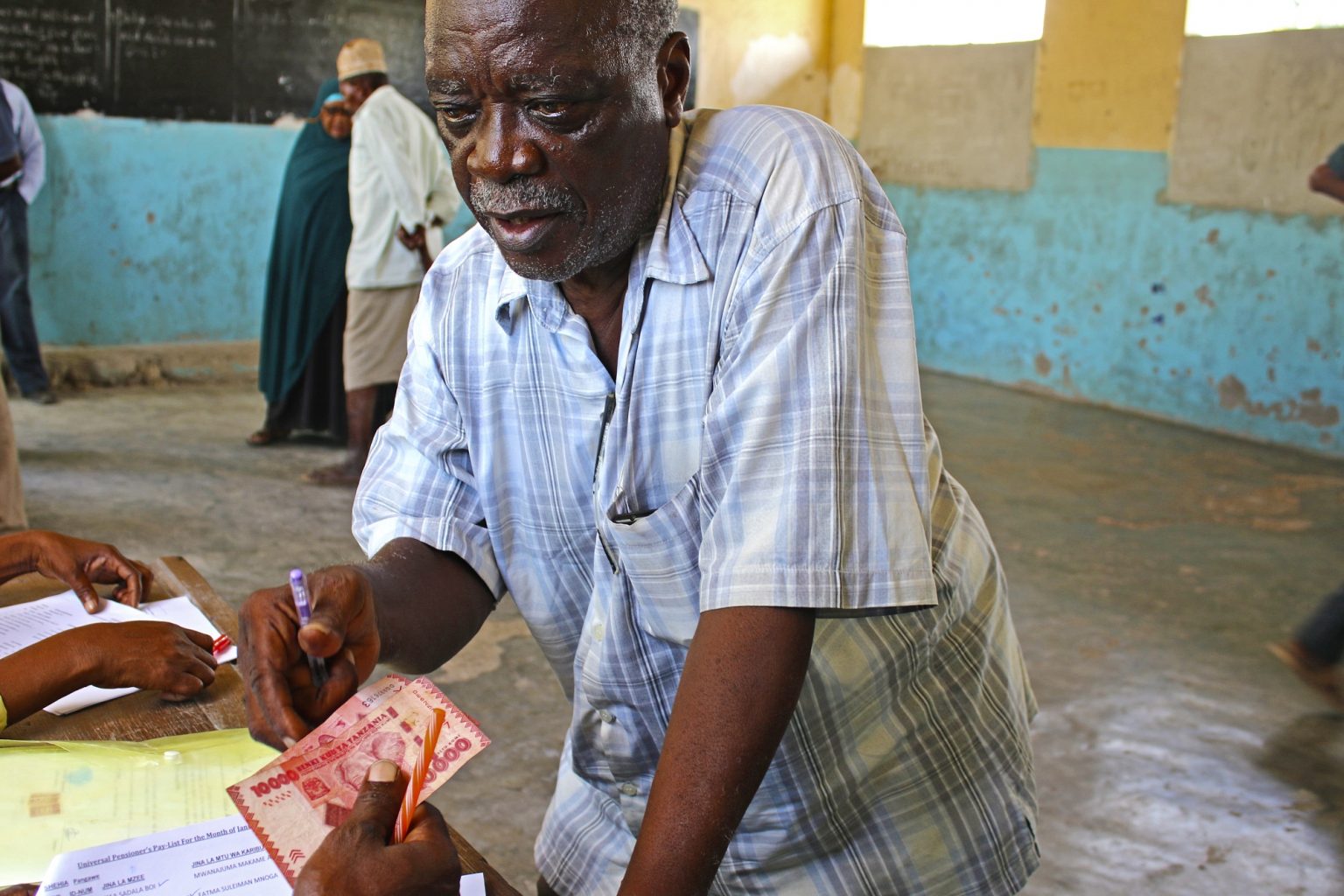
By Ms. Carole Agengo, Dr. Ademola Olajide and Dr. Mohamed A. Sheikh The writers are the Africa Regional Director for HelpAge International; UNFPA Representative, Kenya; and Director General for National Council for Population and Development (NCPD) Africa is often referred to as the ‘world’s youngest continent.’ This is certainly true when one compares the median age of Africans, currently 19 years, while Europe’s median age is 43 years and Asia’s 32. This reflects the relatively small proportion of older adults – those aged 60 years and above, in the total population. Africa occupies the unique position of being, concurrently, the…

A few weeks ago, I was positively surprised to see a sign in a sports shop in Karen, stating that they no longer accepted cash, only cards and mobile money. Until that time, “no-cash” policies in shops was something I had only seen in the Scandinavian countries, and even there, it is still rare. Since the start of the pandemic, however, digital-only payment policies have proliferated in Kenya, and are starting to become commonplace. Cash as a payment method has been in a slow, terminal decline in Kenya for many years, but it has managed to survive, until now. Kenya…

Brent crude oil’s return to a $40/b handle has so far proved to be short-lived. During the past week the oil market has continued to move higher in the belief that the OPEC+ group of producers would extend a deal to curb production. Thereby continuing their support for the market while demand slowly recover. Saudi Arabia and Russia, the leaders of the group, have preliminary agreed on a one-month extension of existing OPEC+ cuts. The problem, however, is once again what to do with countries that fail to deliver the promised cuts. Moscow, usually a laggard in previous deals, has…

By Dr. Olajide Ademola (UNFPA) and Dr. Benjamin Djoudalbaye (Africa CDC) The COVID -19 pandemic has drastically challenged and strained health systems worldwide. All components of the health delivery architecture – from human resources to physical infrastructure – have been severely tested as morbidity and mortality caseloads, unfortunately, gallop. Globally, over four million people have been infected, with about 282 244 lives lost and over one million recoveries between December 2019 and May 2020. As the pandemic continues to evolve and the numbers trickle in, we are not just learning about the fatalities and survival, but also about redefining our…
In Somalia, the challenge to contain COVID-19 is staggering. The country’s health infrastructure has been gutted by decades of conflict and instability. A large part of the population lives in close quarters, while millions reside in decrepit settlements for internally displaced people without money to buy soap or access to regular running water. At the same time, staying at home is not a practical option for most informal workers who need to leave their homes daily to earn money and put food on the table. Somalia’s capacity to manage the Covid-19 public health threat is a cause for concern. More…