

Trending
- Weather experts warn of the most powerful El Niño in decades as extreme weather hits Africa
- Africa Blockchain Festival ignites a new dawn for African innovation
- Africa’s gaming market set to quadruple to $4 billion, defying global slowdown
- Tanzania throws its bond market wide open to the global investors
- VALR sets sights on East Africa as blockchain moves deeper into Africa’s financial system
- The cost of the data gap: Why Kenya’s lenders can’t afford to miss the full picture
- Tanzania takes EAC labour migration helm as regional rules face overhaul
- 2026 is turning out as a defining year in geopolitics, but for whom?


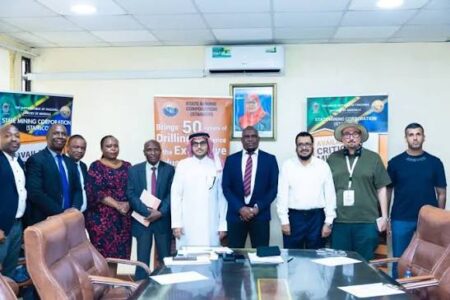
Saudi Arabia commits to increased trade with Tanzania. Already the oil-rich nation has entered into an agreement to set up a meat processing plant…

Tanzania is rolling out new laws aimed at attracting investors…
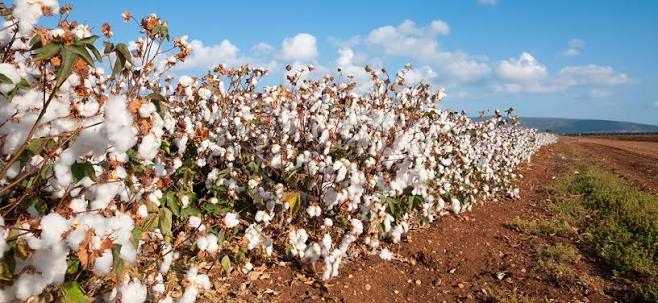
Tanzania organic cotton gaining global market interest. Growing call for…
The number of small-scale miners in mineral-rich Tanzania has more than doubled in a period of less than a year. Mining is the country’s leading revenue earner in terms of foreign export as well as increased government revenue.
The figures were made public by Prime Minister Kassim Majaliwa while addressing parliament. He said in the financial year 2020/2021 4,652 mining exploration licenses were issued to small and medium sized miners.
Notably Tanzania is the only country in the world with deposits of the precious stone tanzanite; Tanzania is also one of Africa’s largest gold producers.

That’s right—it is not on mere goodwill that the magnanimous sums are dished out; it is a two-way street. We give you this amount if you do this for us. This give and take barter in economics is known as conditionality.
To put it in the words of Kjell J. Havenevik, author of ‘The IMF and the World Bank in Africa (Conditionality, Impact and Alternatives), ‘Conditionality is the term given to the conditions relating to macro-policy elements which countries have to meet in order to get access to international loans and/or aid.’
We in the journalism science get information about the big sums ‘handed’ to African countries; what we usually do not get through the all-too-frequent press releases is the conditionality that comes with that money.
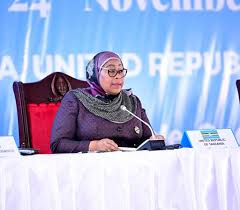
Tanzania is yet another country making a series of moves within the realms of the economy. At the moment the sixth President of Tanzania, Samia Suluhu Hassan is laying another foundation on top of the late John Magufuli presidency’s legacy, which was cut short before it took off for a major portion of its second term.
Earlier in April Tanzania and Uganda managed to strike a victory on the crude oil pipeline project that had stalled. In effect, President Hassan managed to pass another crucial item left by Magufuli’s presidency forward.

Barely a month after the tragic and unexpected death of Tanzania’s outspoken and visionary leader Dr. John Magufuli, the country has gone ahead and inked an oil pact with neighbouring Uganda.
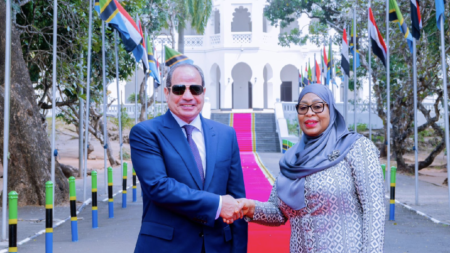
The move puts a lid on speculations of how the country’s first woman President Mama Samia Suluhu Hassan will handle duties of the top office. The new president, who was former vice president under the Magufuli regime, sat with her Ugandan counterpart Yoweri Museveni and together shook hands for French Total E&P and China’s CNOOC and signed key agreements for the East African Crude Oil Pipeline (EACOP).

If you are reading this in East, Central, North or Southern Africa, you have probably…

The late Magufuli is celebrated and mourned across the East African Community which has also joined hands with Tanzania to remember his legacy—which extended from his fight against corruption and the misuse of public resources to his diplomatic relations, forged across the landscape through several regional communities—where on numerous occasions he had declared that ‘we are unified as one’.
Magufuli was a stern advocate of hard work for economic excellence. His voice on this matter was as strong as his willpower. Throughout his unfinished tenure, he had demonstrated how Tanzania can transform its natural wealth and utilize domestic tax collections to fuel development projects.