
Trending
- VALR sets sights on East Africa as blockchain moves deeper into Africa’s financial system
- The cost of the data gap: Why Kenya’s lenders can’t afford to miss the full picture
- Tanzania takes EAC labour migration helm as regional rules face overhaul
- 2026 is turning out as a defining year in geopolitics, but for whom?
- Saudi Arabia and Tanzania pledge to deepen bilateral trade ties
- Tanzania rewrites its digital investment playbook
- Ethical sourcing boosting demand for Tanzania organic cotton
- DRC deploys 70,000 Ebola vaccine doses in high-stakes trial against deadly Bundibugyo strain



Side hustles are everywhere these days.People do freelance work, gigs on the weekends, or delivery jobs at night to “make extra money.” But here’s…

2024 Grantmakers Summit brought together 159 organisations from the East…

Pullman Hotel Nairobi will begin operations in June 2024 Kenya…



In March 2022, while trying to clarify the power situation in Nigeria, TCN reiterated that out of 23 gas-powered stations with a combined capacity of more than 10,000 MW, at least 14 were either shut down or operated at reduced capacity. Two in three power stations have either halted operations or operating below par. It is projected that Nigerians privately generate up to 40,000 MW to address the grid deficit.
According to TCN spokeswoman Ndidi Mbah, the power companies attribute this trend to various factors, including scheduled and unscheduled maintenance, faults in generating units of generating companies, and poor gas supply. However, all these factors cause power generating companies to limit their generating capacities or halt generation altogether. However, the challenges appear to run deeper.
All Progressives Congress Party, after assuming office in 2015, alleged that many of the power companies had been sold by the former People’s Democratic Party government to political cronies that lacked the resources or capacity to run the business.

African Development Fund has approved $5.5 million technical assistance grant to support projects Eastern Sahel…
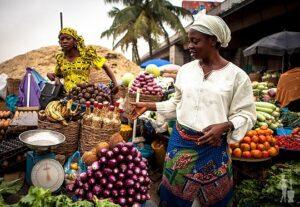
On a broader scale, the United Nations argued that sub-Saharan Africa loses $95 billion yearly because of the gender gap in the labour market.
Multiple entities are recording the contribution of women to the Tanzania economy, including the National Bureau of Statistics (NBS).
The NBS argue that 65 per cent of farmers are women and women head 33 per cent of households; political processes that promote women are mounting up over the decades.
Around 36 per cent of the national parliamentarians are women—however, legislative and financial barriers, as well as gender norms, hinder advancement.
On the other side of the fence, World Bank argues that Tanzania has made vital strides in expanding women’s economic opportunities over the past two decades.
“The female labour-force participation rate rose from 67 per cent in 2000 to 80 per cent in 2019, well above the average of 63 per cent for sub-Saharan Africa and among the highest rates on the continent.” World Bank report argues.
As Tanzania doubles down on improving the education sector and skills take up, ripples are observed in other related fields, employment.

In the latest fundraising led by B Capital Group, Flutterwave raised US$250 million, with participation from Alta Park Capital LP, Whale Rock Capital and Lux Capital.
Flutterwave said in an emailed statement on Wednesday. “The investment has enabled the company to become the highest valued African startup,” a Flutterwave email read.
Flutterwave has processed transactions worth more than US$16 million in over 50 million transactions across dozens of countries in Africa, facilitating cross-border transactions in multiple currencies for companies, including Uber Technologies Inc., Booking.com and Alibaba’s Alipay. It has evolved beyond payments products to an online marketplace and a lending channel to small and medium businesses.
With operations from the Nigerian commercial hub of Lagos to Nairobi, Kenya, the San Francisco-based company will continue to grow in East Africa. According to Flutterwave’s software engineer, the company also plans to expand its Francophone African nations such as Senegal and Cameroon.

To understand the new politics stance and other pro nationals of recent times, we should…

To understand the new politics stance and other pro nationals of recent times, we should…