

Trending
- African trade is growing despite the obstacles
- Why global capital is betting big on Africa’s digital promise
- Kenya posts stronger-than-expected Q1 growth at 5.3% on manufacturing rebound, tourism boom
- China’s new investment rules are about guardrails, not closed doors
- Zanzibar optimistic economic growth will hit 7.5% on tourism boom
- Kenya defies economic shocks to post record $22 billion in tax collections
- Forget South Africa: East Africa now rules in banking industry returns
- Lamu over Tanga: The commercial calculus that cost Tanzania $20bn refinery



Digital development is attracting new Foreign Direct Investment (FDI) to Africa. This as overall FDI into Africa is on the decline according to data…

Kenya’s economy grows 5.3% in first quarter, powered by manufacturing…

Dangote Group’s major refinery in East Africa needed deep-water berths…




With numerous international companies and organizations operating in Tanzania’s rural areas, input by this sector has huge direct impact on the related communities.
Support ranges from digging of wells to funding irrigation and smart agriculture projects. There is also the matter of lack of adequate financing and poor sanitation all of which gravely hold back social and economic growth across the country.
Also, as the minister pointed out, through CSR, companies have the opportunity to help the government increase water supply by digging wells for rural communities and by protecting water catchment areas in places they operate.
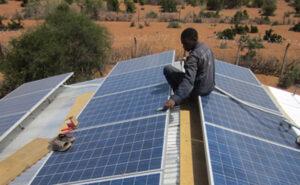
Unfortunately, even with an increased power supply, electricity is mostly used for lighting but the vast part of the community still relies on biomass ‘…which makes up close to 90% of the total primary energy consumption in Tanzania.’
According to REA, this reliance on biomass leads to the deforestation of 100,000 hectares every year and only about a quarter of this is ever reforested. At the moment, at least 63.5% of the households in Tanzania Mainland use firewood as the main source of energy for cooking which is the main cause of deforestation along with the clearing of forests for cultivation.
Another 26.2% of Tanzanians rely on charcoal for cooking and another 5.1% use, liquified petroleum gas and a mere 3 per cent use electricity. These figures show that even though there is an increased supply of electricity there is still profound destruction of forests and the atmosphere through deforestation and the burning of fossil fuels respectively.

Kenya Commercial Bank (KCB) Group has committed to building on the successes of Joshua Oigara…

KEMSA said it is on course to collect at least $23.2 million owed by county…

Terry Ramadhani has officially taken office as the new Kenya Medical Supplies Authority (KEMSA) Chief…

A report by Cytonn Investments has found that Kenya’s hospitality sector has continued to show…