

Trending
- Africa Blockchain Festival ignites a new dawn for African innovation
- Africa’s gaming market set to quadruple to $4 billion, defying global slowdown
- Tanzania throws its bond market wide open to the global investors
- VALR sets sights on East Africa as blockchain moves deeper into Africa’s financial system
- The cost of the data gap: Why Kenya’s lenders can’t afford to miss the full picture
- Tanzania takes EAC labour migration helm as regional rules face overhaul
- 2026 is turning out as a defining year in geopolitics, but for whom?
- Saudi Arabia and Tanzania pledge to deepen bilateral trade ties



Project Management Institute’s recent Talent Gap report shows 2.3 million…

Vodafone Group developed a business tailor-made to deal with Africa’s…


There has never been a generation that has benefitted from simplified access to and…
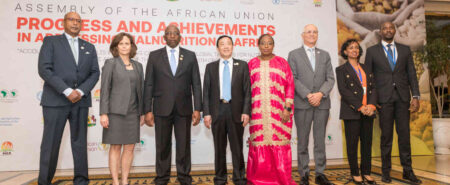
For the 2030 Agenda for Sustainable Development to be actualized appropriate financing is required and remains a major challenge, added to concerns over insufficient financial accountability, transparency and integrity. The President of the UN General Assembly and the President of the UN Economic and Social Council instituted a 15-member panel on Financial Accountability, Transparency and Integrity (FACTI) in March 2019, to look at ways to address illicit financial flows (IFFs), among other issues. Earlier, the problem of IFFs was brought to light by the Thabo Mbeki-led High-level Panel on Illicit Financial Flows from Africa in a 2015 report. Tackling the issue further the United Nations Conference on Trade and Development (UNCTAD) released the Economic Development in Africa Report 2020 titled, Tackling Financial Flows for Sustainable Development in Africa. All these efforts serve to highlight the urgency with which world leaders need to deal with this issue.

The African Union will run the year 2021 under the theme: Arts, Culture, and Heritage:…

In the past sport was usually considered as a form of entertainment, it was casual…

Satellite technology is an integral part of modern communication networks. The world has evolved from…

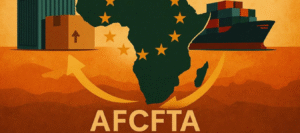
The cornerstone of a successful trade is the efficient distribution of goods from the source to all points of sale. As such, cultivating logistics and distribution channels is necessary for the successful implementation of the African Continental Free Trade Area (AfCFTA).
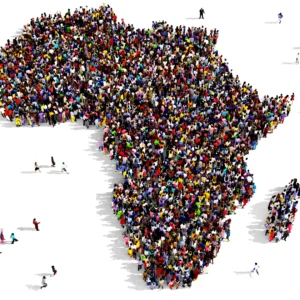
The continent is made up of over 50 different countries whose levels of development vary vastly. Each country needs to seek its solutions locally, but governments need to come together to improve intra-African trade and cross-border co-operation.
AfCFTA will undoubtedly be a breakthrough in reducing the cost of shipping in Africa and improving efficiency. The amount of time that will be spent on customs clearance is set to drop drastically. Currently, it takes more than a week at one-border stops in some countries.