

Trending
- 2026 is turning out as a defining year in geopolitics, but for whom?
- Bitcoin Surges 20%: How Crypto Holders Are Exploring Cloud Mining Income in 2026
- Saudi Arabia and Tanzania pledge to deepen bilateral trade ties
- Tanzania rewrites its digital investment playbook
- Ethical sourcing boosting demand for Tanzania organic cotton
- DRC deploys 70,000 Ebola vaccine doses in high-stakes trial against deadly Bundibugyo strain
- Kenya’s private sector optimistic on growth despite inflation and geopolitical risks
- AfDB and Standard Bank ink $332 million social bond deal to fund South African SMEs


Browsing: Climate change
As part of the requirements under the Kenyan Act, the government additionally established an Integrated Monitoring Reporting and Verification (Integrated MRV) system and published Kenya’s National Climate Change Action Plan 2018-2022 (NCCAP). The five year plan requires the government to develop “action plans”, providing mechanisms to assist stakeholders in bringing about low-carbon climate-resilient development.
Angola boasts some of the most ambitious targets for transition to low carbon development in Africa, albeit having ratified the Paris Agreement in November 2020. Since then the country has launched a national development plan, established a climate observatory and implemented a continuous national emissions monitoring system.
In addition, Gambia is committed to reducing its GHG emissions unconditionally, by 2.4 per cent by 2025 having implemented the Sustainable Energy Action Plan in 2015, which sets out the country’s renewable energy targets and corresponding measures necessary for their achievement. It has also committed to terminating oil importation by 2025. Between 2020 and 2030, Ghana proposes to implement twenty mitigation and eleven adaptation programmes. The Democratic Republic of Congo (DRC) NDCs, commit the country to a 17 per cent reduction rate by 2030.
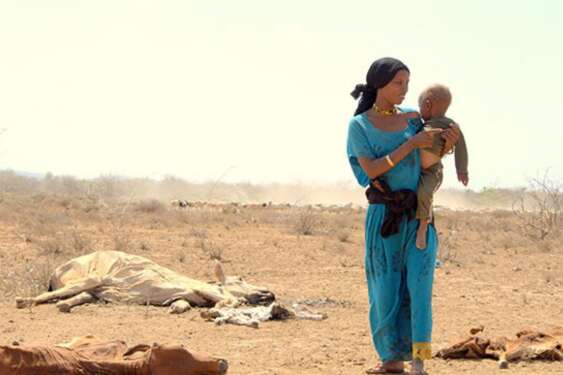
Over the years, various climatic disasters have occurred, notably the recent Cyclone Idai that hit the continent’s south-eastern part. Various more catastrophic weather events continue to affect the continent socially and economically. Kenya, which relies on its agricultural sector’s performance, has evidenced a sustained and growing divergence between farm production and consumption. Notable air masses like the El Nino and La Nina have had substantial negative impacts on coastal countries such as Kenya due to rising sea levels caused by changing oceanic climatic conditions.
Kenya has been forecasted to face another severe dry spell this year as a result of La Nina. La Nina, an air mass typical of cold weather, which is not ideal for rainfall, has been hitting the east coastal country nearly every five years. In 2016, 2.7 million people were affected by a hunger crisis, and the majority of them displaced. A notable concern in such events is the government’s limited financial ability for relief aid. Much of the burden has been borne by humanitarian organizations that continue to offer substantial assistance both for disaster relief and Africa’s economic development.
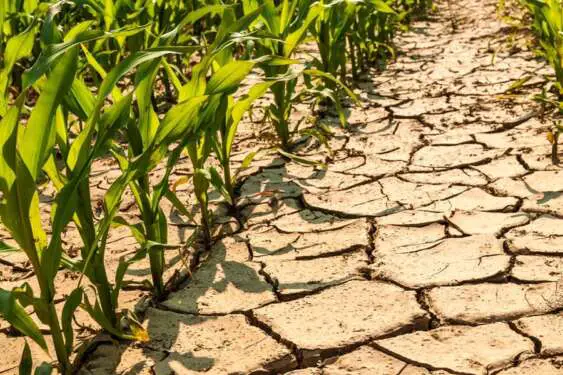
Climate change is a 21st-century phenomenon that has called the attention of most governments on planet earth. In Africa, the…
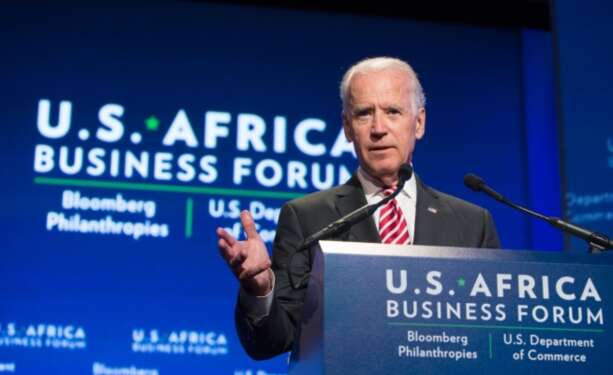
Africa is suffering the worst from the effects of global warming. The continent is the least prepared to respond to…
Potential presidential elect, Joe Biden, took to Twitter to express his administration’s desire to rejoin the Paris climate agreement as…

Salesforce Ventures has announced a second impact investment fund amounting to $100 million dollars. Salesforce Ventures is the investment arm…

The International Monetary Fund (IMF) expects debt-to-GDP ratios to go up significantly to 65 per cent in emerging markets, 50…

The African Development disbursed $5.6 million to Niger to implement its Africa Disaster Risk Management Funding Programme (ADRiFi). The funds…
Nature hurts economies, and if such economies are not well equipped to handle the aftermath of flooding, famine, water scarcity,…
The African Development Bank climate finance continuous to gain ground as the bank in 2019, committed 3.5 billion across the…