

Trending
- Silicon Valley’s Tim Draper backs Nairobi blockchain festival, sees Africa as next digital frontier
- Dangote breaks ground on $16bn Lamu refinery as East Africa seeks fuel independence
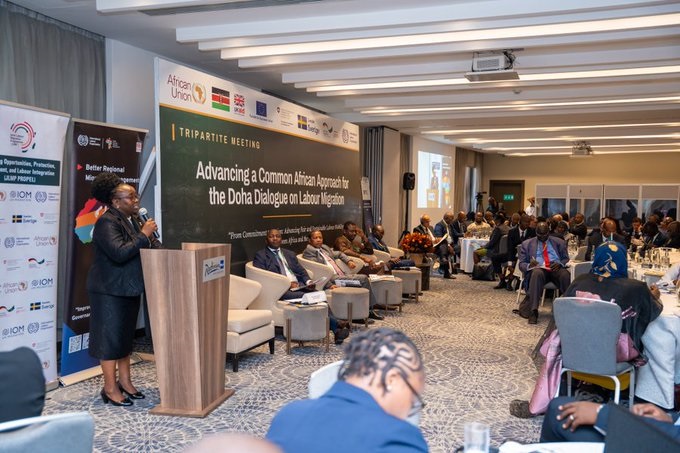
- Gulf and African states meet in Dar to rewrite rules of labour migration
- African governments drive new forest finance progress as global report warns funding globally must scale faster
- Fine Spinners eyes Kenya’s Agoa-backed apparel supply chain with $5m plant
- Why young Kenyan investors need to stop treating the stock market like a betting slip
- Tanzania tax reforms mandate VAT refunds to under 30 days
- In New York, world leaders unveil plan to overhaul global health architecture


Browsing: Digital economy

Cyber security spending in Kenya is still low with half of state entities exposed to malicious attackers. Cyber Security Spending…
Three Kenyan startups have been selected for an incubation programme after winning the Cyber Security Hackathon at the just concluded…
An efficient crypto mining industry can generate more job opportunities in Africa as the demand for miners, blockchain specialists, and technology specialists increases, . This encourages nations to enhance their energy and technological capacities to support crypto operations. These enhancements can considerably benefit other industries and the economy as a whole.
African nations must embrace the chance to become a crypto mining hub. This can aid in the digital economy’s growth, citizens’ financial standing, and the infrastructure for energy production. Consequently, African governments can invest in cryptocurrencies to acquire alternative funding sources for developing renewable and alternative energy sources.
World Bank further notes that the unified digitisation of the East African economy is estimated to generate up to a US$2.6 billion boost in GDP and 4.5 million new jobs that will largely benefit those at the bottom of the pyramid.
Data by GSMA reveals that by the end of 2020, 495 million people subscribed to mobile services in Sub-Saharan Africa, representing 46 percent of the region’s population, an increase of almost 20 million on 2019.
GSMA revealed that smartphone connections will more than double by 2025 in Sub-Saharan Africa with the East African Community registering the largest incremental growth, led by Rwanda and Tanzania.
Another study by PureProfile, an advertising agency company, surveyed investors responsible for around US$700 billion assets under management. The results showed that twenty-five per cent of investor managers expect Africa’s internet industry to increase by 51 per cent in the next three years.
Over 71 per cent of professional investors expect the affordability of mobile phones in Africa to improve by 2025. Currently, the mobile phone economy accounts for an average of 6.8 per cent of monthly incomes. Ninety-seven per cent of all professional investors believe that the Coronavirus pandemic has accelerated the demand for mobile phones.
World Mobile is compounding its unique hybrid mobile network supported by low altitude platform balloons in Zanzibar, which it plans to roll out throughout the continent. The company is already in discussions with government officials in Tanzania, Kenya, and other territories underserviced by traditional mobile operators.
Even though the country knows that diamonds are a finite resource, it still holds the world’s richest mine and is the biggest producer of gem diamonds. The country has become something of a role model for good development, powered by diamond mining.
20 percent of Botswana’s gross domestic product comes from this one commodity.
It propelled the country from the second poorest country in the world in 1966, at US$70 per person per year, to a middle-income country in 2021. Botswana estimates the diamond economy will start dropping in 2030.
Based on a report by Disrupt Africa, funding for health tech startups in Africa jumped 257.7% from US$28.8m in 2019 to US$103m in 2020. These startups provide a wide range of services from scheduling medical consultations to telemedicine and digitalized imagery.
MaiSoin from Cote d’Ivoire uses a decentralized, gig-economy model, to facilitate the relationship between healthcare professionals and patients needing care at home or via telemedicine. In their first year of operations, they have had an average of 50% growth month over month and are already looking at potential expansions in the region.

The rise of digital technology presents a myriad of new inventions and conveniences and changes how people interact, communicate, and…
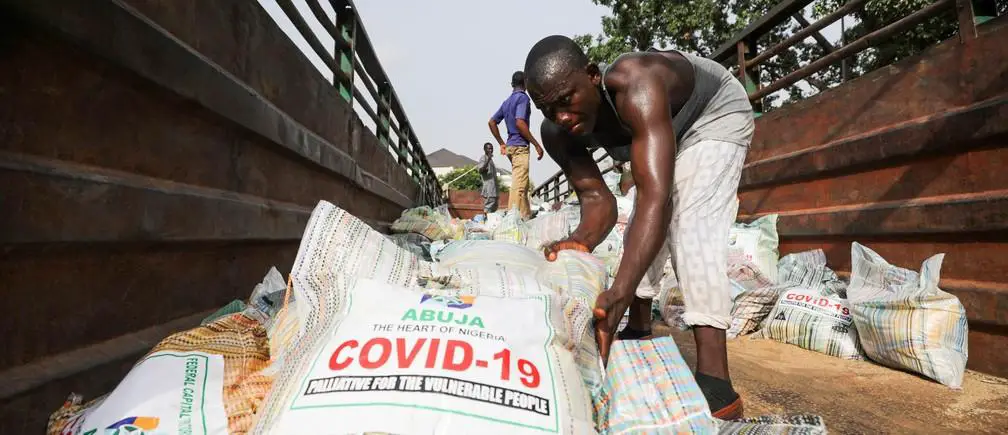
Africa, the continent of more than 1.3 billion people has experienced its share of the coronavirus (COVID-19), which shaved off…

Digital technologies could quicken economy recovery that has been affected by COVID-19 pandemic, according to the World Bank’s latest Economic…