
Trending
- VALR sets sights on East Africa as blockchain moves deeper into Africa’s financial system
- The cost of the data gap: Why Kenya’s lenders can’t afford to miss the full picture
- Tanzania takes EAC labour migration helm as regional rules face overhaul
- 2026 is turning out as a defining year in geopolitics, but for whom?
- Saudi Arabia and Tanzania pledge to deepen bilateral trade ties
- Tanzania rewrites its digital investment playbook
- Ethical sourcing boosting demand for Tanzania organic cotton
- DRC deploys 70,000 Ebola vaccine doses in high-stakes trial against deadly Bundibugyo strain


Browsing: Johannesburg Stock Exchange (JSE)
Statistics show that innovative ESG and carbon finance mechanisms are quickly turning Africa’s untapped capital, which is estimated at $3…
A2X will mark the fourth exchange that Shoprite Group shares will be available to investors. A2X market has partnered with…
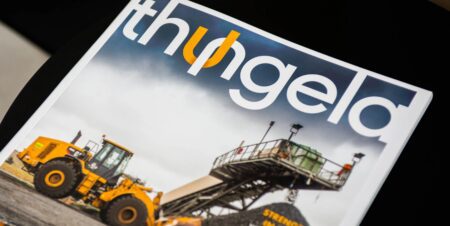
Thungela Resources Limited has been busy with mergers and acquisitions to grow its geographic footprint and diversify from its pure…

The listing of SYGSE happens at a time the JSE is preparing to usher in new amendments to its listings requirements, paving the way for issuers to list and trade Actively Managed ETFs (AMETFs) for the first time in the bourse’s history.
In September, the bourse announced that the Financial Sector Conduct Authority (FSCA) approved amendments to the JSE listings requirements, allowing issuers to list and trade AMETFs for the first time. “The changes [allow] locally registered Collective Investment Scheme (CIS) management companies to list ETFs which related to offshore assets on South African securities exchanges. It [allows] these funds unlimited investment in offshore assets, subject to the restrictions on their offshore portfolio allowances.”
The stock exchange indicated that given the global ETF market’s evolution and the local industry’s desire, the impending introduction of AMETFs in South Africa aligns with global best practices.

Sasol’s results presentation in February was an awkward affair. The session was pre-recorded and then aired on the company’s website.…
The resilience of the diversified services group was enabled by the company’s widespread portfolio of businesses. Bidvest owns a vast…
The Johannesburg Stock Exchange (JSE) building in Sandton. The oldest stock exchange in Africa has experienced a net decline in…
Ratings agency pronouncements are important in that they determine the financial standing of a country in the markets. When a country has unfavourable ratings, it will find it difficult to borrow without paying high-interest rates.
Conversely, favourable ratings indicate a much more stable credit proposition which will enable a borrower to access funding at concessionary rates.
South Africa has received funding to the tune of tens of billions of Rand from developed countries. This financial package has been to assist the country in reducing its reliance on fossil fuels for its energy. The country received this money immediately after the COP 26 conference last year.
In 2004, Mittal Steel was founded following the merger of Ispat International and LNM Holdings, and the simultaneous acquisition of International Steel Group, becoming came the world’s leading steel producer.
Shortly after, in 2006, Mittal Steel launched an ambitious bid to merge with Arcelor, creating ArcelorMittal.
Lakshmi Mittal has done very well, and it leaves little doubt in the mind that he has enjoyed a very gratifying career replete with success in business if his personal bank account is anything to go by together with numerous recognitions of his work in philanthropy and his contribution to the steel industry.
These prospective customer circumstances have provided the proverbial “ace” which Capitec has played very successfully during its 21 years of existence.
Capitec’s success is attributable largely to the leadership of one man Stassen and the support of his team. Stassen for his part is not a traditional banker, he was during his time at the helm of the bank an even more unconventional CEO.
In his own words, he is non-hierarchical, consultative, and often informal in his approach. By his own admission, he is not a natural reader but said that he learns a lot from observation… Typically the average chief executive is said to read at least 52 books a year… but then Stassen was not an average CEO.