Trending
- Zimbabwe edges closer to arrears payment, debt restructuring and reset of ties with IMF
- Tanzania coffee industry mulls commercializing wastes to spur fresh revenue streams
- Reasons for African Currencies Growing in Significance for Business Decisions
- Nairobi forum launches push to close Africa’s climate protection gap
- East Africa’s lessons from India’s economic growth playbook
- Tanzania and Serbia to revive falling trade relations
- TotalEnergies commits $10 billion to Angola as fresh oil find comes on stream in three months
- In Africa, the conversations defining corporate reputation are going on in channels most CEOs cannot see


Browsing: Kenya

Nairobi will continue purchasing fuel on credit from three state-owned Gulf oil marketers until December 2024 in a plan the government is banking on to ease piling pressure on Kenya’s forex reserves.
The move comes in the wake of high expenditure on oil imports even as Kenya remains a net importer grappling with a widening trade deficit that hit $10.8 billion last year. Last year, Kenya’s expenditure on imports rose by 17.5 per cent to $16.9 billion (KSh2.5 trillion), despite growing export volumes.

According to Investopedia, a gig economy is a labour market mainly reliant on temporary and part-time work filled by independent contractors and freelancers rather than full-time permanent employees. A gig economy produces cheaper, more efficient services for those willing to use them.
A gig is a broad category that includes a wide range of positions. Work can range from cab driving or restaurant delivery to writing code or freelance essays. Instead of tenure-track or tenured professors, adjunct and part-time professors are contracted employees. By recruiting more adjunct and part-time teachers, colleges and universities can save costs while also better-matching instructors to academic needs.

The Confederation of African Football (CAF) has selected Kenya, Tanzania, and Uganda to host the 2027 Africa Cup of Nations (AFCON) over bids from Morocco, Algeria, Senegal, Botswana, and Egypt. The East Africa joint bid, commonly called the “Pamoja AFCON Bid,” has won the hosting rights for the 2027 AFCON as Morocco takes the rights for the 2025 showpiece.
CAF president Patrice Motsepe announced the news on Wednesday morning, 27 September, shortly after the body held an executive committee meeting in its headquarters in Cairo, Egypt. Recommendations from several nations boosted the East Africa Pamoja AFCON Bid. In a move that will elate East African sports enthusiasts, the CAF Executive Committee chose the Pamoja Afcon Bid.

The government has no option but to squeeze taxpayers further to raise revenues to meet budgetary obligations as the depreciating shilling worsens Kenya’s debt and economic struggles. This comes as the Kenyan shilling weakens against the US dollar and other major global currencies, pushing up the country’s spending on repayment. Kenya’s shilling has lost about 19 per cent of its value to the dollar year-to-date, exchanging at an average of KSh147.47 on Monday, September 25, 2023.
The weak currency has pushed the country’s public debt repayment bill by at least $4.67 billion (Sh690 billion) in the last eight months. Piling debt comes as the National Treasury went on a borrowing spree to bridge the budget deficit.

The Vodafone Foundation has set aside $6 million to extend the successful m-mama maternal health initiative to Malawi over the next five years. This expansion aims to enhance maternal and newborn healthcare access in Malawi and the region. Malawi has one of the highest maternal mortality rates in the world. Estimates show that the country currently records 5.7 maternal deaths per 1,000 live births.
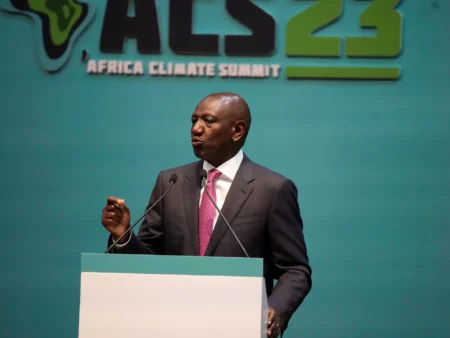
A considerable gap exists between symbol and substance regarding an African climate change approach. Foreign leaders often nod to how Africa accounts for only four per cent of global emissions but bears the brunt of the devastating climate change effects. Rising temperatures, extreme weather conditions, and ecosystem disruptions threaten millions of Africans’ livelihoods.
For many communities across the continent, the climate threat is already existential. With 18 per cent of the global population, Africa has 16 of the 20 countries most vulnerable to climate change, according to Notre Dame Global Adaptation Initiative.
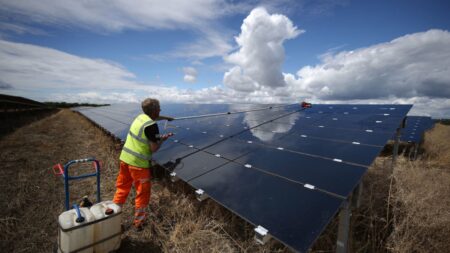
Africa’s energy sector is at a crossroads but it has the chance to lead the global shift to sustainable power.…

4G Capital joins US Ambassador to Kenya Meg Whitman on the US-Kenya Business Roadshow in San Francisco. The Roadshow is…

Kenya’s appeal comes at a moment when East Africa has seen only one exit through an IPO in the past…
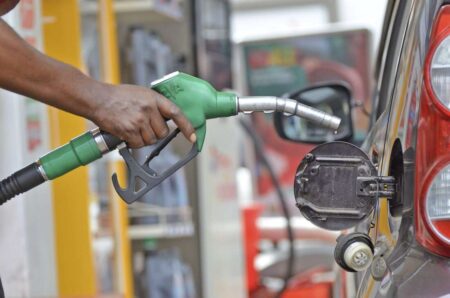
For many Kenyans, life was unbearable during former President Uhuru Kenyatta’s reign. But just one year after President William Ruto came to power, life is getting more onerous. High taxation, the depreciation of the shilling against the dollar, and record-high fuel prices have highlighted the last few months. This has painted a grim picture of Kenya’s future and shattered citizens’ hopes for economic reinvigoration.
On September 14, 2023, the Energy and Petroleum Regulatory Authority (EPRA) announced record-high fuel prices for the September-October regulation cycle. A litre of super will now retail at Kes 211.64, diesel at Kes 200.90, and Kerosene at Kes 202.61. This represents an increase of Kes 16.96, 21.32, and 33.13, respectively, in the new prices announced last midnight.