
Trending
- African governments drive new forest finance progress as global report warns funding globally must scale faster
- Fine Spinners eyes Kenya’s Agoa-backed apparel supply chain with $5m plant
- Why young Kenyan investors need to stop treating the stock market like a betting slip
- Tanzania tax reforms mandate VAT refunds to under 30 days
- In New York, world leaders unveil plan to overhaul global health architecture
- Minisend grows Kenya presence as official payment partner of Africa Blockchain Festival 2026
- UN resolution challenges world maps that make Africa look smaller
- Zimbabwe edges closer to arrears payment, debt restructuring and reset of ties with IMF


Browsing: premium
African economy has sustained significant impacts due to the pandemic Several sectors such as tourism and trade have been impacted…
As part of the requirements under the Kenyan Act, the government additionally established an Integrated Monitoring Reporting and Verification (Integrated MRV) system and published Kenya’s National Climate Change Action Plan 2018-2022 (NCCAP). The five year plan requires the government to develop “action plans”, providing mechanisms to assist stakeholders in bringing about low-carbon climate-resilient development.
Angola boasts some of the most ambitious targets for transition to low carbon development in Africa, albeit having ratified the Paris Agreement in November 2020. Since then the country has launched a national development plan, established a climate observatory and implemented a continuous national emissions monitoring system.
In addition, Gambia is committed to reducing its GHG emissions unconditionally, by 2.4 per cent by 2025 having implemented the Sustainable Energy Action Plan in 2015, which sets out the country’s renewable energy targets and corresponding measures necessary for their achievement. It has also committed to terminating oil importation by 2025. Between 2020 and 2030, Ghana proposes to implement twenty mitigation and eleven adaptation programmes. The Democratic Republic of Congo (DRC) NDCs, commit the country to a 17 per cent reduction rate by 2030.
Albeit marred with difficulties, green manufacturing in Africa is possible and the continent stands to greatly benefit from the transition. It will promote inclusive economic transformation through domestic manufacturing and a commodity-based industrialization process, capitalizing on the continent’s resources and opportunities presented by the dynamic nature of the global structure of production.
Green industrialization has been identified as the holy grail of Africa’s socio-economic transformation; infusing green initiatives into value chain activities for instance, during sourcing and processing of raw materials to the marketing and selling of finished products. The Economic Commission for Africa (ECA) economic report on Greening Africa’s Industrialization, deduces that it is imperative for African countries to identify green industrialization entry points, set policies that support green industrialization and mobilize resources from the public and private sectors, as it is a precondition for sustainable and inclusive growth.
The reason there is so much interest in Latin America as an investment destination is that there is little value left in seed and early stage companies in North America, Europe and even India.
Over the coming years LatAm will also lose its appeal as valuations start to exceed value. There is therefore no doubt that the next geographical location in which this arbitrage will be practised is sub-Saharan Africa.
Firstly, environmental criteria which consider how well a company performs as a steward of nature. This includes the energy a company takes in and the waste that it produces and the consequences for humanity as a result.
This aspect of the criteria also encompasses carbon emissions and climate change which have become highly topical especially in the ongoing COP26 conference in Glasgow. This aspect of the ESG criteria is important because every company uses energy and it is affected by the environment.
The social criteria which is second considers how that company manages its relationships with stakeholders namely employees, shareholders, lenders, customers, suppliers, and the communities where it operates. This feature addresses the relationships a company has and the reputation it fosters in the communities it operates in which may include labour relations, diversity, and inclusion.

Mobile money is growing fast in East Africa Despite of the pandemic, still mobile money regulators enabled its performance Financial…
African countries have dire shortage of energy supply and many cannot even meet their minimum required base-load, so why is…
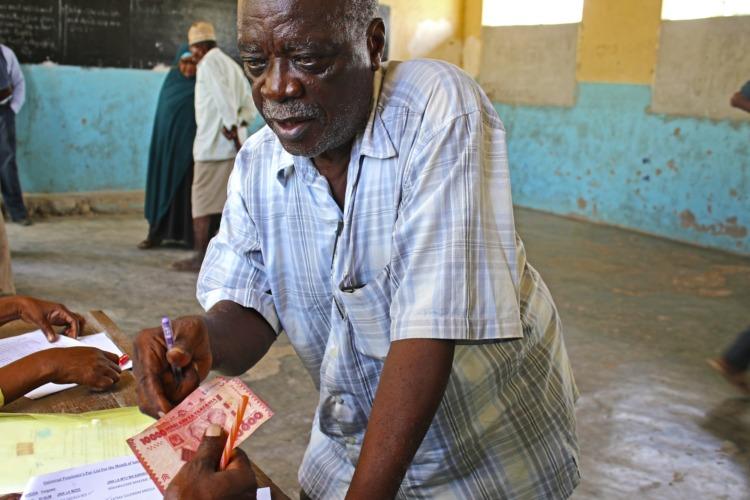
Tanzania has went through significant changes in its pension schemes over the past years Pension funds have becomes a useful…
When the government of Uganda launched the first of four regional agricultural mechanization centres in July 2020, questions were raised…
If your goal is financial success, then the investment is the vehicle that will get you to that destination. Having…