

Trending
- African governments drive new forest finance progress as global report warns funding globally must scale faster
- Fine Spinners eyes Kenya’s Agoa-backed apparel supply chain with $5m plant
- Why young Kenyan investors need to stop treating the stock market like a betting slip
- Tanzania tax reforms mandate VAT refunds to under 30 days
- In New York, world leaders unveil plan to overhaul global health architecture
- Minisend grows Kenya presence as official payment partner of Africa Blockchain Festival 2026
- UN resolution challenges world maps that make Africa look smaller
- Zimbabwe edges closer to arrears payment, debt restructuring and reset of ties with IMF


Browsing: zimbabwe
The company’s performance was mainly affected by several reasons, including the roof collapse in 2021 which halted production and resulted in low revenues.
Another factor is foreign currency exchange losses incurred on the related party borrowing of US $32 million and related party payables. As a result, the company has not been able to generate sufficient cash flows to settle short-term borrowings due to external parties. The decommissioning of cement mill 1 to make way for the commissioning phase of the VCM also adversely affected cement volumes.
Although the decline in revenue is partly attributed to the decommissioning one of the existing cement ball mills to make way for the installation of the new Vertical Cement Mill (VCM). The new VCM which is anticipated to be fully operational by Q4 2022 is expected to revive production and income.
If you are just wondering what a VCM is, cement mills are the milling machines used in cement plants to grind hard clinker into fine cement powders. Cement ball mill and vertical roller mill are two most widely used cement mills in today’s cement grinding plants.

Fast food giant, Simbisa Brands Ltd., the firm that controls high-profile restaurant chains across African markets, spurred its planned VFEX listing, notifying investors in a comprehensive roadmap that the deal may be through by December 2, 2022.
Simbisa, which has risen from its Zimbabwean roots to establish a formidable African network, executes its strategy through a string of high-end hospitality brands that include the flagship Chicken Inn, Pizza Inn, Creamy Inn and Bakers Inn, one of the country’s biggest bread producers.
It also holds the franchises for quick service restaurant chain; Rocomamas, Nandos and Steers, along with Galito
In a statement that disclosed Simbisa’s rationale to switch from the ZSE, the firm’s board rallied shareholders to give an emphatic nod to the transaction at an extraordinary general meeting scheduled for November 18, 2022.
Riozim Limited the Zimbabwe based, and Zimbabwe Stock Exchange-listed diversified miner, has more going wrong for it than right. For…

Post the Restructure, in January 2018, Probrands disposed of its dairy assets to a newly incorporated company, Prodairy, a dairy and dairy products processor.”
The company has a long history of brushes with the law.
In 2013 Innscor Africa Limited was fined US$ 60 million for not following the proper procedures in its acquisition of majority shareholding in National Foods Limited in 2013. The CTC, after conduction investigations on the transaction, found that Innscor acted against regulations when it purchased a majority interest in National Foods.
Innscor Africa Limited as in its most recent run-in with CTC did not notify them of their intention to acquire a majority stake in National Foods Limited which is a contravention of the Competition Act.
As his banking operation grew Vingirai became the target of what has been called deliberate skullduggery against successful businesspeople in Zimbabwe. In 2004 after the banking crisis that claimed the scalps of most of the indigenous banks in Zimbabwe Nicholas Vingirai had to leave the country and spent seven years in self-imposed exile after he was charged with contravening the country’s exchange control laws.
He was absolved in 2011 of the charges of externalization of foreign currency however, the government had expropriated his firm Intermarket Holdings in 2006. Since that time Vingirai has been on a crusade to recover his assets which are now in the centre of the dispute. ZB Financial Holdings comprises of assets that belong to Transnational Holdings Limited. For the assets that were annexed from Vingirai, the government duly transferred 22.7% of the shares in ZB Financial Holdings to the veteran banker.
More shares are due to Vingirai’s investment vehicle so that they correspond to the value of Intermarket Holdings at the time that the government took it over. In July 2021, 11% of ZB Financial Holdings shares were supposed to be transferred to Transnational Holdings Limited. This is pending. The dispute has been long drawn out with all kinds of proposals being made, ranging from demerging Intermarket from ZB to allocating shares to the veteran banker.

New Zimbabwe went on to report that the court ruled that in the case of First Merchant Bank failing to reimburse Shah and his company, the Bank of Zambia was held liable and, in the alternative, the Attorney General was ordered to pay if the funds could not be found. The culmination of this dispute is that Shah and his company are in for a particularly large windfall of cash. The reclusive Indian business tycoon is said to have business interests in Zimbabwe, Zambia, and India.
Despite his wins in business Jayesh Shah has never successfully shaken off the controversy that comes from the notable success a person enjoys in any endeavour. Success always breeds as many admirers as it does critics. Tendai Biti, who was Zimbabwe’s finance minister at one time during the Government of National Unity, called Jayesh Shah a “loan shark of Indian descent”.
The opposition leader made this highly disparaging remark after revelations that Jayesh Shah and another equally controversial business, Nicholas van Hoogstraten were providing cash loans to Zimbabweans against their immovable properties on unsustainable and usurious terms when the inevitable eventuality of default occurred by the borrowers, the lenders Jayesh Shah and Nicholas van Hoogstraten would move in and realize the property against which the original loan was secured.
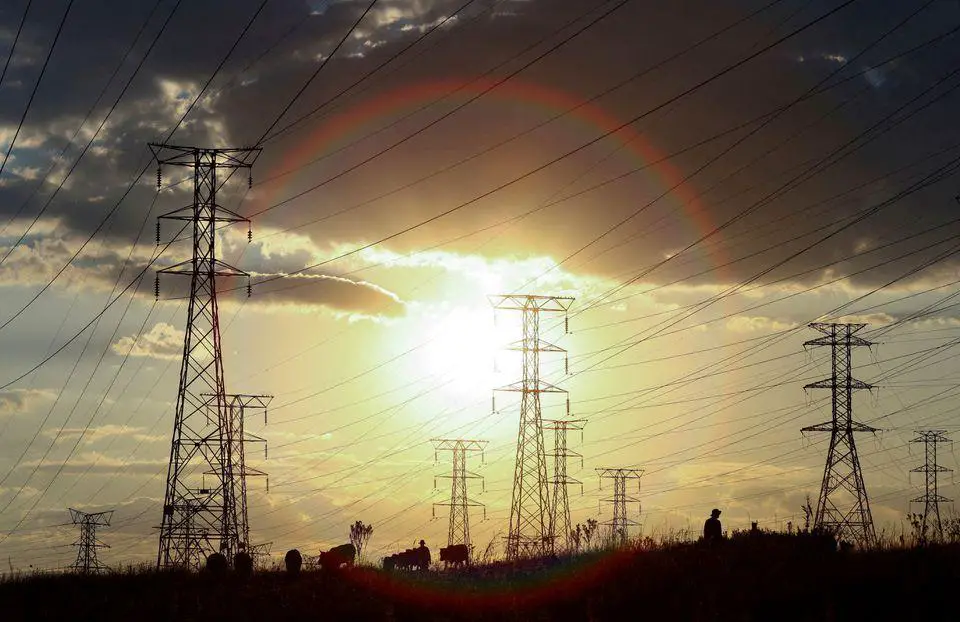
Zimbabwe has been experiencing intermittent power generation shortfalls due to an ageing plant at its Kariba hydropower station and the main coal-driven power generators at Hwange.
According to Crisis 24, Zimbabwe will likely remain susceptible to rounds of load shedding through 2022 and possibly beyond if additional power production capacity is not made available. In mid-June, a circular from Meikles Hotel in Zimbabwe said that they have been operating on generator power for about a week and were now offering guests buckets of hot water to bath with. This is also one of the effects of the increased power cuts evident, although it is a few months apart.
Crisis 24 added that temporary commercial and communications disruptions are possible while load shedding and unscheduled disruptions are taking place; cellular and mobile services could be affected. Traffic disruptions and longer driving times are possible during these periods due to malfunctioning traffic signals. Power outages could also result in the temporary unavailability of essential services such as ATMs and filling stations.

Investing in ETFs or exchange-traded funds is equivalent to investing in all constituents that are part of an index directly.
According to Forbes, the yields or returns generated by ETFs replicate the benchmark index. It gives investors an opportunity to benefit from diversity, flexibility and scope for growth that comes from ETFs being traded on stock exchanges.
An exchange-traded fund (ETF) is a marketable security that tracks an index, sector, commodity, or another asset which can be purchased or sold on a stock exchange the same way a regular stock can.
Zimbabwe became the fifth country in Africa to list an ETF, with South Africa, Nigeria, Kenya, and Egypt also currently trading the instrument.
Zimbabwe became the fifth country in Africa to list an ETF, with South Africa, Nigeria, Kenya, and Egypt also currently trading the instrument.

Because of erratic economic policy, Zimbabwe continues to be the sick man of the Southern African Development Community (SADC) region.…

The ZSE’s 2020 research found that individual Zimbabweans made a meagre amount of contributions to the regional capital market. A few of the obstacles mentioned are a lack of understanding of the investment process and the notion that it is the realm and preservation of the wealthy in society.
According to an article by Mail and Guardian published May 25, 2022, this survey prompted the bourse to launch ZSE Direct, a product that would make access to the market straightforward even for first-time investors.