


Trending
- African trade is growing despite the obstacles
- Why global capital is betting big on Africa’s digital promise
- Kenya posts stronger-than-expected Q1 growth at 5.3% on manufacturing rebound, tourism boom
- China’s new investment rules are about guardrails, not closed doors
- Zanzibar optimistic economic growth will hit 7.5% on tourism boom
- Kenya defies economic shocks to post record $22 billion in tax collections
- Forget South Africa: East Africa now rules in banking industry returns
- Lamu over Tanga: The commercial calculus that cost Tanzania $20bn refinery



The pioneering accelerator programme aims to grow insurance coverage among low-income consumers by investing in innovative solutions in nine African countries. The expanded…

An efficient crypto mining industry can generate more job opportunities in Africa as the demand for miners, blockchain specialists, and technology specialists increases, . This encourages nations to enhance their energy and technological capacities to support crypto operations. These enhancements can considerably benefit other industries and the economy as a whole.
African nations must embrace the chance to become a crypto mining hub. This can aid in the digital economy’s growth, citizens’ financial standing, and the infrastructure for energy production. Consequently, African governments can invest in cryptocurrencies to acquire alternative funding sources for developing renewable and alternative energy sources.

Africa is a strong contender for developing technologies such as blockchain and cryptocurrency owing to the continent’s growing mobile tech adoption rates. Considering the turbulent global financial markets, expensive remittance costs, and restricted banking access, blockchain in Africa offers alternatives to tackle their day-to-day issues.



Data by the World Bank reveals that at least a quarter of the African population…

Recently, many Nigerians trading on the Binance platform complained about initiating or completing transactions.
Some of the affected persons have taken to social media calling out crypto for “targeting Africans, especially Nigerians”, as their accounts have been suspended for reasons oblivious to them.
Some users say that they have been told to contact the Federal Bureau of Investigation (FBI) and New York Police Department to resolve transactions issues, a situation they claim to be absurd.
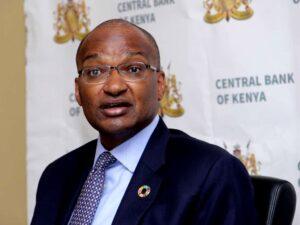
The CBK has also issued circulars to local commercial banks warning them against dealing with cryptocurrencies transactions or face penalties for non-compliance.
The last circular was issued in 2018 and has remained in action up until now.
While delivering the monetary policy announcement where the monetary policy committee retained the base lending rate at seven per cent for the 12th time, Dr Patrick said that their position had not changed on any of the crypto products in the market.

Twitter founder Jack Dorsey appointed four Africans to sit on Btrust (Bitcoin Trust) board on December 15, 2021.
Btrust is an initiative co-founded by Jack and the United States singer, Jay-Z, to deploy 500 bitcoin to develop and foster the currency in Africa and India.
Ojoma Ochai, Obi Nwosu, Abubakar Nur Khalil and South African Carla Kirk- Cohen. There were 7,000 applications interested in the same positions. The application form for board members established a mission to “make bitcoin the internet’s currency.”
Non-Fungible Tokens (NFTs) are the new opportunity for anyone with anything they can monetise and an access to the internet to reap the benefits of minting money on the World Wide Web.
NFTs are “One of a kind” digital assets that can be traded like any other piece of property, but NFTs do not exist in any tangible form. It is possible to think of virtual or real assets as tokens that may be exchanged for tokens.
Therefore, an NFT is a digital title for a piece of content that may be sold on auction sites but is non-returnable because it is unique and irreplaceable. Because of this, its value fluctuates and it is useless as a means of exchange. Cryptocurrency and blockchain are the foundations of NFTs.

The Crypto market in the world is looking ugly.
The bitcoin price fell to a three-month low on January 10, accelerating the slide that started when the Federal Reserve ignited a broad sell-off worth US$300 billion. The bank cautioned that it might move more quickly than previously expected to reverse policy meant to reinforce the economy during the Coronavirus pandemic.
Experts predict that the latest crypto fall will persist for weeks in the Federal Reserve measures continue to be more aggressive.