
Trending
- 2026 is turning out as a defining year in geopolitics, but for whom?
- Bitcoin Surges 20%: How Crypto Holders Are Exploring Cloud Mining Income in 2026
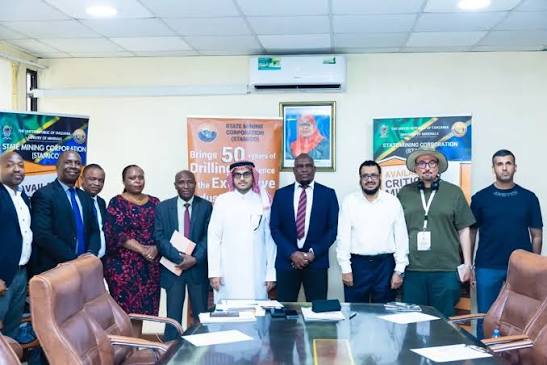
- Saudi Arabia and Tanzania pledge to deepen bilateral trade ties
- Tanzania rewrites its digital investment playbook
- Ethical sourcing boosting demand for Tanzania organic cotton
- DRC deploys 70,000 Ebola vaccine doses in high-stakes trial against deadly Bundibugyo strain
- Kenya’s private sector optimistic on growth despite inflation and geopolitical risks
- AfDB and Standard Bank ink $332 million social bond deal to fund South African SMEs



Geopolitics: Not since the wars in Afghanistan and Iraq reshaped global security after 2001 or, more significantly, since the fall of the Berlin Wall…

An easing of the Gulf crisis is the moment to…

Zhu Ruowan, the Editor, CGTN Global Business, argues that China’s…



One of the many lessons learned from the pandemic is that SMEs need to embrace digital transformation, not just to weather unplanned challenges but because it will help them be more competitive and stable. Digital enablement is not just a means of survival. It is a way for SMEs to conduct business more efficiently, which in turn can empower them to expand their operations and earnings further.
Being nimbler than their big business counterparts, SMEs can quickly rethink their marketing strategies and adopt new technologies to enhance their offerings faster. Digital innovation provides extraordinary opportunities for SMEs. It empowers them to implement new market models, has a greater line of sight across their business, improves traceability, and meet their customers, service providers, and logistics partners, in many instances, all on the same page.
In the digital trading space, solutions such as import/export platforms, automated cargo-tracking and digital reporting of non-tariff barriers can significantly provide efficient cross-border trade levelling the playing field for SMEs. This, in turn, is good for both the customers and communities they serve as well as the continent’s economic growth on a wider scale.

Reliable and affordable telecom services have never been more vital to our national economic and…

Mapping “Adaptech”: introducing a multi-dimensional map of over 70 digital technologies for climate adaptation Climate…

It is obvious that the DRC’s desire to become a member of the EAC is to tap into the benefits of regional trade, i.e. an expanded market of 300 million people, and to increase Foreign Direct Investment (FDI) through its membership in the EAC bloc. DRC’s capital market remains underdeveloped and consists mainly of the issuance of treasury bonds.
There is no stock exchange in the country and only a small number of private equity firms are actively investing in the mining industry. There are hardly any institutional investors in the DRC except for an insurance company and a state pension fund. The Central Bank of Congo (BCC), developed a market for short-term bonds, which are bought and held by local Congolese banks.
The absence of a domestic debt market has meant that the fixed-rate market is limited to government-issued treasury bonds with maturities of up to 28 days traded through commercial banks.
The Vienna World Conference on Human Rights in 1993 was forced to address women’s rights as a human rights issues because of the violence and sexual abuse against women occurring in Yugoslavia at the time.
The Fourth International Women’s Conference was held in Beijing in 1995 made human rights and women’s participation in decision making at all levels key. One of the recommendations was for the countries to have gender desks in the Ministries, Departments and Agencies including Security Services. It cautioned against the specific establishment of Women’s Ministries as these would take gender issues to the periphery as that ministry would be saddled with all matters gender-related.
The conference also discussed the eradication of poverty, women in armed conflict and violence against women.

It is highly discouraged to go to a company directly and purchase a cover as in more ways than one you will be short-changed when the time comes to pay the claim. You will find that the requirements for you to get paid a claim can only be handled by an agent or broker as they will go the extra mile to make sure that you are properly sorted out.
These insurance intermediaries will also advise you on the best insurance company to insure with as they have the knowledge which most likely you do not have. I always point out about those insurance clients whom we once saw knocking on the door of an insurance company whose doors had been closed for good, but were pleading to be let in and purchase a motor insurance cover.
That is the tragedy of not trusting your agent or broker as you might find yourself holding onto a useless piece of paper known as a motor insurance sticker.