
Trending
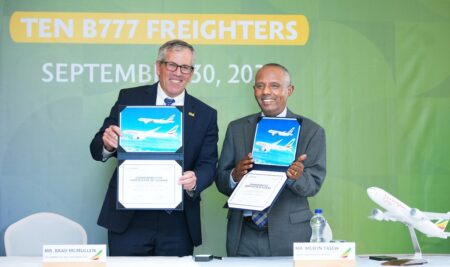
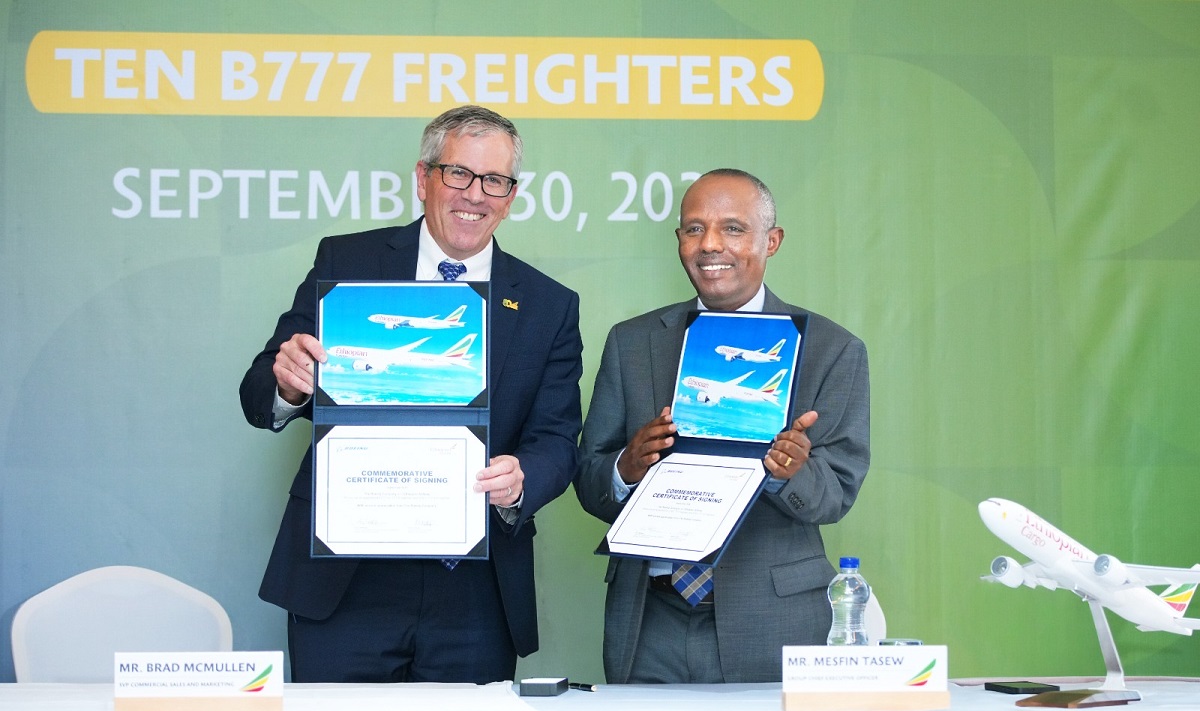
- Ethiopian Airlines bets big on Boeing freighters in $5 billion cargo fleet expansion
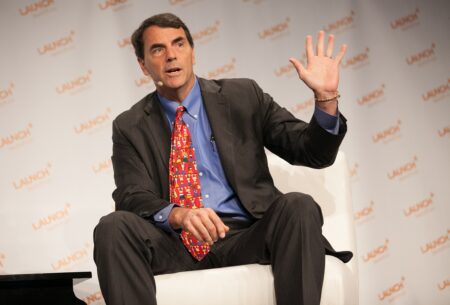
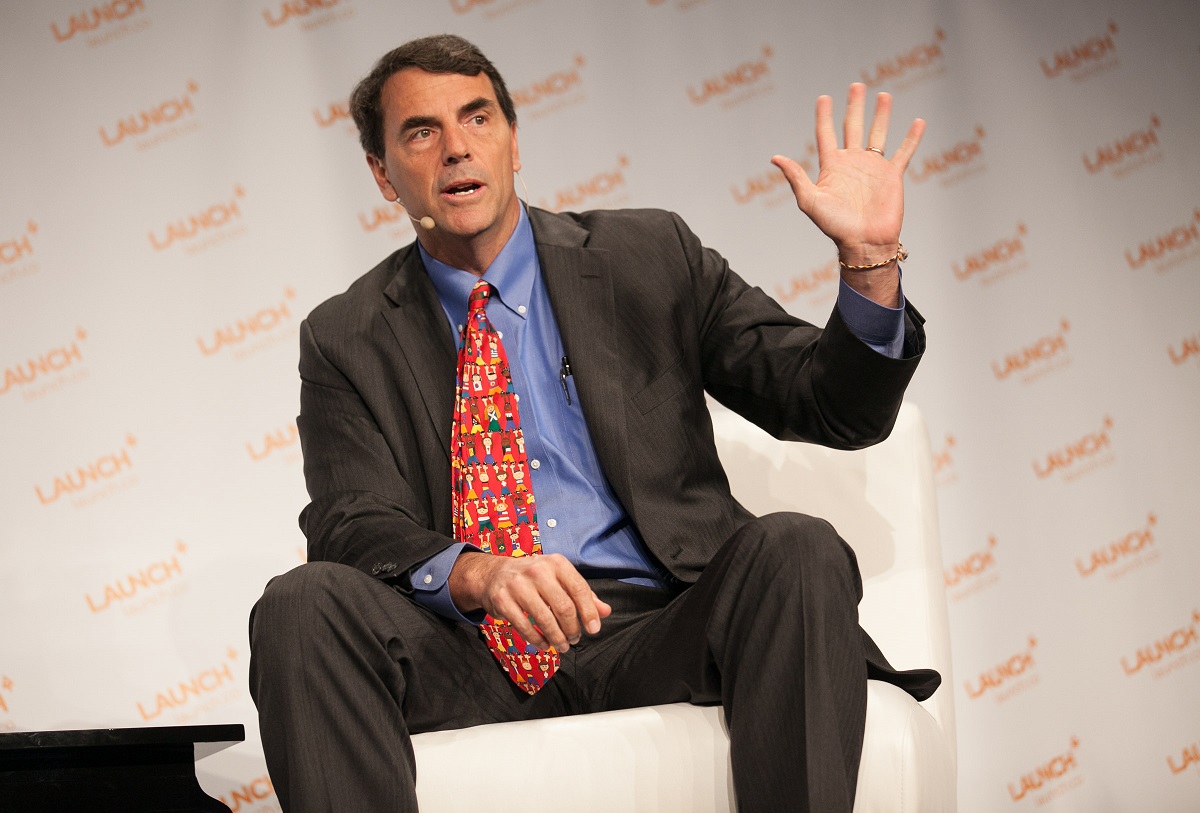
- Silicon Valley’s Tim Draper backs Nairobi blockchain festival, sees Africa as next digital frontier
- Dangote breaks ground on $16bn Lamu refinery as East Africa seeks fuel independence
- Gulf and African states meet in Dar to rewrite rules of labour migration
- African governments drive new forest finance progress as global report warns funding globally must scale faster
- Fine Spinners eyes Kenya’s Agoa-backed apparel supply chain with $5m plant
- Why young Kenyan investors need to stop treating the stock market like a betting slip
- Tanzania tax reforms mandate VAT refunds to under 30 days


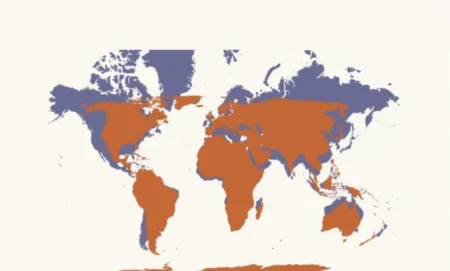
For generations, millions of people have looked at world maps that make Africa appear smaller than it really is. A recent United Nations (UN)…

Here’s a question worth sitting with: how much growth are…
Geopolitics: Not since the wars in Afghanistan and Iraq reshaped…


Insurance brokers in Kenya, as well as insurance agencies, can negotiate terms requiring insurance coverage under credit terms, as happens in the banking industry. The article seems to go all out to malign the insurance agents’ names by saying they are the ones owing the billions.
This gives the impression there could be a hidden motive in the penning of the article. The Kenyan insurance sector is highly regulated, and a working regulator should ensure that such cases are unheard of with licensed insurance agents in Kenya.
According to the Insurance Act Cap 487 Section 156 talks about insurance premiums and the manner in which they are supposed to be remitted to the insurer. Insurance brokers in Kenya are supposed to remit their premiums immediately after they receive the same from the client. Other intermediaries have a certain window within which they are supposed to remit the premiums and this goes for all the licensed insurance agents in Kenya.

This year’s progress has been threatened by Russia’s invasion of Ukraine, which has caused a global economic shock that has hit Africa at a time when the government’s policy space to respond to it is small to nonexistent.

Ahead of the US-Africa Summit in December, the Russia-Africa Summit next year and as new…
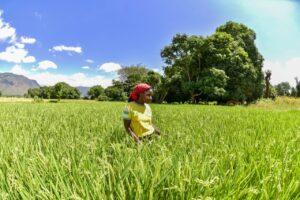
Meanwhile, Africa is looking to take pre-emptive action to avert the inevitable food crisis.
The United States has pledged support to help the continent grow and distribute more food. The aid will come through the African Development Bank (AfDB). The Bank is looking to fund a significant increase in food production in an effort to ward off the food crisis wrought by the Russia-Ukraine war.
In May this year, the AfDB set up a US$1.5 billion African Emergency Food Production Facility. It was established with the aim of supporting some 20 million smallholder farmers produce more food and to do so more sustainably.

The connection bypass road launched by the five presidents of the East African Community (EAC) has set precedence in the importance of neighbouring countries undertaking joint projects to improve transport infrastructure between and amongst themselves.
This point is underlined in the World Bank report; “Patterns of shipping, transshipping, and distribution mean that trade depends not only on the quality of infrastructure in the two trading countries but also of that in key third party countries on the trading network.”
The point is that while two countries can come together to improve transport infrastructure, it is not enough because trade, in many cases, goes much further than the border between two countries.
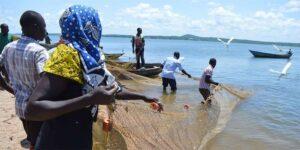
Lake Victoria’s fisheries support more than 3 million livelihoods and bring in US$500 million in revenues annually.
Nile Perch is the main fish caught in Lake Victoria. Fish maw – the air sack that aids the Nile Perch in floating and a Chinese delicacy – has been a major export source. Statistics from the Uganda Ministry of Agriculture indicate an increase in fish maw exports earning from US$27m in 2015, to US$31m in 2016, US$48m in 2017 and US$52m in 2018. These earnings exclude the earnings from Nile Perch and its eggs.
However, the lake has been invaded by water hyacinth – the floating, green mats of waxy leaves with purple blossoms – depriving the waters below of oxygen which makes it hard for aquatic life to survive.
That, plus overfishing which occurs when fishermen use undersized nets that catch fish before they reach maturity, rapid population growth, and pollution by wastewater, agro-pesticides and fertilisers threaten the future of fishing in Lake Victoria.