




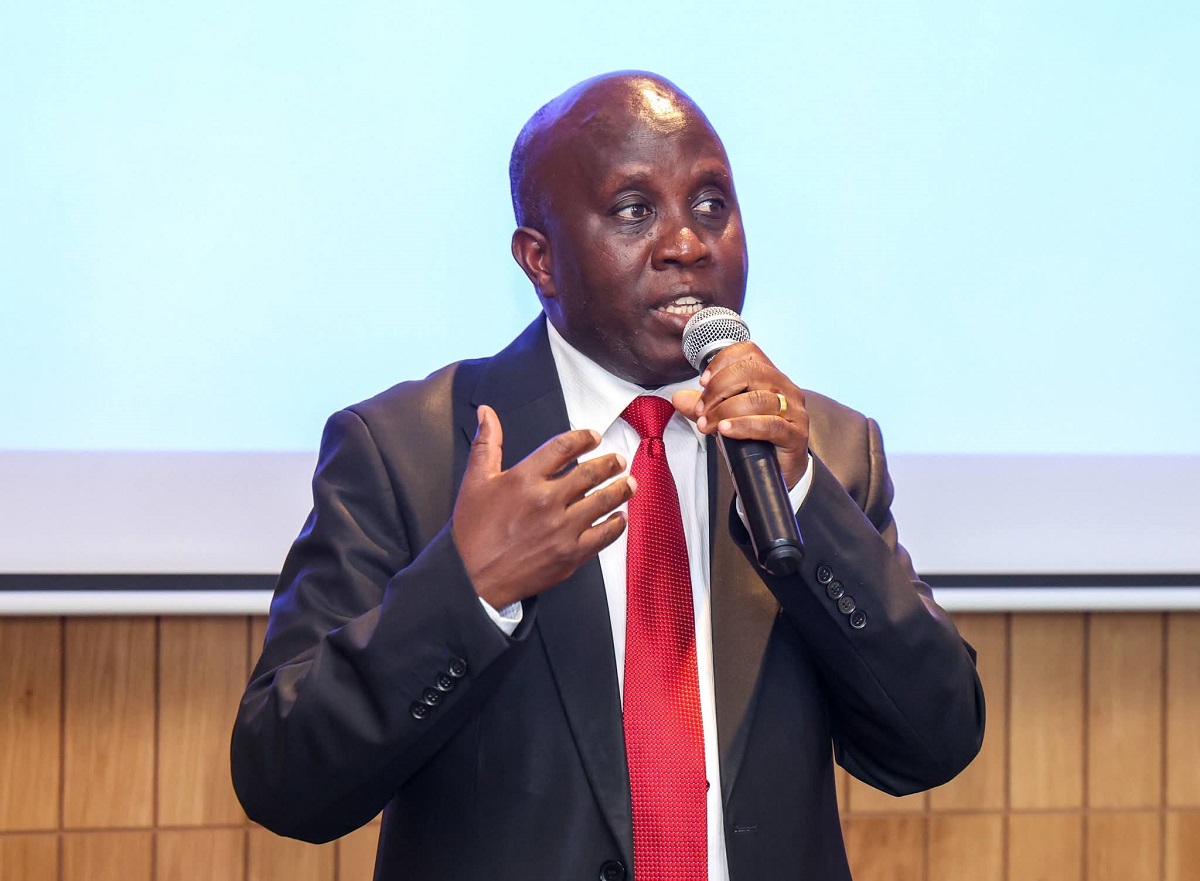
- Nairobi is fast evolving into one of Africa’s best destinations for tech investors, backed by a $250 million core infrastructure push, green energy access, and data policy reforms.
In February this year, stakeholders in Kenya’s tech industry met in a room overlooking the Nairobi National Park for what seemed like a routine exercise: validating the National Data Governance Policy. This routine exercise could not have come at a more opportune time as the country aligns its core building blocks to tap into the next wave of Artificial Intelligence (AI)-powered growth.
As thousands of delegates prepare to convene in Nairobi from 19-21 May 2026 for the AI Everything Kenya summit, global investors will be scouting for the next big thing in Africa’s AI ecosystem, which is projected to exceed $3 billion in value by 2030.
For venture firms, development finance institutions, private equity entities, and innovators, AI Everything Kenya is structured to unfold across two major venues: An Inclusive AI Summit at the Sarit Expo Centre, in Westlands, followed by the AI Everything Kenya Expo and conference at the Kenyatta International Conference Centre, at the heart of Nairobi.
The three-day showcase is designed as a high-impact convergence of thought leadership, investment dialogue, and real-world AI use cases, demonstrating the continent’s rising influence in tech innovation.
“Africa’s tech ecosystem is vibrant and purpose-driven. Instead of replicating legacy models, we are building new ones through innovations in food systems, healthcare, education, and governance. Every innovation serves the mission to uplift lives, bridge gaps, and build futures,” states Ambassador Philip Thigo, President William Ruto’s Special Envoy on Technology, on the summit’s portal welcoming participants to Nairobi.
This global forum aligns with the Government of Kenya’s bold vision to position the country as the preferred technology and innovation centre in Africa. Through strategic investments in digital infrastructure, policy reforms, and innovation, Kenya is cementing its position as a gateway for global companies seeking to tap into Africa’s vibrant tech-enabled industry.
Kenya: A hub of tech-powered investments
Nairobi, in particular, has emerged as a hub for tech-powered investments, backed by a dynamic startup ecosystem, strong mobile penetration, internet access, and progressive regulatory frameworks.
Authorities in Kenya have been wooing investors, showcasing the country’s potential to attract investments. At the just concluded Kenya International Investment Conference (KIICO) held on 25-27 March, Ambassador Thigo observed that the forum, “reinforced the importance of pro-innovation policies that crown investment, enable experimentation, and build trust, while positioning Kenya not only to develop local talent, but also to attract global talent, diaspora expertise, founders, and researchers into one dynamic innovation ecosystem.”
A closer look at Kenya’s investment in AI infrastructure shows a strong proposition. Nairobi is investing between $250 million and $300 million in AI infrastructure, including data centres, compute infrastructure, and research labs. These investments, coupled with a pipeline of venture capital targeting AI-powered startups, is placing Kenya at a vantage point in tapping Africa’s $3 billion AI market potential.
Currently, Kenya enjoys an electricity grid that is overwhelmingly generated from green sources, a factor that sees the East African country stand out from competing destinations for global capital. A stable energy supply is vital in training large language models and running inference at scale, given that data centres come with heavy electricity bills. Kenya’s energy mix is poised to be one of the country’s decisive differentiators.
“What separates Kenya’s proposition from other markets is its unparalleled energy advantage,” reported a KIICO 2026 roundtable summary. “The country’s electricity grid is overwhelmingly powered by renewable sources, offering a stable, clean, and reliable energy supply critical to powering the energy-intensive AI compute economy”.
Across Africa, economies are tapping geothermal, hydro, wind, and solar, creating some of the greenest grids and competitive industrial electricity tariffs. And this push is paying dividends. For instance, iXAfrica Data Centre, argualbly East and Central Africa’s largest hyperscale, carrier-neutral, and AI-ready facility, has been selected by tech heavyweight, Oracle, as the host partner for the Oracle Cloud Infrastructure (OCI) in Nairobi.
iXAfrica Data Centre is built to global cloud standards with high-density capacity, resilient power architecture, and proximity to key submarine and national connectivity routes. “We are delighted to be in execution mode to bring OCI to Kenya,” said Snehar Shah, CEO of iXAfrica. “With this collaboration, iXAfrica is leveraging the renewable energy, talent, and abundant submarine and national connectivity available in our market”.
Nairobi’s strategic significance extends beyond a single deployment. Government-backed push to establish data centres within Special Economic Zones, aligned with renewable energy planning, highlight how Kenya seeks to optimise its edge on energy into scalable, bankable AI infrastructure. For Western investors facing ESG mandates and tough emission targets, the ability to power AI systems with clean energy is not a nice-to-have, but rather an increasingly non-negotiable must-have.
Kenya’s data policy reforms
If energy is the fuel of AI, certainly, data is its raw material. And here, Kenya is uniquely positioning itself, with the draft National Data Governance Policy, which is set for roll-out starting 1st July 2026. This policy guideline sets up a framework that addresses core issues for investors, such as, the ownership of data, access rights, and day-to-day usage rules.
“Data has become one of the country’s most strategic assets,” highlighted Eng. John Tanui, the Principal Secretary for ICT and the Digital Economy, at the February policy validation forum. He added: “To unlock its full socio-economic value, we must build a harmonised, inclusive, and ethical framework that treats data as a shared national resource while safeguarding citizens’ rights”.
Kenya’s data governance policy is based on principles that sync with investor’s wish list: data standardisation, single sources of truth, data sovereignty, human-centric governance, secure sharing, and transparency. Critically, it seeks to address emerging risks associated with AI, cloud computing, and Internet of Things (IoT) by introducing adaptive governance mechanisms, risk-based audits, and stronger oversight of automated decision-making systems.
To oversee its implementation, Kenya plans to establish a National Data Governance and Emerging Technologies Council, which will be managed by a Data Governance Office under the leadership of a Chief Data Officer. This Council will be tasked with offering strategic direction, aligning data initiatives with national priorities, and holding both public and private actors accountable.
For venture capital and private equity firms evaluating AI investments, this policy helps mitigate risks. In markets where data rules are opaque or unenforced, investors often run into regulatory directives that could wipe out valuations overnight. Kenya’s approach of setting the rules before the technology scales, offers predictability.
Full-stack AI: From compute to talent
The KIICO 2026 roundtable, convened by the Office of the Special Envoy on Technology and KenInvest in collaboration with the American Chamber of Commerce, brought together about 50 senior stakeholders to share insights on “full-stack” approach to AI development.
For Kenya, that stack cuts across six levels: energy and compute infrastructure, data systems, research and model development, applications, governance, and talent cultivation.
Perhaps the most telling signal from this forum was a shift in language. Rather than chase fragile “unicorn startups,” which are the high-growth models that characterised the 2021 venture boom, the participants advocated for building resilient, locally grounded “camels”, that is, tech ecosystems designed for durability and tailored to serve African needs.
This approach is poised to give rise to sovereign data centres, or localised AI models that accommodate local languages and bandwidth constraints. What’s more, they’ll be interoperable with existing digital public infrastructure, better referred to as “Kenya Stack”, to support an enduring AI ecosystem.
Additionally, the forum highlighted talent as a core pillar in Kenya’s tech boom. But, the roundtable cautioned that overreliance on foreign experts could limit long-term growth. It, therefore, urged for measures to build a pipeline of local AI talent through education reforms, skills development, and public sector training.
Key proposals to achieve this goal include aligning university curricula with evolving industry needs while also stepping up AI literacy push among public servants. This initiative will also help open pathways for Kenya’s diaspora community to play key roles through fellowships, residency, and nomad visa programmes.
“The next three years will be critical in determining how AI investments are distributed across the region,” participants stressed, warning that Kenya must move quickly to secure its place in the fast-evolving global technology landscape.
The venture capital alignment
If policy and infrastructure offer the supply side of the AI economy, venture capital provides the demand signal. And here, Kenya seems to be outperforming its peers.
For instance, in February 2026, Kenya-based venture firm Delta40 announced a $20 million raise to expand financing for early-stage startups across Africa, with backing from the Soros Economic Development Fund and the Rockefeller Foundation. The fund attracted 54 investors from 13 countries, including development finance institutions, foundations, family offices, and, significantly, 25 startup founders.
Delta40 offers cheques of between $100,000 and $500,000 at the idea-to-seed stage, with follow-on funding, focusing on energy and mobility, agriculture and food systems, and financial services. The firm plans to apply AI tools across its portfolio. Founded in 2021, it has backed 16 companies, including logistics platform Lori and solar fintech SunFi, and operates venture studios in Kenya and Nigeria.
The significance of this raise is huge. Delta40’s model, which fuses capital with operational support through a venture studio structure, reflects a broader shift in African startup funding toward models that help reduce early-stage failure rates. In markets where many founders are first-time entrepreneurs and ecosystem support is uneven, hands-on backing can be all the difference between scaling and closing shop.
For the AI economy specifically, the mix of commercial and concessional capital is vital. Development finance institutions and foundations are blending return targets with growth goals, recognising that sectors such as energy, agriculture, and mobility, where AI has transformative potential, are also capital-intensive. Structured financing that includes debt and grants can extend runway and improve survival odds.
AI use cases in Kenya: A look at M-PESA
No assessment of Kenya’s AI economy ecosystem is complete without examining fintech industry trailblazer M-PESA. Now at 19 years since its launch, this fintech platform is undergoing a major upgrade to process transactions at scale.
By end of this year, M-PESA is projected to double its peak capacity from 4,000 transactions per second (TPS) to 8,000 TPS, with an interim target of 6,000 TPS already achieved in April 2026. In context, the platform processed approximately 616 TPS back in 2015.
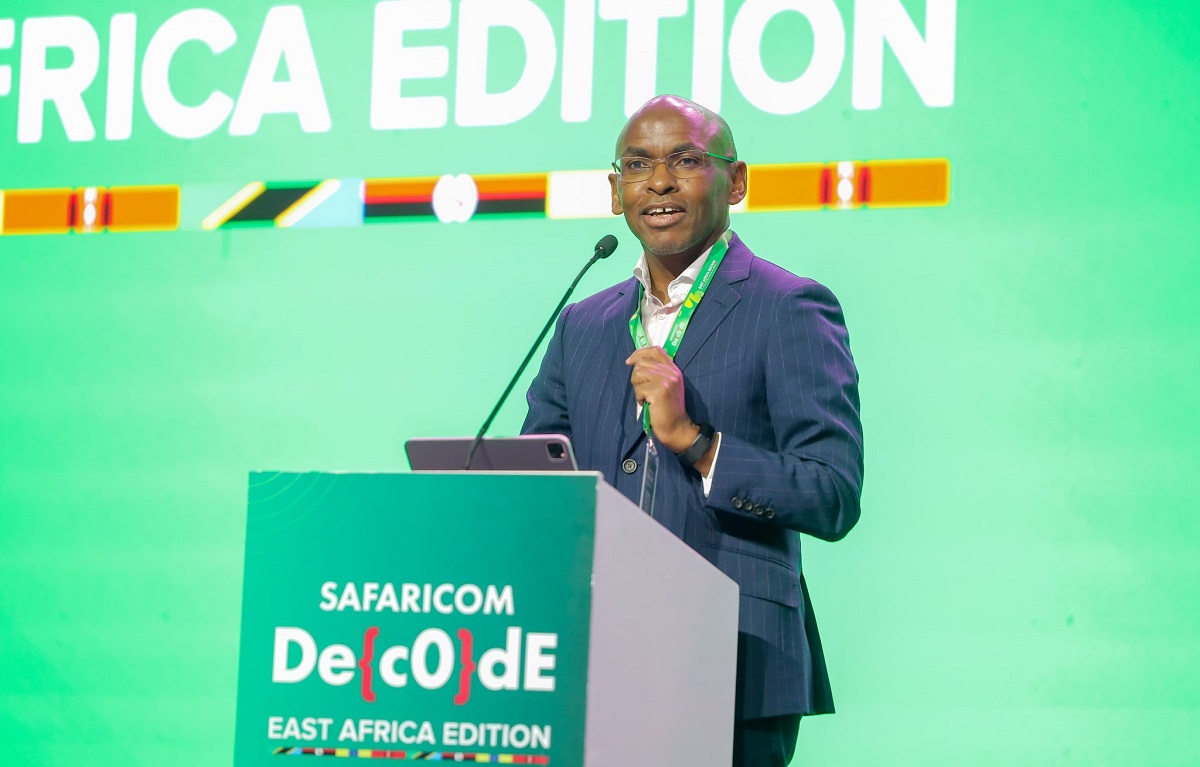
During this year’s edition of Safaricom PLC’s Decode summit, a forum that highlighted the transformative role of AI in shaping the future of technology, Chief Executive Dr. Peter Ndegwa said the telco is tapping AI to enable smarter customer experiences through tools such as Zuri, enhance fraud detection, while also creating personalized offers tailored to individual needs.
“By 2027, we anticipate unlocking $7 billion in new opportunities powered by AI while improving efficiency and productivity across the business,” said Dr. Ndegwa.
M-PESA’s ongoing transformation showcases Kenya’s ability to build and operate digital infrastructure at a scale that rivals developed markets. The lessons learned in high-availability design, and in managing thousands of integrations are transferable to AI systems that require real-time inference and low-latency responses.
Moreover, the “Kenya Stack” concept of rolling out interoperable digital public infrastructure goes far beyond payments. Today, it covers identity systems, data exchange frameworks, and service delivery innovations. With the backing of the proposed National Data Governance Policy, these components have the potential to create an environment where AI models can be trained on high-quality, standardised, and legally accessible data.
The road to AI Everything Kenya
When AI Everything Kenya summit opens on 19th May, delegates will be arriving in a country that has already secured hyperscale cloud infrastructure. Nairobi is also finalising a national data governance framework, and has demonstrated its ability to operate digital platforms at a scale.
The question that remains is how East Africa crown jewel can move forward at scale amid rising competition. “If Kenya follows through,” observed one analysis of the data governance policy, “2026 may be remembered as the year the country stopped treating data as a by-product of bureaucracy and started using it as new gold fuel for better services, smarter policies, digital innovation, and a more empowered citizenry”.
For global investors, Kenya is carving out a niche for tech investments, positioning itself for a slice of billion dollar opportunities in the next wave of AI value creation. The AI Everything Kenya summit will show how far that proposition has travelled as the world watches.
Read also: The Global Kenyan: How Diaspora Professionals Are Arbitraging 2026 Tech Salaries