

Trending
- 2026 is turning out as a defining year in geopolitics, but for whom?
- Bitcoin Surges 20%: How Crypto Holders Are Exploring Cloud Mining Income in 2026
- Saudi Arabia and Tanzania pledge to deepen bilateral trade ties
- Tanzania rewrites its digital investment playbook
- Ethical sourcing boosting demand for Tanzania organic cotton
- DRC deploys 70,000 Ebola vaccine doses in high-stakes trial against deadly Bundibugyo strain
- Kenya’s private sector optimistic on growth despite inflation and geopolitical risks
- AfDB and Standard Bank ink $332 million social bond deal to fund South African SMEs



East Africa has become a key frontier for economic expansion so as to have a balance of power against the West and as a…

The market share of Tanzania tea is gaining ground globally.…

People have been told for a long time that the…



Technology company Little has announced plans to construct a commercial office building in Lavington, Nairobi,…

Johnson & Johnson and the Ministry of Kenya have signed an MoU to facilitate access…

Kakuzi Plc’s inaugural Hass Avocado export cargo to China has been sold-out, paving the way…
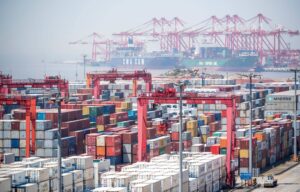
For historic reasons, bilateral and regional trade in Africa has been hampered by trade routes designed for export away from the continent rather than for facilitating intra-Africa trade. Obstacles include long distances, inadequate transport services, and inefficient institutional and transit regimes.
In many landlocked African countries, economic centres are located several hundred kilometres away from the closest seaport. Overcoming geographic constraints or the lack of economies of scale caused by small transportation volumes is key for all countries, particularly transit countries. A renewed focus on the efficiency of transport and logistics services is long overdue, given that many countries retain policies that favour closed, small, and inefficient services markets.
By committing to no new barriers to services trade during the progressive liberalization process, at least in the five priority sectors—business, communication, financial, transport, and tourism services, and with declining trade costs—the transport sector is bound to expand.

While massive and spectacular infrastructure projects seem to point that East Africa’s largest and most vibrant economy remains in the right direction, increasing state debt, soaring fuel and commodity prices and high unemployment threaten to water down the economic footprint of Kenya’s fourth president Kenyatta.

KenGen and Toshiba Energy Systems & Solutions Corporation have concluded a memorandum of understanding (MOU),…