
Trending
- VALR sets sights on East Africa as blockchain moves deeper into Africa’s financial system
- The cost of the data gap: Why Kenya’s lenders can’t afford to miss the full picture
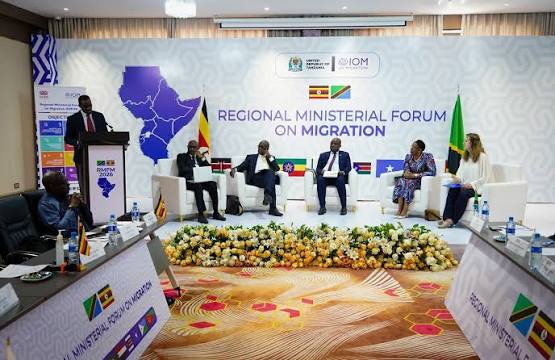
- Tanzania takes EAC labour migration helm as regional rules face overhaul
- 2026 is turning out as a defining year in geopolitics, but for whom?
- Saudi Arabia and Tanzania pledge to deepen bilateral trade ties
- Tanzania rewrites its digital investment playbook
- Ethical sourcing boosting demand for Tanzania organic cotton
- DRC deploys 70,000 Ebola vaccine doses in high-stakes trial against deadly Bundibugyo strain



Unlike conventional bonds that generate returns through fixed interest payments, Sukuk generates returns through the ownership of underlying assets, thereby avoiding the prohibitions of…
![Oil-extraction-in-Angola. [Photo: Financial Fortune]](https://theexchange.africa/wp-content/uploads/2022/10/ANgola-300x200.jpg "Sectors to revive Angola’s heavily indebted economy")
Angola is also rich in other minerals like iron ores, diamonds, gold, marble and phosphate deposits. The embassy of Angola’s economic outlook indicates that from the 1950s through 1975, iron ores were explored in provinces such as Malange, Bié, Huambo, and Huíla, and average output reached 5.7 million tonnes per year between 1970 and 1974.
The most explored minerals were exported to Japan, Germany, and the United Kingdom, earning Angola US$50 million a year.
Angola’s phosphate deposits are estimated at 150 million tonnes, located in the provinces of Cabinda and Záire. These resources have so far been unexplored. In Southeastern Angola in the provinces of Namibe and Huíla, marble, granite, and quartz reserves abound. Marble is especially consumed in the local market, while black granite is on demand and exported to United States and Japanese markets.
As Africa’s role in the global economy continues to garner…



The country is nonetheless instituting economic reforms aimed at empowering the private sector and attracting foreign investment in abid to diversify the economy. Hopefully, this will create new jobs especially for the youth who are currently facing enormous unemployment in the wake of the pandemic due to the country’s reliance on tourism.
Notably, other than tourism, Cape Verde’s economy is very much service-oriented with commerce, transport, and public services accounting for three-fourths of the country’s GDP.
Since the country’s economy is heavily dependent on conditions in the eurozone countries, Cape Verde’s economic recovery is hinged on foreign aid as well as remittances. Currently, One UN is assisting Cape Verde to develop a national trade strategy designed to enhance its productive capacities.

Having into consideration the epidemic COVID-19 worldwide situation, the Angolan executive decision to extend the…

This diploma has the goal of completing the regulatory programme carried out by the Angolan…

Technological advancements have seen a positive growth trend on the African continent. Various big tech…
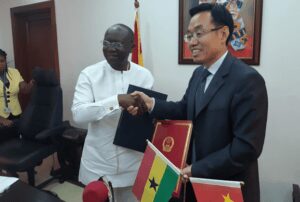
The Chinese government offered Ghana a grant of $42.62 million for economic and technical projects…

Etion limited aims to grow its client network and sell high-tech digital solutions during the…