
Trending
- VALR sets sights on East Africa as blockchain moves deeper into Africa’s financial system
- The cost of the data gap: Why Kenya’s lenders can’t afford to miss the full picture
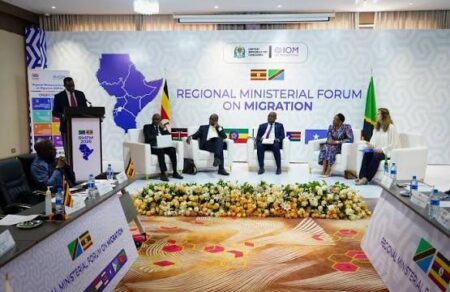
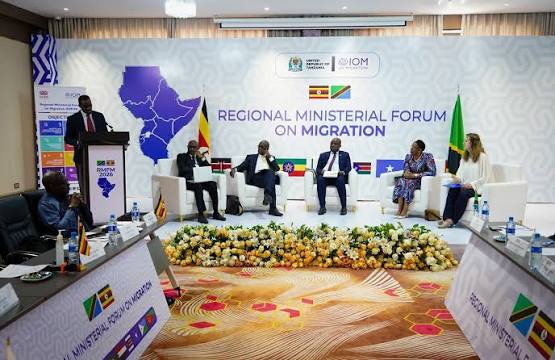
- Tanzania takes EAC labour migration helm as regional rules face overhaul
- 2026 is turning out as a defining year in geopolitics, but for whom?
- Saudi Arabia and Tanzania pledge to deepen bilateral trade ties
- Tanzania rewrites its digital investment playbook
- Ethical sourcing boosting demand for Tanzania organic cotton
- DRC deploys 70,000 Ebola vaccine doses in high-stakes trial against deadly Bundibugyo strain



Side hustles are everywhere these days.People do freelance work, gigs on the weekends, or delivery jobs at night to “make extra money.” But here’s…

2024 Grantmakers Summit brought together 159 organisations from the East…

Pullman Hotel Nairobi will begin operations in June 2024 Kenya…


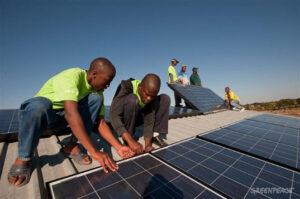
However, all efforts have been directed in that sector to try and make it greener and cleaner. Among consumers, a major shift is now being witnessed with most of the industries investing in clean energy sources that are both affordable and sustainable.
Such initiatives have made Kenya be rated among the top countries that are implementing their nationally determined contributions that seek to cut greenhouse gas emissions in the country by 32 per cent by 2030.
The latest industry to have made noted efforts to transit to clean Energy is Bamburi Cement Factory situated in Bamburi Mombasa.
If you received your salary on the 1st of January in ZWL, you would struggle to pay for goods and services in February. This volatile situation results in consumers seeing value eroded from their bank balances at an astonishing rate.
We see wages struggle to keep up with inflation, a phenomenon similar to 2008. Most people buy USD from the black market to retain some semblance of value in these balances.
Zimbabwe has a currency crisis, and the Authorities seem to be struggling to deal with it. The rate at which the Zimbabwe dollar is depreciating signifies the state of the economy. Much of this is being blamed on the countries foreign currency auction system.
The Vienna World Conference on Human Rights in 1993 was forced to address women’s rights as a human rights issues because of the violence and sexual abuse against women occurring in Yugoslavia at the time.
The Fourth International Women’s Conference was held in Beijing in 1995 made human rights and women’s participation in decision making at all levels key. One of the recommendations was for the countries to have gender desks in the Ministries, Departments and Agencies including Security Services. It cautioned against the specific establishment of Women’s Ministries as these would take gender issues to the periphery as that ministry would be saddled with all matters gender-related.
The conference also discussed the eradication of poverty, women in armed conflict and violence against women.
Apart from the absence of a public strategy for the continent, there is a lack of coordination among various state and para-state institutions working with Africa.
Despite the growth of external players’ influence and presence in Africa, Russia has to intensify and redefine its parameters. Russia’s foreign policy strategy regarding Africa has to spell out and incorporate the development needs of African countries.
Unlike most competitors, Russia has to promote an understandable agenda for Africa: working more on sovereignty, continental integration, infrastructure development, human development (education and medicine), security (including the fight against hunger and epidemics), normal universal human values, the idea that people should live with dignity and feel protected.
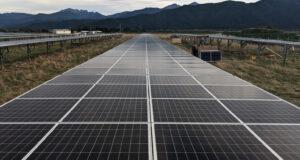
The South African solar photovoltaic (PV) market is increasing exponentially.
Solar Power Market outlook expects the solar market to register a CAGR of over 10 per cent from 2021 – 2026, reaching an installed capacity of more than 3.6 GW by 2026, up from 1.48 GW in 2019.
Solar power production in South Africa comes when the country is aligning to reduce carbon emissions through a transition from coal to other clean energy sources. This step is not an easy fit.
Data by the World Bank Group reveals that Kenya’s electrification rate currently stands at 70…