
Trending
- VALR sets sights on East Africa as blockchain moves deeper into Africa’s financial system
- The cost of the data gap: Why Kenya’s lenders can’t afford to miss the full picture
- Tanzania takes EAC labour migration helm as regional rules face overhaul
- 2026 is turning out as a defining year in geopolitics, but for whom?
- Saudi Arabia and Tanzania pledge to deepen bilateral trade ties
- Tanzania rewrites its digital investment playbook
- Ethical sourcing boosting demand for Tanzania organic cotton
- DRC deploys 70,000 Ebola vaccine doses in high-stakes trial against deadly Bundibugyo strain



Side hustles are everywhere these days.People do freelance work, gigs on the weekends, or delivery jobs at night to “make extra money.” But here’s…

2024 Grantmakers Summit brought together 159 organisations from the East…

Pullman Hotel Nairobi will begin operations in June 2024 Kenya…



When exports receipts increase it means from the definition given that the country that pursues this strategy will find itself in the desired position where it earns more than it spends.
This in the long run will lead to the country becoming less reliant on balance of payments support from multilateral lenders and repaying its debt obligations.
For a country like Zimbabwe, it is imperative that the southern African country pursues this strategy as the increased foreign exchange receipts will provide desperately needed foreign currency and monetary stability.

It further explains that the RCF disbursement will continue to help address Tanzania’s urgent balance of payment needs arising from the Covid-19 pandemic.
The money will also serve to provide Tanzania with concessional resources needed to take measures to mitigate the severe socio-economic impact of the pandemic.
Tanzania’s economy is heavily dependent on the tourism industry and as yet, the IMF cautions that travel services receipts and travel arrivals continue to remain below pre-pandemic levels.
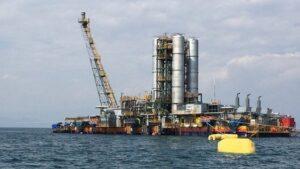
Extracts from Lake Kivu are sustainable as it would take centuries to exhaust the gas…

Kenya Insights reported that the ship (MT Jag Prarena) docked at the Port of Mombasa on December 30 and was offloaded for nearly three days. Four other vessels that had gone through the legal importation process we kept at bay, incurring approximately Ksh100 million (US$88 million) in demurrage charges.
OMAK said that Gulf had imported the petrol contrary to the petroleum act 2019, with the importation and offloading of the cargo being done outside the Open Tender System (OTS).
The act prohibits private imports of refined petroleum products using state-owned common user facilities.

In the first quarter of 2021, Egypt’s unemployment rate was at 7.4 per cent which marked a 0.1 decrease and a 2.3 per cent decrease during the same period in 2020.
According to CAPMAS, Egypt’s labour force in Q2 was estimated to be 29.115 million individuals in comparison to 29.284 million individuals in the first quarter which was a decrease of 0.6 per cent.
In urban areas, the labour force is estimated to be around 12.981 million persons while in rural areas it is estimated to be 16.134 million persons. The total number of females was recorded as 4.882 million individuals.
In the first six months of the year, Kenya’s food imports had increased to sh103.34 billion. The figures collected by the Kenya Revenue Authority (KRA) showed that the food imports were sh12.35 billion more than the amount spent in the same period in 2020.
According to data from the national treasury, import expenditure increased by 29 per cent in the third quarter of 2021. China is the most significant contributor of Kenyan imports accounting for 31.6 per cent of the total bill from the Asian continent.
This is the fastest growth in the food import bill since a 60 per cent jump recorded in 2016 when the bill stood at sh82.83 billion. The exponential increase has been linked to the growing popularity of digital trading, allowing retailers and consumers to order and ship food and other commodities directly.