

Trending
- Africa Blockchain Festival ignites a new dawn for African innovation
- Africa’s gaming market set to quadruple to $4 billion, defying global slowdown
- Tanzania throws its bond market wide open to the global investors
- VALR sets sights on East Africa as blockchain moves deeper into Africa’s financial system
- The cost of the data gap: Why Kenya’s lenders can’t afford to miss the full picture
- Tanzania takes EAC labour migration helm as regional rules face overhaul
- 2026 is turning out as a defining year in geopolitics, but for whom?
- Saudi Arabia and Tanzania pledge to deepen bilateral trade ties


Sustainable Agriculture Farming Practices have been identified as the only way to ensure food security in the future Crop Life International launched its flagship…
Expensive loans remain a significant issue across populations engaged in…
Sustainable agriculture employs 65-70 percent of Africa’s labour force. Only…

There is a lot of hype around the Zimbabwe Stock Exchange (ZSE). For instance, it…
On a spiritual level, the fracturing of the relationship between the people and the land as urbanisation kicked in with a vengeance is causing lasting and severe damage to the environment and the population’s food security.
The curious thing to a British observer is that nearly all of the people of my age (more than 50 years!) whom I know and who are at the top of their professions in finance, government, trade, hospitality or retail are also…..farmers.
In fact, I know hardly anyone who came to the big city seeking an escape from rural ways who is not now farming in the village or on the outskirts of their city. Many times I see them a good deal more excited about their crops than they are about their balance sheets.
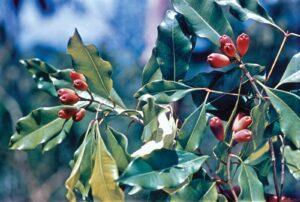
The processing factory set up by Indesso may propel Tanzania to become the largest clove oil producer in Africa.
Aloyce Elia Kibiriti, the Chairman of the Msasa IBC village, said that representatives from Indesso camped in the area and chose their village to construct the proposed clove leaves-to-oil producing factory significantly for export to Indonesia.
Chairman Kibiriti added that they had already secured land for the project, saying it would create employment for the farmers who lost their farms after creating the Derema Conservation Corridor.
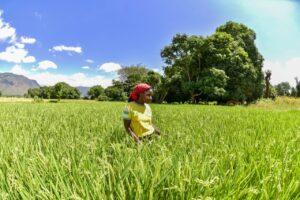
With so many more mouths to feed every year, the World’s ambitious Sustainable Development Goals, particularly on poverty eradication and ending hunger, seem further away than ever before.
The trend is global, and on October 16, 2021, the UN admitted and warned that the global fight against hunger is being lost.
With the warning, the UN called for action to improve food security for the world’s most vulnerable people, African coming on top of that list. For a place that relies so heavily on substantial farming for a livelihood, Africa faces a most daunting reality, clear forests to farm, lose potential output.
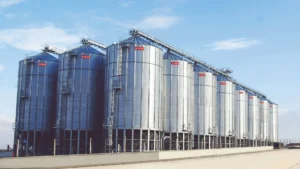
The Tanzania Cereals and Other produce Board (CPB) reported that the grain stores in Juba and Lubumbashi were already experiencing a vibrant business environment. They also expected the Mombasa facility to outperform the two.
According to the 2019 Statistics, Tanzania exported more than 97,000 tonnes of maize. This factor opened the country to the opportunity of launching its grain surplus scheme with the Southern Agricultural Growth Corridor of Tanzania (SAGCOT).
SAGCOT was established in 2010 to create a transformed and economically viable agricultural sector in Tanzania that protects food security, enhances environmental sustainability, and improves livelihoods. The Agricultural growth corridor uses 350,000 hectares in the fertile southern islands of Tanzania to grow maize, wheat, paddy, sorghum, cassava, millet, beans, bananas and sweet potatoes.
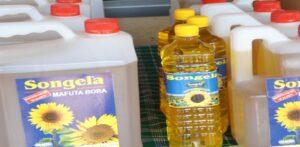
The programme aims at empowering extension officers who would, in turn, train farmers through expert guidance. Chemba district targets to produce 100,000 tonnes of sunflower in the 2022 season to increase the production of edible oil in the country.
President Samia’s administration has plans to improve cotton farming, among other crops. The government has taken measures to improve sunflower production through an increased budget allocation for the Agricultural Seed Authority, up from Tsh.5.42 billion (US$2.3 million) in 2020-2021 to Tsh.10.8 billion (US$4.7 million) in 2021-2022.
In 2021, the government boosted the capacity of the Tanzania Agricultural Development Bank (TADB) by providing Tsh.208billon (US$90 million) to the bank to reach more farmers and finance them. It also empowered the National Food Reserve Agency (NFRA) to purchase 95,000 tonnes of maize from farmers.