

Trending
- Tanzania throws its bond market wide open to the global investors
- VALR sets sights on East Africa as blockchain moves deeper into Africa’s financial system
- The cost of the data gap: Why Kenya’s lenders can’t afford to miss the full picture
- Tanzania takes EAC labour migration helm as regional rules face overhaul
- 2026 is turning out as a defining year in geopolitics, but for whom?
- Saudi Arabia and Tanzania pledge to deepen bilateral trade ties
- Tanzania rewrites its digital investment playbook
- Ethical sourcing boosting demand for Tanzania organic cotton


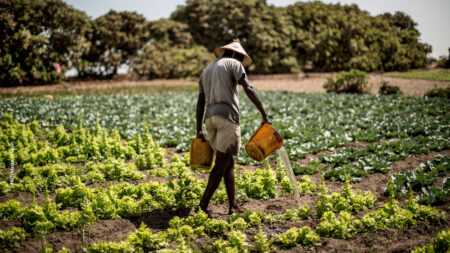
Sustainable Agriculture Farming Practices have been identified as the only way to ensure food security in the future Crop Life International launched its flagship…
Expensive loans remain a significant issue across populations engaged in…
Sustainable agriculture employs 65-70 percent of Africa’s labour force. Only…


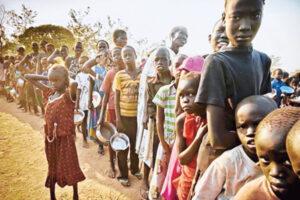
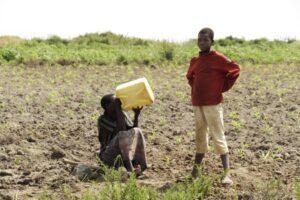
Across the region, agriculture has been a crucial economic activity that has to levitate communities’ economies and promote some major changes, in farmer’s lives.
Farming has changed significantly over the past decade. This change has not occurred or is being adopted evenly across the globe. Europe, North, South America, and Asia have been developing and utilizing agriculture mechanization quite fast.
However, the latter has not been active in sub-Saharan Africa for a while. For the record, farming practices present during the 1960s when most of Africa, was liberating itself from colonial hands, are largely being divorced currently.
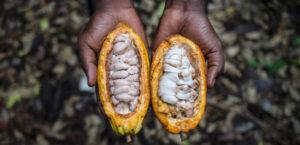
As the number of people demanding food supply has kept increasing since 2015 from 1.1 million to 2.7 million, Cameroon is striving to keep its farming systems updated and strong. According to the Aid and International Development Forum, 57 per cent of the rural people live in poverty.
Cameroon has more than 28 million people and like the rest of other African nations, it is endowed with rich natural resources, including oil and gas, but more importantly, Cameroon has a wide variety of agricultural products, such as coffee, cotton, cocoa, maize and cassava.
Kenya’s National Cereals and Produce Board has signed a Memorandum of Understanding (MOU) with Safaricom’s…
The reasons for the current position are both economic and political. The intent of this article is to explore the economic side of the country’s decline with the view to put forward new areas of economic significance that can give rise to the recovery of the country’s fortunes.
These new areas if adopted and implemented will most certainly result in economic green shoots and with time they will transform into major industries anchoring the economy on the same scale and extent that mining and agriculture did in the former years.
The political side of the equation of Zimbabwe’s economic decline has been written about extensively and it is beyond the scope of this article. However, it must be noted and borne in mind that it is immensely difficult to separate politics from economics as these two concepts enjoy a very strong symbiotic relationship.
“Before the Forest and Farm Facility Programme (FFF) reached out to us, I faced many…
Kenya’s Ministry of Devolution together with the Food and Agriculture Organization say the country requires…