

Trending
- Tanzania throws its bond market wide open to the global investors
- VALR sets sights on East Africa as blockchain moves deeper into Africa’s financial system
- The cost of the data gap: Why Kenya’s lenders can’t afford to miss the full picture
- Tanzania takes EAC labour migration helm as regional rules face overhaul
- 2026 is turning out as a defining year in geopolitics, but for whom?
- Saudi Arabia and Tanzania pledge to deepen bilateral trade ties
- Tanzania rewrites its digital investment playbook
- Ethical sourcing boosting demand for Tanzania organic cotton


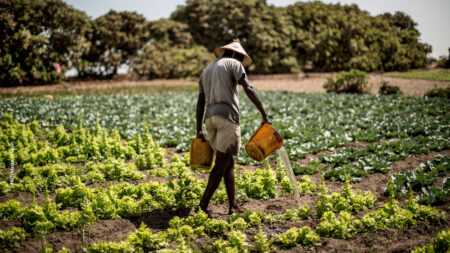
Sustainable Agriculture Farming Practices have been identified as the only way to ensure food security in the future Crop Life International launched its flagship…
Expensive loans remain a significant issue across populations engaged in…
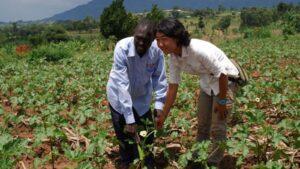
Sustainable agriculture employs 65-70 percent of Africa’s labour force. Only…

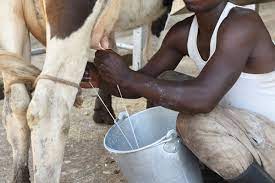
Looking at the bigger picture, speculations are that the milk and milk product levies and taxes are designed to lure Uganda to choose favourably towards other trade issues that are pending.
As local Ugandan media puts it; “Uganda maintains that if there are issues that need to be addressed, they can be handled through bilateral arrangements or the regional trade agreements within the East African Community instead of using arbitrary means such as high taxes.”
Squeezing Uganda to act in its favour, Kenya has also imposed what Uganda is terming ‘a restriction to Ugandan diary products since January 2020.’ Notably, Kenya is Uganda’s largest milk trading partner in the region, yet for over an year now, Kenya has maintained restrictions on Ugandan milk products despite the East African Community (EAC) common market protocol.
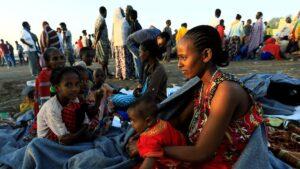
FAO says that in addition to lost agricultural assets, the state of core basic services across northern Ethiopia is impeding relief efforts.
“Electricity and fuel are lacking, cash and credit are not to be found, and there is only one functional road in and out of the region”, noted Paulsen.
According to the organization, the conflict commenced at the peak of what would have been the main Maher season harvest before many households had the opportunity to harvest their crops.
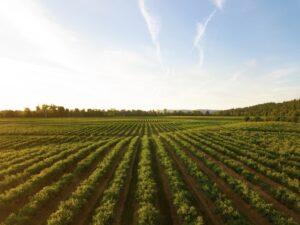
Data by the bloc reveals that the sector provides livelihoods for about 80 per cent of the region’s workers, and accounts for about 65 per cent of foreign exchange earnings.
The continent, which COMESA Secretary General Chileshe Kapwepwe said last month has the potential to feed its self and export to the rest of the world, has remained a net food importer for the last 15 years.
Africa remains one of the most vulnerable regions in regard to food security, and is…

Kenya’s Capital Markets Authority (CMA) has issued the first set of licenses to five coffee…
An educational approach especially one that combines study in key areas like Science, Technology, Engineering and Mathematics (STEM) is critical to achieving lasting change in the continent.
An educational-based development model is a revolutionary tool in the economic sector as it fosters innovation, problem solving and creativity in real-life situations.
The approach has been adopted in most countries globally, as well as in the African continent. It has a significant impact on society, the economy and the way people relate to the natural environment.