
Trending
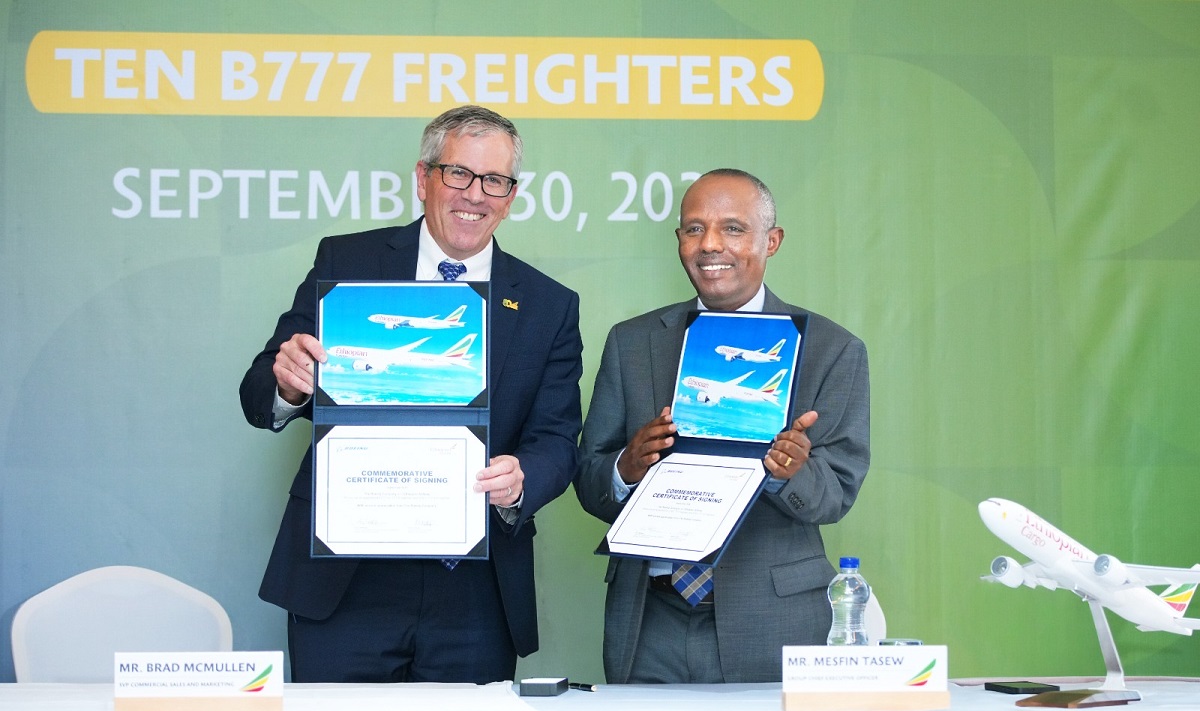
- Ethiopian Airlines bets big on Boeing freighters in $5 billion cargo fleet expansion
- Silicon Valley’s Tim Draper backs Nairobi blockchain festival, sees Africa as next digital frontier
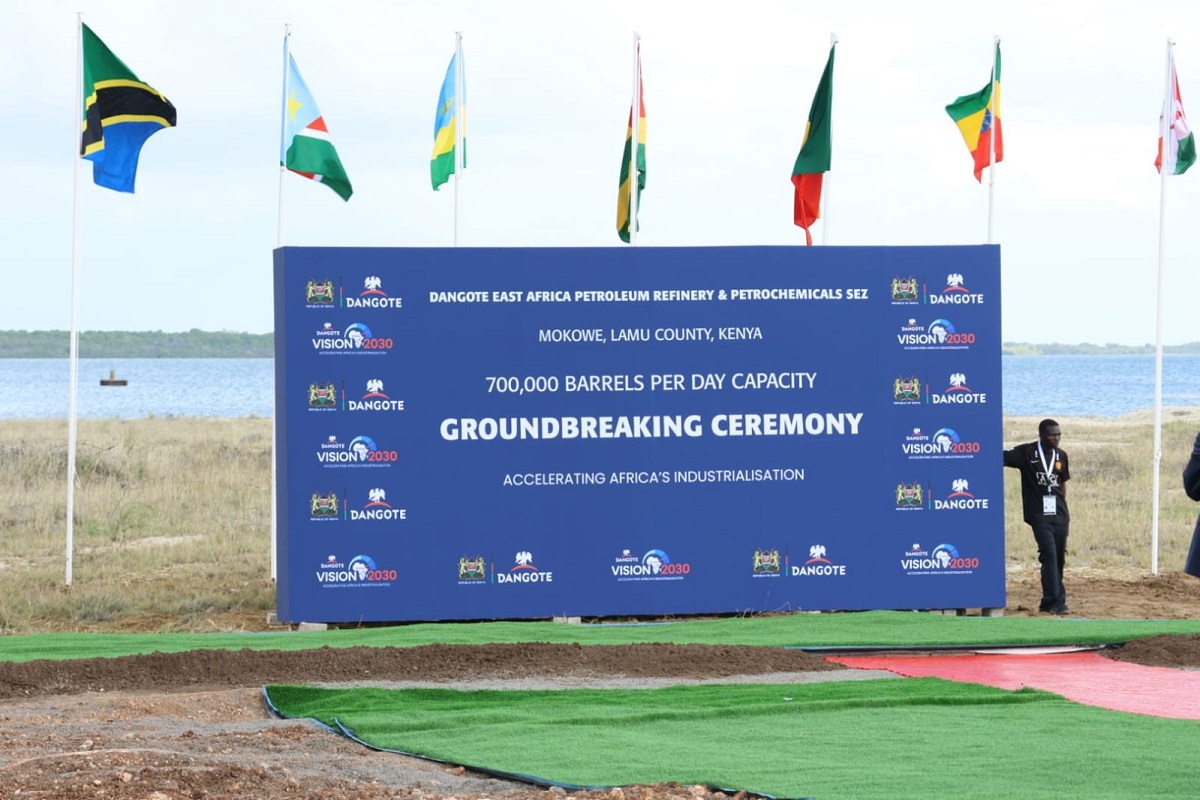
- Dangote breaks ground on $16bn Lamu refinery as East Africa seeks fuel independence
- Gulf and African states meet in Dar to rewrite rules of labour migration
- African governments drive new forest finance progress as global report warns funding globally must scale faster
- Fine Spinners eyes Kenya’s Agoa-backed apparel supply chain with $5m plant
- Why young Kenyan investors need to stop treating the stock market like a betting slip
- Tanzania tax reforms mandate VAT refunds to under 30 days


Browsing: Africa
A Primer McKinsey & Company, the global business consulting giant conducted a study on the slow pace of infrastructure development…
China had been funding the development and exploitation of massive coal reserves in countries like Indonesia and Vietnam under an initiative called the Belt & Road but has come under pressure as the world tries to honour its Paris climate agreements.
This Belt & Road initiative is a strategy initiated by the People’s Republic of China that seeks to connect Asia with Africa and Europe via land and maritime networks with the aim of improving regional integration, increasing trade and stimulating economic growth.
To realize this vision required the use of natural resources which China does not have entirely but other nations do and would then secure supply of this through the development of resources such as coal mines in developing countries. The Chinese are reportedly developing a US$3 billion coal mine in the Hwange area of Zimbabwe.
As part of the requirements under the Kenyan Act, the government additionally established an Integrated Monitoring Reporting and Verification (Integrated MRV) system and published Kenya’s National Climate Change Action Plan 2018-2022 (NCCAP). The five year plan requires the government to develop “action plans”, providing mechanisms to assist stakeholders in bringing about low-carbon climate-resilient development.
Angola boasts some of the most ambitious targets for transition to low carbon development in Africa, albeit having ratified the Paris Agreement in November 2020. Since then the country has launched a national development plan, established a climate observatory and implemented a continuous national emissions monitoring system.
In addition, Gambia is committed to reducing its GHG emissions unconditionally, by 2.4 per cent by 2025 having implemented the Sustainable Energy Action Plan in 2015, which sets out the country’s renewable energy targets and corresponding measures necessary for their achievement. It has also committed to terminating oil importation by 2025. Between 2020 and 2030, Ghana proposes to implement twenty mitigation and eleven adaptation programmes. The Democratic Republic of Congo (DRC) NDCs, commit the country to a 17 per cent reduction rate by 2030.
Firstly, environmental criteria which consider how well a company performs as a steward of nature. This includes the energy a company takes in and the waste that it produces and the consequences for humanity as a result.
This aspect of the criteria also encompasses carbon emissions and climate change which have become highly topical especially in the ongoing COP26 conference in Glasgow. This aspect of the ESG criteria is important because every company uses energy and it is affected by the environment.
The social criteria which is second considers how that company manages its relationships with stakeholders namely employees, shareholders, lenders, customers, suppliers, and the communities where it operates. This feature addresses the relationships a company has and the reputation it fosters in the communities it operates in which may include labour relations, diversity, and inclusion.
African countries have dire shortage of energy supply and many cannot even meet their minimum required base-load, so why is…
The government of Tanzania has received 1.3tri/- as Covid-19 relief package from the International Monetary Fund (IMF). Now the government…
The solution, currently under deployment by DPA is tailored to the hospital’s energy needs and designed to increase efficiencies. It will be grid-tied with photovoltaic (PV) of 80 kWp capacity and mounted on the rooftop.
This will see the facility save 30-40 per cent of their monthly electricity cost of approximately KES 550,000- this is through the use of solar power and reduced maintenance costs of all major hospital equipment affected by erratic power fluctuation.
The hospital sector, in operation 24 hours a day, 365 days a year, is one of the areas with high energy consumption and NCH joins a growing list of companies, universities, factories and hospitals in Kenya that have turned to solar PV grid-tied systems to supply power for self-consumption.
PAGA, a payment processing company in Nigeria (similar to PAYPAL) started by Tayo Oviosu in 2009 is on track to potentially be the next unicorn as it processed $2.3 billion worth of transactions in 2020 and $8 billion during the past four years. The company is now expanding into Ethiopia and Mexico as part of its global growth plan.
Another future unicorn is CNG TRANSFER founded during the pandemic by Emmanuel Tochi and Vincent Omulo, a Nigerian and Kenyan, respectively. The startup’s flagship product is www.Transfy.io – a cross border intra-African money transfer platform built on blockchain enabling Africans to transparently move money from one country to another at no cost. Within a year of launch, they have already processed 100 million of Kenyan Shillings in Kenya alone while operational in Nigeria, Zambia, Botswana, South Africa, Rwanda and Ghana.
The cost associated with policy instability and unpredictability is often passed down to consumers In 2020, the manufacturing industry in…
Africa is also moving to mechanize agriculture offering another avenue for heavy investment for technology-rich UAE. Investing in mechanizing Africa’s farms also goes to investing in the world’s food security and alleviating poverty, all of which are priority UN Sustainable Development Goals (SDGs).
Then you have the energy and mineral sectors; Africa, and in particular East Africa, has been the site for the world’s most recent offshore oil and gas discoveries. The potential is immense; however, here we must point out the equally lucrative and much more sustainable opportunity to invest in renewable energy. Africa offers vast expanses of huge wind and solar potential that can be harnessed to power the continent and beyond.