

Trending
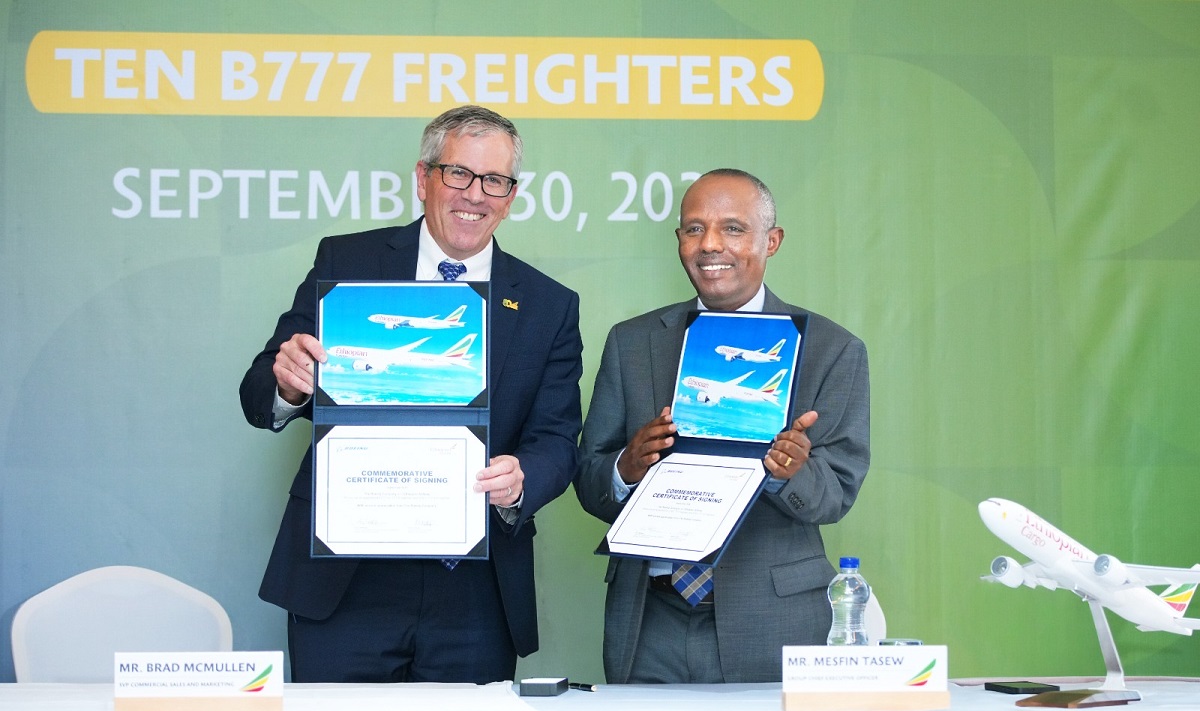
- Ethiopian Airlines bets big on Boeing freighters in $5 billion cargo fleet expansion
- Silicon Valley’s Tim Draper backs Nairobi blockchain festival, sees Africa as next digital frontier
- Dangote breaks ground on $16bn Lamu refinery as East Africa seeks fuel independence
- Gulf and African states meet in Dar to rewrite rules of labour migration
- African governments drive new forest finance progress as global report warns funding globally must scale faster
- Fine Spinners eyes Kenya’s Agoa-backed apparel supply chain with $5m plant
- Why young Kenyan investors need to stop treating the stock market like a betting slip
- Tanzania tax reforms mandate VAT refunds to under 30 days


Browsing: Africa

Across the region, agriculture has been a crucial economic activity that has to levitate communities’ economies and promote some major changes, in farmer’s lives.
Farming has changed significantly over the past decade. This change has not occurred or is being adopted evenly across the globe. Europe, North, South America, and Asia have been developing and utilizing agriculture mechanization quite fast.
However, the latter has not been active in sub-Saharan Africa for a while. For the record, farming practices present during the 1960s when most of Africa, was liberating itself from colonial hands, are largely being divorced currently.

Long gone are the days you hear of Africa and envision mud huts and malnourished babies. Well, maybe long-gone is…

Passenger vehicles were Kenya’s fourth-largest import overall in 2014, valued at US$420 million and making up 2.3% of total imports (by value) while commercial vehicles ranked seventh, valued at US$370 million.
“If the current trend of 10% to 12% growth per annum on vehicle imports is to be maintained, Kenya will have five million vehicles on the road by the year 2030,” Deloitte said.
Numerous advantages and benefits have been proffered to explain the motives individuals have for moving their assets offshore and investing in jurisdictions other than their home countries. Standard Bank reckons that offshore investment aids in capitalizing on circumstances outside the country providing a buffer against our markets, our inflation spikes and exchange rate fluctuations.
Essentially, offshore investment serves as a hedge against the volatility and harsh economic fundamentals in the local economy. Zimbabwe as a case in point has suffered from perennial poor economic performance for the greater part of the last two decades. The economic phase that characterized this period included compulsory expropriation of productive farmland, the expropriation of hard currency funds that were never returned, of individuals and organizations by the government to fund its operations, hyperinflation and a generally depressed economy.

No family wants to be stuck in their home and yet starve due to food security systems being shaken by…

Invest Africa has launched a new programme of support for over 500 African MSMEs. In a statement, the company, which…

The unemployment rate in Egypt recorded 7.3 percent of the total labour force during the second quarter of 2021 according…

Four critical universities best practices for fostering graduate employability are of interest: Industry partnerships, Aligning university education with a country’s development plans, Regular university curriculum reviews, and Strengthening quality assurance systems.
However, while Universities work to better prepare graduates for the workforce, it is imperative for the government and the private sector to step in and increase the employability of graduates who are already in the workforce.

Egypt-China ongoing cooperation hits $1.8 billion according to Egypt’s Ministry of International Cooperation. According to a press statement from the…

Even though East Africa’s two economic giants Kenya and Tanzania are seen as business rivals, the two conduct enormous trade…