
Trending
- Silicon Valley’s Tim Draper backs Nairobi blockchain festival, sees Africa as next digital frontier
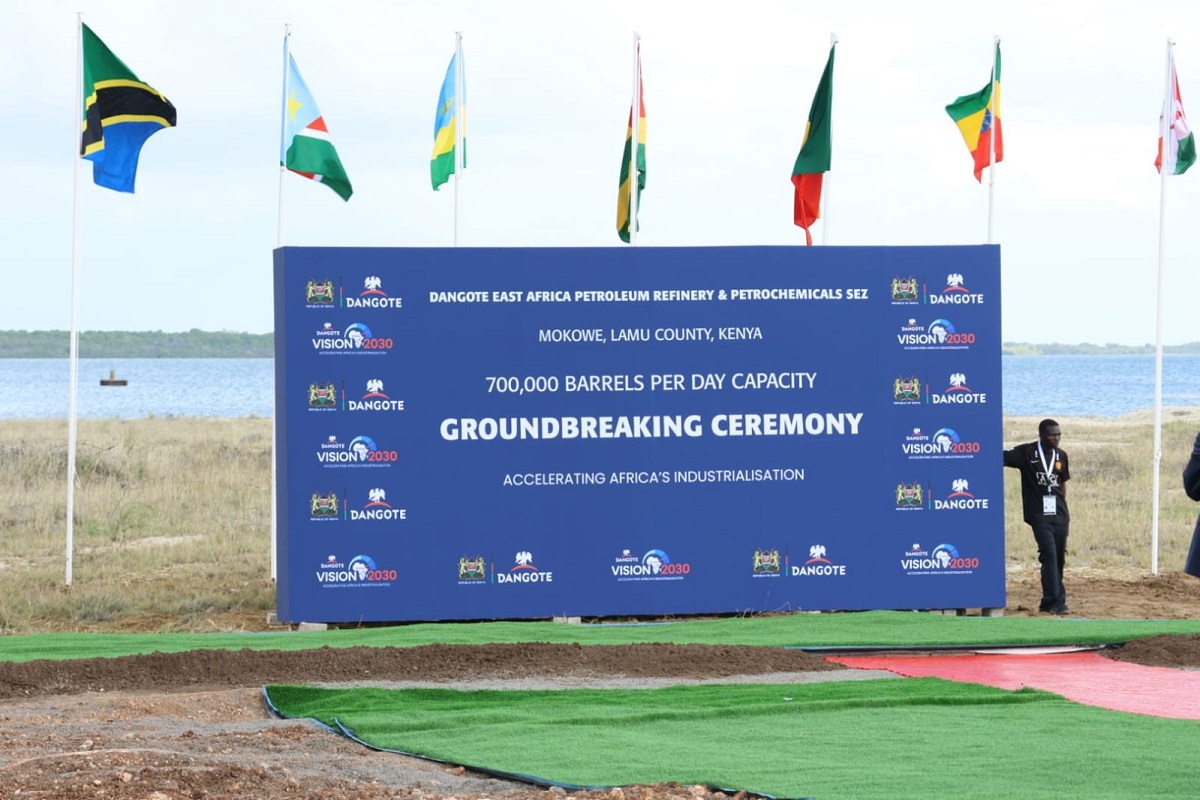
- Dangote breaks ground on $16bn Lamu refinery as East Africa seeks fuel independence
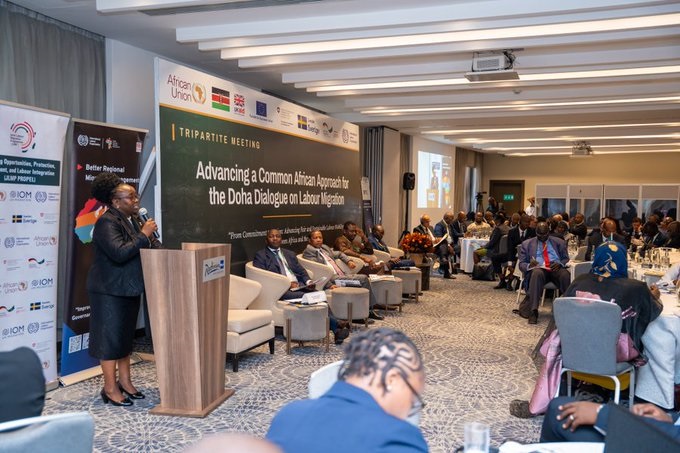
- Gulf and African states meet in Dar to rewrite rules of labour migration
- African governments drive new forest finance progress as global report warns funding globally must scale faster
- Fine Spinners eyes Kenya’s Agoa-backed apparel supply chain with $5m plant
- Why young Kenyan investors need to stop treating the stock market like a betting slip
- Tanzania tax reforms mandate VAT refunds to under 30 days
- In New York, world leaders unveil plan to overhaul global health architecture


Browsing: China
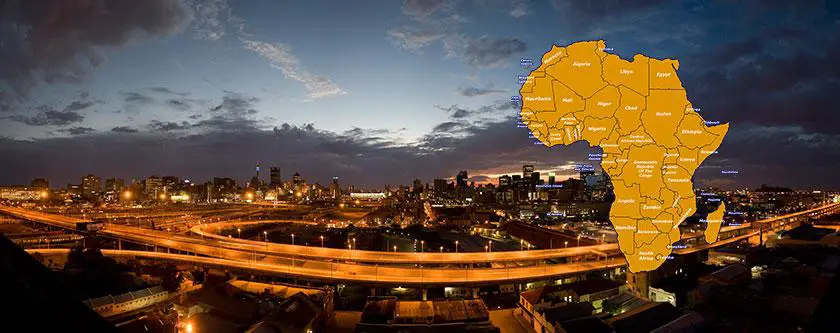
In as far as global trade is concerned Africa has a central role to play. So critical is this role that should Africa be absent from the global trade equation the global economy simply will not prosper. Africa’s mining sector offers in 2022 and going forward a real opportunity for expansion.
Africa’s economic transformation will come from its ability to leverage the comparative advantage position its natural resources offer. Africa needs to become the seventh corridor of the Belt & Road Initiative (BRI). China will be able to enhance its dominance in the global economy if it does more to invest in and develop economic ties with Africa.
Currently the BRI in as far as Africa is concerned restricts the role of Africa to providing access to raw materials.
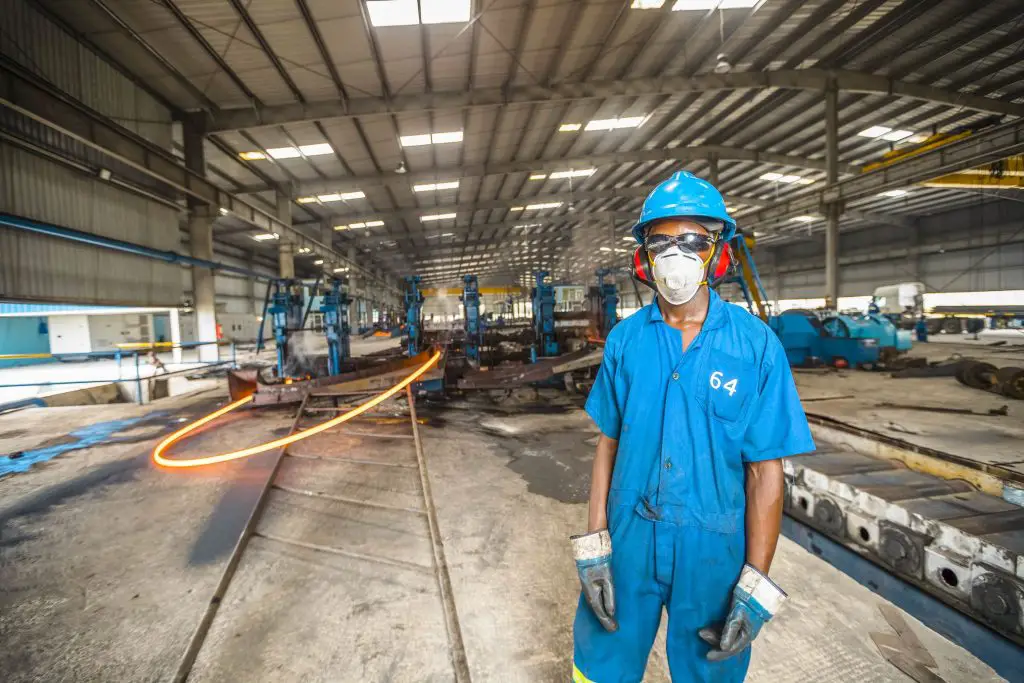
China is one of Tanzania’s biggest trade partner Tanzania’s industrial economy has been growing over the past decade Tanzania has…
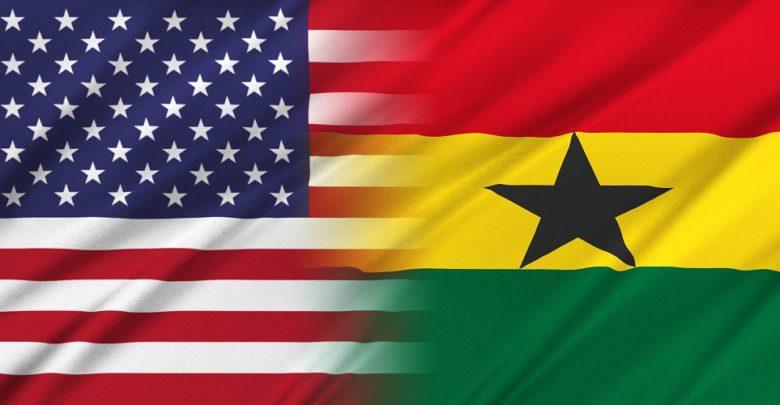
Many exports from Ghana to the US benefit from duty-free tariff preferences under the American Growth and Opportunity Act (AGOA) and the Generalized System of Preferences (GSP) programme. Exports from Ghana to the US that have enjoyed AGOA preferences include yams, apparel and cocoa (beans, powder or paste).
Ghana has exported US$131 million worth of yams to the US since 2012, avoiding a standard import duty of 6.4 per cent under AGOA. Cocoa exported to the US has amounted to US$2.5 billion over the last two decades.
Miss Rosa Whitaker, the President and the CEO of the Whitaker Group (TWG), is significant to the success of AGOA in Africa, facilitating the export of over 9,000 agricultural and manufactured goods to the United States.
Whitaker advocates for African countries to research what the US market is demanding and be alert to new opportunities. She pointed out the success of Ghana’s cocoa in the United States, saying that the processed cocoa powder manufactured at the US$100 million Cargill plant is now being offered to global food manufacturers under a made-in-Ghana label.
Consequently, China has carefully abandoned its strong preference for bilateral dealing with problem debtors. The Chinese state avoids being a rule-taker compared to the West on debt issues. Still, it increasingly appears to recognize that multilateral approaches – ideally on an ‘a la carte’ basis – can help contain both the pressures on its African partners and its challenges.
China, therefore cautiously supported the DSSI for some African nations when it came to effect in April 2020, and similarly, the Common Framework launched in 2021. However, the slow implementation of the Common Framework brings to light four specific challenges linked to China’s role.
First is China’s discomfort with the independent and central role played by the IMF in controlling how much a country can afford to pay through its debt sustainability analysis (DSA). Second is the alarm of privates, and public sector lenders in the West over a lack of accountability in the total amount of debt China lent to African nations.
As would be expected, Total rebutted the claims. Its first move was to make public the related project social and environmental studies and issue a statement in which it pledged transparency.
The company admits that; “The projects for the development of the oil and gas resources of the Lake Albert region and the cross-border pipeline are situated in a sensitive social and environmental context that requires special measures for the environment and the rights of the local communities.”
In a follow-up statement, the investors maintained that; “All the partners are committed to implementing these projects in an exemplary manner and taking into highest consideration the biodiversity and environmental stakes as well as the local communities’ rights and within the stringent environmental and social performance standards of the International Finance Corporation.”
Worth noting here is that Africa, including Ethiopia and most of its East African neighbours, are squirming in shipments of second-hand clothing, interestingly, imported from Europe, North America and other western countries.
What better defines neo-colonialism than Africa producing clothes to be exported to Europe and North America only for these very clothes to be sold back to Africa after they have been used! This sounds worse than the renowned exploitative colonial and post-colonial trade agreements (that still hold true and strong) where Africa, using cheap labour, produces raw material, which is cheaply exported to Europe, processed, packaged and sold back to Africa!
Several East African countries have attempted to honour up and ban the import of second-hand clothes. As you can imagine, the attempt failed.
While Russia’s preferred visions and modes of action in the Maghreb seem to be fairly well identified, the perceptions and expectations, but also the possible reservations on the Maghreb are more rarely expressed by the leaders of these countries and little-studied at the academic level.
Perhaps we should look at this, as far as the powers that be are concerned, a concern for discretion regarding the sensitive aspects of this foreign policy component – this is particularly true for Algeria – an area on which they generally communicate little and for the academic research community in North Africa, a lack of knowledge related to the history, geography and culture of contemporary Russia.
If there is undoubtedly, on the Maghreb side and with important nuances from one country to another, a manifest interest in a development or a deepening of the partnership with Moscow, questions may remain about Russia’s objectives, especially in Rabat and Tunis.
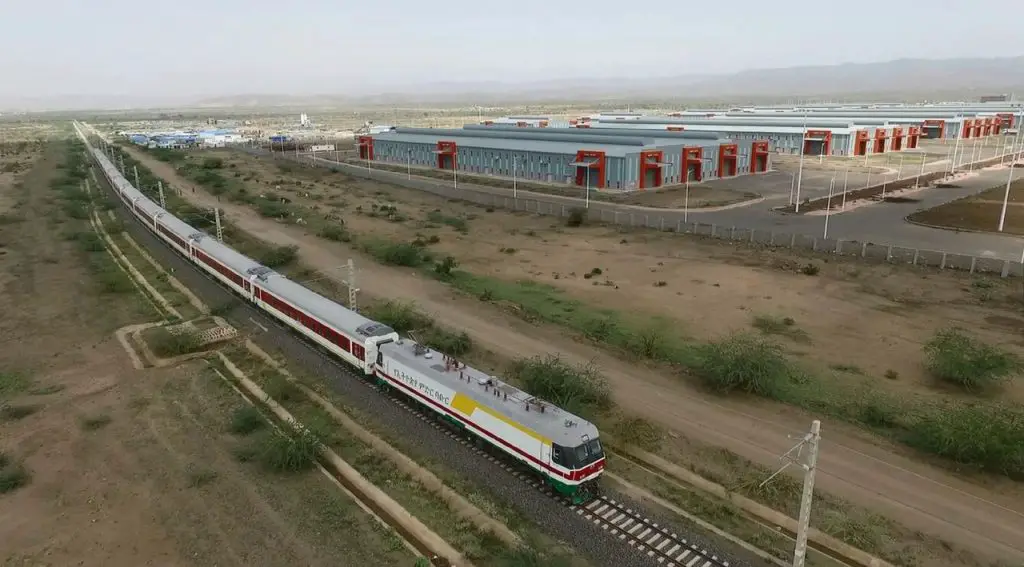
Tanzania Railway Investment In the most recent development, an additional 282km of the railway are been constructed to connect Tanzania…
In the first six months of the year, Kenya’s food imports had increased to sh103.34 billion. The figures collected by the Kenya Revenue Authority (KRA) showed that the food imports were sh12.35 billion more than the amount spent in the same period in 2020.
According to data from the national treasury, import expenditure increased by 29 per cent in the third quarter of 2021. China is the most significant contributor of Kenyan imports accounting for 31.6 per cent of the total bill from the Asian continent.
This is the fastest growth in the food import bill since a 60 per cent jump recorded in 2016 when the bill stood at sh82.83 billion. The exponential increase has been linked to the growing popularity of digital trading, allowing retailers and consumers to order and ship food and other commodities directly.
A dollar is trading at 16.67 Kwacha and 13.35 Seychelles rupees as at December 31. Both countries were among the three worst performers in 2020.
This has fueled speculation from corporate participants and currency retail traders on when exactly to exit foreign currency risks for dollar hoarders or whether to buy the Kwacha as a safer haven store for value.
President Hichilema’s government is in the process of reworking as much as $17 billion in external public debt. He has submitted an endorsement request to the IMF as his administration advances talks with creditors from US$3 billion in Eurobond holders to US$5.8 billion owed to the Republic of China.