
Trending
- 2026 is turning out as a defining year in geopolitics, but for whom?
- Bitcoin Surges 20%: How Crypto Holders Are Exploring Cloud Mining Income in 2026
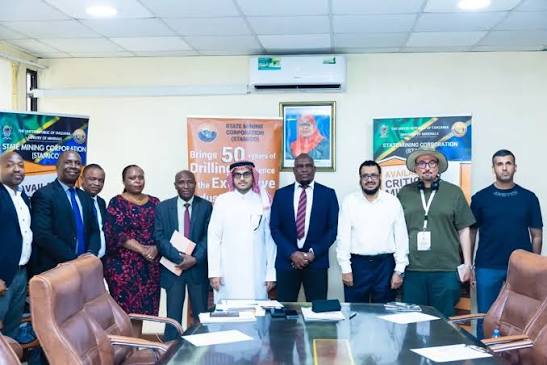
- Saudi Arabia and Tanzania pledge to deepen bilateral trade ties
- Tanzania rewrites its digital investment playbook
- Ethical sourcing boosting demand for Tanzania organic cotton
- DRC deploys 70,000 Ebola vaccine doses in high-stakes trial against deadly Bundibugyo strain
- Kenya’s private sector optimistic on growth despite inflation and geopolitical risks
- AfDB and Standard Bank ink $332 million social bond deal to fund South African SMEs



The Africa Blockchain Festival 2026 will convene global pioneers in blockchain, artificial intelligence, and the digital economy in Nairobi, Kenya, this October. Kenya is…

Payments platform Grey adds the Ethiopian Birr in its global…

Token unlocks are triggering rapid market volatility, liquidity shifts, and…


Scientists in Tanzania are making headway in biotechnology to improve agriculture and healthcare in the country as global scientists continue to improve the biopharma industry and use of AI in drug development.
“Machine learning will end up being an absolutely critical, pivotal shift—a paradigm shift—in the sense that it will touch every single facet of how we discover and develop medicines , and accelerate and improve every single one of them,” Daphne Koller CEO and founder, insitro.
From AI-driven drug discovery industry in the US to biotech agriculture in Tanzania, machines are increasingly determine what we eat, what drugs to cure us, machines run our lives.
With financial inclusion in mind, governments are taking notice and offering more supportive regulatory frameworks, ever further assuring that the African fintech industry growth rivals that of more mature markets, the likes of Vietnam, Indonesia, and India.
Despite the high potential seen in East Africa, with countries like Kenya standing out, South Africa still commands approximately 40 per cent of the industry revenues.
On the western part of the continent, too, in places like Ghana, growth is at 15 per cent per annum and will only get higher all through 2025. Then you have the larger economies coming in; Nigeria and Egypt are both expected to enjoy annual growth rates of 12 per cent over the same period.
While growth rates at this early stages are higher in less developed East African countries, economies with more mature financial systems and digital infrastructure, the likes of South Africa stand a greater chance of executing more innovation in the fintech industry and implementing security measures such as regulatory technology including anti-money laundering.

A new report by Kaspersky has revealed that from January to September 2022, computers in…

The Bwefum ICT Community Centre is one of 11 ICT hubs, which the union government through the Universal Communication Service Access Fund (UCSAF) has constructed in Unguja and Pemba along with supporting the construction of 42 other communication towers across the islands.
These towers improve ICT across the island and as a result it means improved interconnectivity between businesses, government authorities and the general public.
President Mwinyi emphasized that inter-connectivity will help improve social services. For example, when it comes to healthcare provision, ICT is vital in communication between service providers allowing for the transfer of patient and staff info seamlessly in the shortest time possible.

Kenya’s Safaricom has launched 5G Wi-fi, more than a year after it announced it was…

Mastercard has released a new study that indicates that fintech startups in Africa grew 81…