
Trending
- 2026 is turning out as a defining year in geopolitics, but for whom?
- Bitcoin Surges 20%: How Crypto Holders Are Exploring Cloud Mining Income in 2026
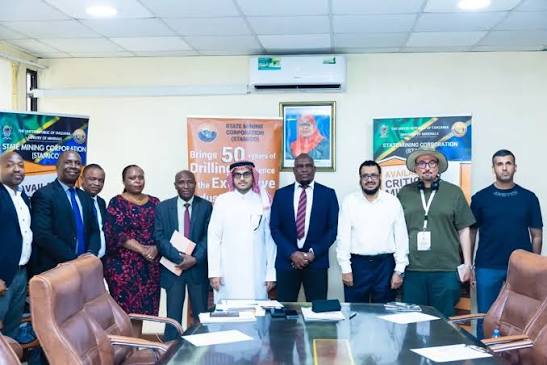
- Saudi Arabia and Tanzania pledge to deepen bilateral trade ties
- Tanzania rewrites its digital investment playbook
- Ethical sourcing boosting demand for Tanzania organic cotton
- DRC deploys 70,000 Ebola vaccine doses in high-stakes trial against deadly Bundibugyo strain
- Kenya’s private sector optimistic on growth despite inflation and geopolitical risks
- AfDB and Standard Bank ink $332 million social bond deal to fund South African SMEs



The Africa Blockchain Festival 2026 will convene global pioneers in blockchain, artificial intelligence, and the digital economy in Nairobi, Kenya, this October. Kenya is…

Payments platform Grey adds the Ethiopian Birr in its global…

Token unlocks are triggering rapid market volatility, liquidity shifts, and…

5G is the world’s fifth generation of wireless technology The network is superior to other…

The election of South Africa and other countries, on Monday, October 3, 2022, into different regional groups that constitute ITU Council was the highpoint of the Plenipotentiary Conference 2022 (PP-22) ongoing in Bucharest, the capital city of the Republic of Romania.
The seats in ITU Council are divided into five regions, A to E. South Africa was elected into the ITU Council Region D for Africa, which has 13 seats. The other 12 countries elected alongside South Africa are Algeria, Egypt, Ghana, Kenya, Mauritius, Morocco, Rwanda, Senegal, Nigeria, Tanzania, Tunisia, and Uganda.
Elections of member states also took place into Region A for The Americas (nine seats); Region B for Western Europe (eight seats); Region C for Eastern Europe & Northern Asia (five seats); and Region E, for Asia and Australasia with 13 seats as Africa.
The 21st Plenipotentiary Conference of the Council, also saw the election by member states, of Doreen Bogdan-Martin of the United States of America as the organisation’s next Secretary-General.

The market growth is extensively attributed to the rising health and fitness awareness, growing penetration of the internet & smartphones, and increased consumer disposable income levels.
The rising adoption has led to an increase in device development & innovation as more market players race in to deliver the growing demand and capture a higher market share.
According to Kewalramani, to set itself apart from competitors, Fitbit has evolved from being a pure fitness tracking device company to bringing more functionality and innovation around stress and sleep management to help users gain control of their health goals.

According to McKinsey published February 23, 2022, transport currently makes up 10 percent of Africa’s total greenhouse gas (GHG) emissions. This is expected to increase in line with sub-Saharan Africa’s expanding vehicle parc.
South Africa, Kenya, Rwanda, Uganda, Ethiopia, and Nigeria make up around 70 per cent of Africa’s annual vehicle sales and 45 per cent of the region’s population.
The vehicle parc is expected to grow from 25 million vehicles today to an estimated 58 million by 2040, driven by urbanization and rising incomes. As its vehicle parc grows, the challenge for Africa will be to push for more sustainable mobility and avoid the risk of becoming the dumping ground for the world’s unwanted used ICE vehicles.

The Global Business Magazine Awards has awarded AAR Insurance Kenya the Most Innovative Insurance Mobile…
Kenya Trade Network Agency (KenTrade) has embarked on a sensitisation programme targeting insurance companies to…