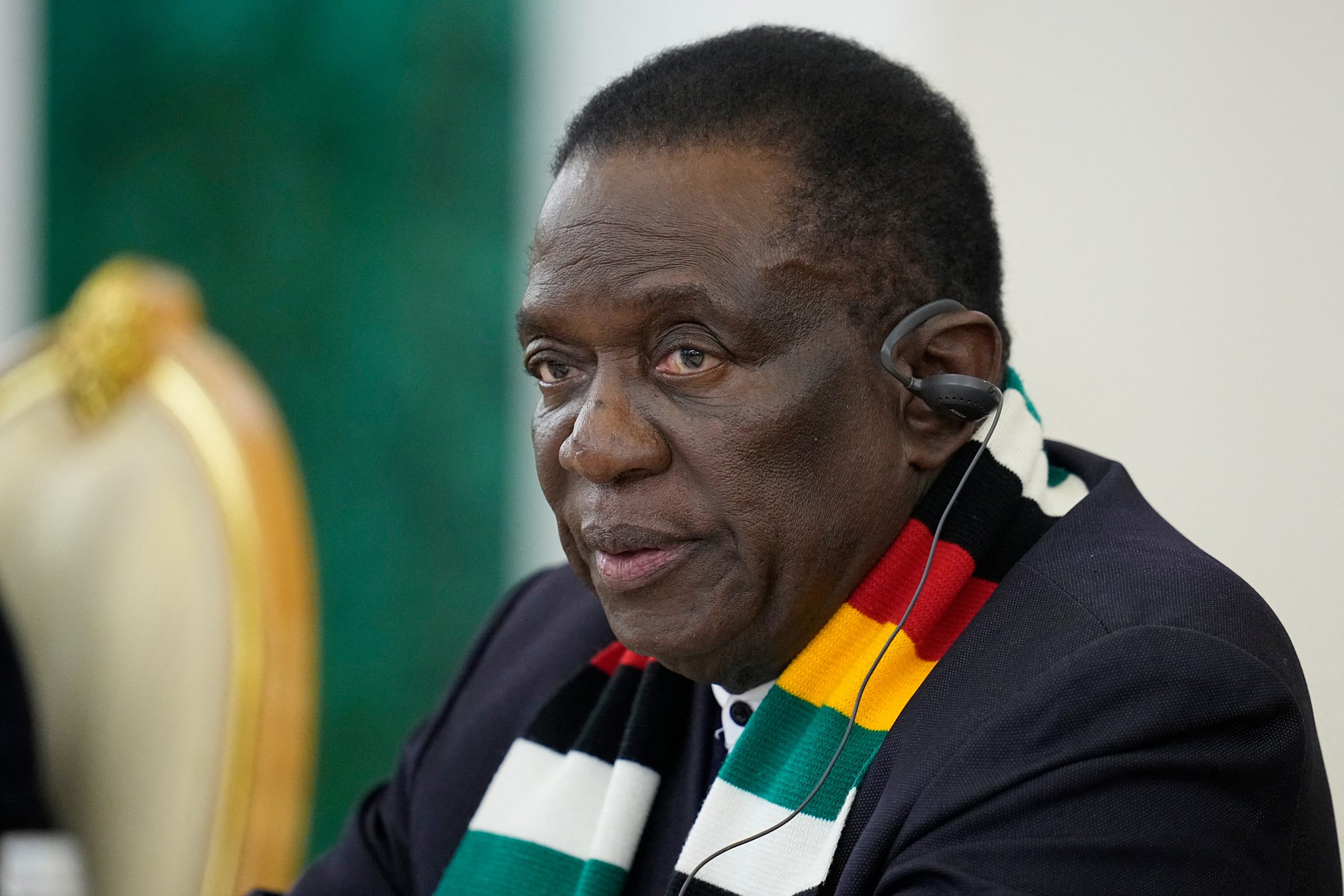





- As AI economy takes shape, data is turning into a strategic asset class, argues Kenya’s Special Envoy on Technology, Philip Thigo. He highlights that the AI stack is a system encompassing compute, infrastructure, energy, water, talent, and data itself. “Once you say asset, then it is not something that could be given freely.”
- As data assumes prime value internationally, Nairobi is strategically positioning itself as the gateway to a continental AI market, which is forecast to hit US$16.5 billion by 2030.
When Ambassador Philip Thigo, Kenya’s Special Envoy on Technology, describes data as a “strategic asset,” he is not speaking in abstract metaphors. He is delivering an investment case, seeking to open funding taps globally to power the country’s Artificial Intelligence (AI)-powered economic growth at scale. And in May 2026, Nairobi will become the venue where that investment case meets the might of global capital.
The occasion is the inaugural AI Everything Kenya x GITEX Kenya summit, running from 19–21 May. Organised by inD in partnership with President William Ruto’s Office of the Special Envoy on Technology and dx⁵, the event is could emerge as East Africa’s largest technology expo. The showcase is modelled to strategically position Nairobi as the gateway to a continental AI market, which is forecast to hit US$16.5 billion by 2030, and Kenya is data-centric case for why global investors should set base here.
Why Data is a Strategic Asset No Longer Just ‘New Oil’
According to Ambassador Thigo, “data is a strategic asset.” He breaks down the AI stack into a broad system encompassing compute, infrastructure, energy, water, talent, and data itself. “Once you say asset,” he argues, “then it is not something that could be given freely,” he told The Exchange in a media interview.
This classification of data marks a critical departure from the extractive industry models of the past. For decades, African countries have been supplying tonnes of raw materials, minerals, agricultural commodities, and labour, to foreign destinations without capturing the commensurate value. With the increasing value for data globally, Amb. Thigo warns against replicating that ‘extractive’ pattern in the emerging intelligence-based economy.
Currently, Kenya is Africa’s leading user of AI chatbots such as ChatGPT among its tech-savvy young population. As Thigo notes, the country’s young generation is being shaped by AI models trained predominantly on English-language data, representing only a fraction of Africa’s 2,000+ languages. So, these questions obtain: “Who’s shaping our opinions? Who’s shaping our thinking? Who’s shaping our institutions?” he asks.
For investors scouting for tech-based investment opportunities in Kenya, this presents both a risk and an opportunity. The risk is data colonialism as millions of African users generate value for offshore platforms. But, the opportunity lies on backing sovereign, locally trained models that reflect unique African contexts, languages, and market realities, effectively creating entirely new asset classes.
From Strategic Dialogue to Scalable Infrastructure
The AI Everything Kenya x GITEX Kenya agenda is structured around moving from dialogue to industry deployment. The opening day’s Inclusive AI Summit at the Sarit Expo Centre features high-level sessions including ‘Kenya as the Heartbeat of Inclusive AI’ and ‘Digital Sovereignty for the AI Age’. These forums are poised to address the infrastructure questions that preoccupy institutional investors such as: Where is the compute located? Where is the energy coming from? Where is the talent pool?
Amb. Thigo underscores that compute is “infrastructure,” requiring energy, water, connectivity, and skilled labour to turn productive. Globally, Kenya is a trailblazer in renewable energy, including geothermal, wind, solar, and it’s a regional logistics and connectivity hub.
The summit’s programming signals a deep dive with dedicated roundtables on AI readiness framework, led by the International Telecommunication Union (ITU), and an AI Cyber Offense and Defense Roundtable led by ISACA. Here, industry pioneers will lead standards-setting engagements that help reduce investment risk.
Notably, the ITU session runs across all three days, a roundtable, a workshop, and a final-day hackathon. That structure is poised to move beyond talk to demonstrable capability building, precisely the kind of signal that helps de-risk the deployment of capital.
Why Upskilling is Vital in AI Economy
According to Amb. Thigo, global estimates show that approximately 75 million jobs will be lost to AI, even as the new wave gives rise to 133 million new jobs, a net gain of 58 million income earning opportunities. But, “AI will not displace workers directly,” notes Thigo, “rather, those who fail to integrate AI skills into their roles will be displaced by those who do.”
This is where Kenya’s demographic dividend becomes a catalyst for investment. The country has a young, digitally native population that is harnessing the power of AI tools at scale. For them, and Thigo observed, the strategic challenge—and opportunity—is redirecting that engagement from emotional support and companionship (currently a dominant use case among youth turning into Chat GPT) toward research, education, and productive enterprise.
The Ambassador revealed ongoing collaboration between Kenya and OpenAI to introduce bespoke education, and research-focused AI platforms. This goal is poised to be undertaken in consultation with Kenya’s Ministry of Education, national examination council, and the quality assurance agency. The mission is to institutionalise responsible AI use in schools. For investors, this looks set to invite a pipeline of AI-literate talent into the workforce, a core ingredient for any tech-oriented investment.
Already, AI is offering some careers a window of opportunity albeit with mixed results. For instance, traditional workflows in newsrooms, that is, attending events, taking notes, and transcribing interviews, are fast being transformed by AI tools that automate and accelerate deliverables.
“Where producing one podcast episode might have taken two weeks previously, now it can be done daily.” AI-driven editing, voice synthesis, and affordable equipment have democratised content creation, enabling small teams or even individuals to manage production tasks that previously required larger crews.
This means that AI is not just cutting costs; it is fundamentally altering the unit economics of knowledge industry, content creation, and service delivery. Companies that integrate AI augmentation will achieve productivity gains that competitors without AI skills will find it hard to match, he counsels.
Data Sovereignty as an Industry Edge
The phrase “data sovereignty” is often dismissed as political rhetoric but Thigo reframes it as an economic necessity in the emerging reality. “If it’s [data] an asset, then it is not something that could be given freely.” He points out that roughly 88 per cent of the data currently powering global AI models is in English language, despite the world’s linguistic diversity. “What are we interacting with? Whose data are we interacting with?”
While these questions beg answers, the tech envoy cautions countries against embracing isolation. “We live in a world that is interdependent.” But he insists that African countries must “come in from a position of power in a standard asset class. It must be negotiated. And we shouldn’t sit around just because somebody else has money.”
For investors, sovereign AI ecosystems offer a competitive advantage since locally hosted data reduces latency, complies with emerging data protection regulations, and enables contextual insights that global models trained on Western data cannot replicate.
Thigo illustrates this with a simple example: mapping your travel from home to office. Raw location data is one thing. But “imagine that data being processed in a way that enables them not just to find the input that gets you to a destination,” meaning optimised for local traffic patterns, local pricing, local behaviours etc? That intelligence is where value is created in local contexts.
Kenya as Africa’s Top Venture Capital Destination
At the moment, investment metrics in the continent are moving in Kenya’s favour. According to the AI Everything Kenya x GITEX Kenya press statement, “Kenya [is] emerging as Africa’s top destination for venture capital in 2025, accounting for almost one-third of funding raised across the continent.” Nairobi is functioning as the nexus where “capital, talent, and policy frameworks are aligned.”
Next month’s summit investor programmes, venture scaling forums, and capital deployment pathway roundtables are designed to connect startups and scaleups with regional and international investors.
Some of the participating tech heavyweights are: Cisco, Fortinet, Mastercard, ASUS, Odoo, Zoho, Mitsumi, Redington, MArt, IT Park Uzbekistan, and IX Africa Data Centre—a mix of global infrastructure providers and emerging market specialists.
The presence of IX Africa Data Centre is particularly notable. Data centre infrastructure is the physical foundation of any AI economy. And for Kenya and Africa, without realistic local compute capacity, sovereignty remains just theory. The fact that major players are exhibiting is a sign of rising confidence in Kenya’s energy, connectivity, and regulatory environment.
Why Innovation is Vital in AI Economy
Amb. Thigo returns repeatedly to a pragmatic refrain: innovation is not about technology. “Innovation is doing things in the field. Innovation in this context is your ability to be agile and adapt.”
He draws historical parallels when the printing press disrupted writers but created a new industry. Electricity, steel, ICT, and all past waves of general-purpose technology significantly displaced some roles while generating far more new ones.
The difference with AI-powered economy is the pace of change. “The disruption is not only occurring but accelerating rapidly,” Thigo warns. For corporates and startups, the winning strategic push will involve clearly identifying how AI will enable, accelerate, or displace your industry, then align own functions at the speed of need.
He offers a simple test: “Anybody took any Uber taxi this morning? How did the car come to you?” The answer is an AI-driven system that most users never think about. That invisibility is the ultimate measure of successful integration. The goal is not to become an AI company. It is to use AI to do your existing business differently, better, and faster.
Kenya’s Moment in AI Economy
The AI Everything Kenya x GITEX Kenya summit from 19–21 May is modelled to signal to owners of capital that East Africa is serious about building its own intelligent economy. The country’s investment case rests on three pillars: a young, AI-engaged population ready for upskilling; renewable energy infrastructure capable of powering compute-intensive workloads; and a policy environment that treats data as a strategic asset to be leveraged, not surrendered.
Ambassador Thigo’s closing warning is worth repeating: “If we do not come at that point, it’s just not about what the other countries are thinking. For me, I think it is what are we thinking.” And for the investors willing to think alongside Nairobi, the returns may prove substantial.
Read also: AI Everything MEA 2026: The Biggest Tech Trends in Africa and Middle East