Trending
- Kenya’s construction costs surge at fastest pace in four years as fuel price shock hits
- African trade is growing despite the obstacles
- Why global capital is betting big on Africa’s digital promise
- Kenya posts stronger-than-expected Q1 growth at 5.3% on manufacturing rebound, tourism boom
- China’s new investment rules are about guardrails, not closed doors
- Zanzibar optimistic economic growth will hit 7.5% on tourism boom
- Kenya defies economic shocks to post record $22 billion in tax collections
- Forget South Africa: East Africa now rules in banking industry returns


Author: Giza Mdoe

Giza Mdoe
Giza Mdoe is an experienced journalist with 10 plus years. He's been a Creative Director on various brand awareness campaigns and a former Copy Editor for some of Tanzania's leading newspapers. He's a graduate with a BA in Journalism from the University of San Jose. Contact me at [email protected]

According to the research finding, even though a minimum of 5%, of national health budgets, should be dedicated to mental health in low-income countries, most African countries still spend less than 1%.
Even though there is high-level policy commitment on paper in most African countries, however, allocation of appropriate budgets and human resources for mental health still lags woefully behind the rest of the world.
For example, in Ethiopia, Ghana, Nigeria and South Africa more than 90% of people living with mental illness do not receive any form of evidence-based care, the report points out.
Experts warn that the Covid-19 pandemic has had a worse impact on mental health. Due to the related economic impact of the pandemic which left millions without jobs and millions of others under-employed, mental health cases are worse due to elevated levels of stress, anxiety, social isolation and domestic disputes to mention but a few.
A major topic of discourse is Africa producing its own vaccines. Now, both the private and public sectors in Africa are lobbying for what is essentially a very lucrative deal for the provision of much-needed affordable health care.
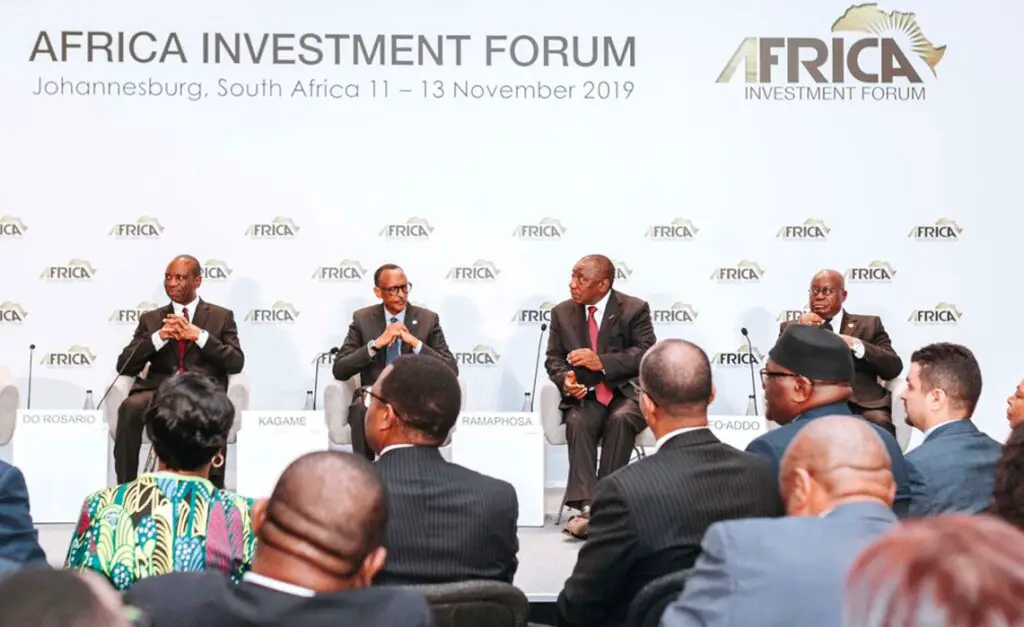
Only last year, members of the Africa Investment Forum team showcased two projects that were focused on the pharmaceutical and healthcare sectors. Jointly, the two projects are worth over US$140 million and are to be carried out both in East and West Africa.
“The first opportunity, with a project cost of US$96 million, is for the development of a 250-bed specialist hospital offering world-class healthcare services in a West African country,” the Forum announced in a press release.
“The second project is for the construction of a US$45 million WHO-prequalified vaccine production plant in East Africa that will be capable of routine production of three vaccines, including for Covid-19,” the Forum announced.
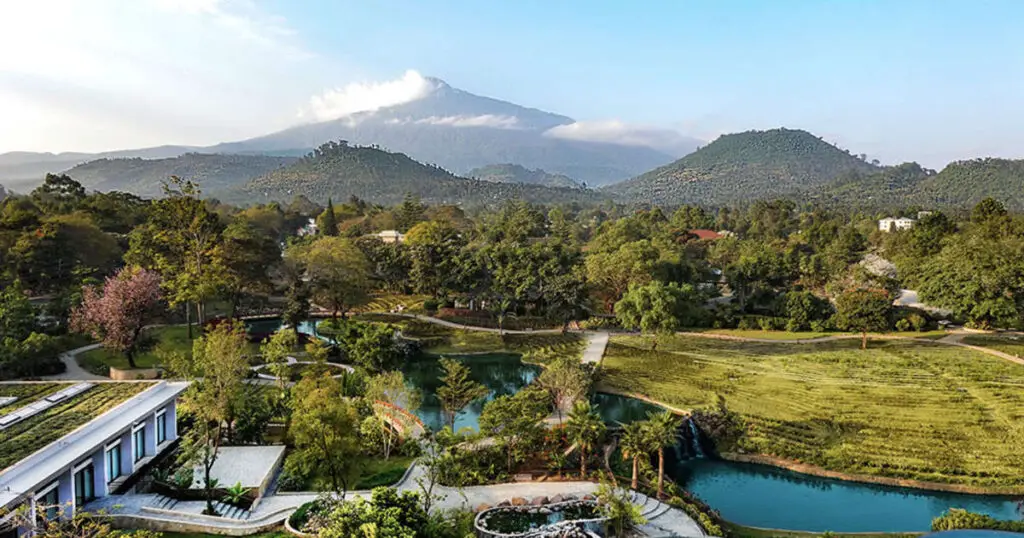
Similarly, as the country took internal measures to help the sector recover, the entire region, under the East African Community (EAC) moved to do the same. The EAC’s Sectoral Council on Tourism and Wildlife Management recently approved what it termed, the EAC Regional COVID-19 Tourism Recovery Plan.
Under this recovery plan, the EAC looks to work collectively towards the recovery of tourism in the region by supporting measures already adopted by individual countries in the bloc. A key agreement here was harmonization of guidelines to restore tourism and hospitality.
The Council approved the draft regional guidelines which are meant to build coherence in the measures that individual countries take to revive tourism. The Council insisted that if they work under the same guidelines then they will be able to earn trust and confidence of international tourists.
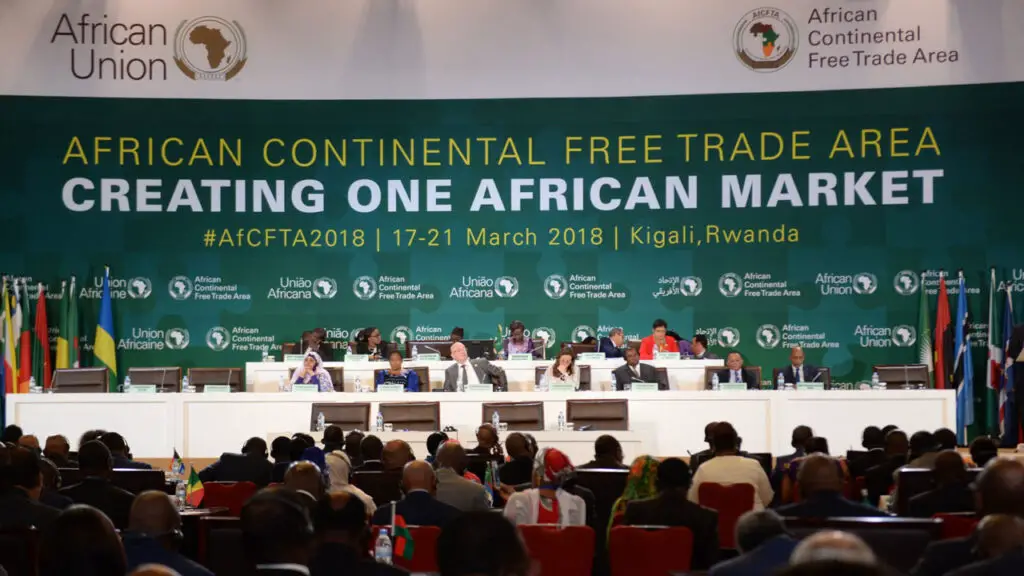
One of the major criticisms raised against his ambitious continent-wide free trade pact is the fact that it is bound to have disproportionate benefits for different countries. There are already pre-existing inequalities that favour more developed countries.
Bluntly speaking, it is to be reasonably expected that it is the continent’s tycoons, large business owners that will benefit the most.
Consider this, only three of the agreement’s members i.e. Nigeria, South Africa and Egypt account for almost half (50%) of all of Africa’s GDP. Take for instance the fact that in 2020 alone, the continent of Africa as a whole, imported US$20 billion worth of goods from South Africa.
With the tariff-free movement of goods, South Africa will enjoy a tremendous increase in trade output to the rest of the continent at much lower costs.
The project uses a comprehensive approach to combat cancer, involving communities and building capacity to over 400 community health care workers, and raising awareness by printing and distributing over 3,000 books and 5,000 Information, Communications and Education (ICE) materials.
“This project aims to complement the government efforts towards reducing cancer morbidity and mortality,” said Minister of Health Ummy Mwalimu.
“The government cannot single-handedly combat the growing burden of cancer, hence we commend TCCP for their innovation towards demonstrating the success of public-private collaboration to control cancer in the country,” she added.
Describing the EDGE Certification launch process as ‘a public declaration that we will continue to improve our gender index,’ Magala affirmed commitment to focus on what she described as ‘…capacity development initiatives that will move us towards a gender-equal Bank.”
What this means, as pointed out before, is not only more employment opportunities for women but promotions to high executive positions.
No one put it better that Magala when she said; “Ultimately, the EDGE certification process is changing the gender DNA of the bank.”
In this transformation process, the Bank maintains transparency and calls to both employees and stakeholders to hold the Bank accountable for any gender prejudice.
Tanzania’s President Samia spearheaded the signing of some 36 MoUs. Of these, 12 were signed by government public institutions, 23 by private sector parties and one by the Revolutionary government of Zanzibar.
The President reassured investors of Tanzania’s favourable business environment. She placed emphasis on the country’s peace and political stability which she said makes Tanzania a unique investment destination where investors will enjoy open doors to invest across all sectors.
She placed a special note on the country’s potential in tourism and hospitality as well as agriculture and energy.
“Tanzania is strategically located and the port of Dar es Salaam is the gate to Africa’s interior,” she added.
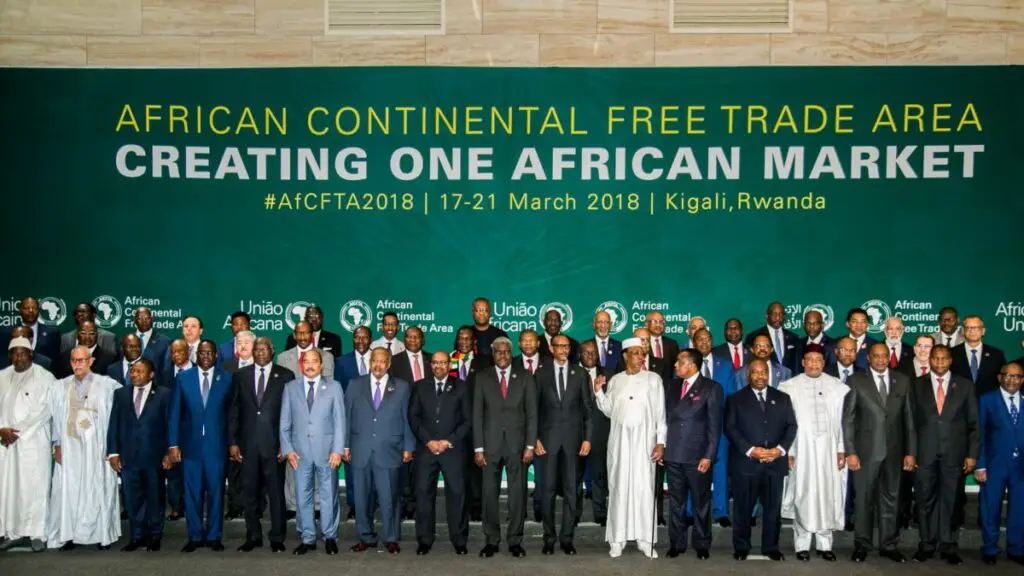
Top five priorities for the African Union Building Nutrition and Food Security top African Union Agenda Africa requires an equitable representation at the United Nations The Assembly of African Union Heads of State and Government held its 35th Ordinary Session early February this year and listed the continent’s top five priorities. The Assembly meeting saw the handover of the rotating leadership of the Union from H.E. President Antoine Tshisekedi of the Democratic Republic of Congo who was Chairperson in 2021, to President Macky Sall of Senegal. The Heads of State and Government launched the African Union Theme of the Year…
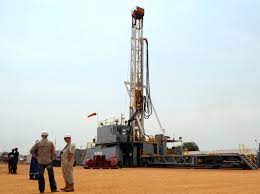
African nations are harnessing it’s push toward the oil and gas industry despite global push to reduce greenhouse gasses Oil-rich nations are keen to explore and pump out various fossil fuels as the rest of the world moves toward being Carbon Neutral COP 26 focused on resolutions for the world, but that was mainly the developed world, what about Africa? Part 1: The fuel of modern-day civilization The backdrop of modern-day development as embodied in Europe, America, Asia and the Arab Peninsula all lies in fossil fuel, crude oil, black gold. It is the burning of fossil fuels that runs…

African Union hosting eight events at the Expo 2020 Dubai The world sees Africa as the new frontier for business, trade and investment How the UAE is setting itself up as the launchpad for doing business in Africa The African Union (AU) is hosting eight events at Expo 2020 Dubai. With one event each week, the AU hopes to highlight the continent’s investment opportunities and reshape the general world view of Africa, the least not being, science and technology development on the continent. “From the onset, we set our sights on showcasing the incredible and continued opportunities that lie across…