


Trending
- Kenya’s construction costs surge at fastest pace in four years as fuel price shock hits
- African trade is growing despite the obstacles
- Why global capital is betting big on Africa’s digital promise
- Kenya posts stronger-than-expected Q1 growth at 5.3% on manufacturing rebound, tourism boom
- China’s new investment rules are about guardrails, not closed doors
- Zanzibar optimistic economic growth will hit 7.5% on tourism boom
- Kenya defies economic shocks to post record $22 billion in tax collections
- Forget South Africa: East Africa now rules in banking industry returns


Author: Giza Mdoe

Giza Mdoe
Giza Mdoe is an experienced journalist with 10 plus years. He's been a Creative Director on various brand awareness campaigns and a former Copy Editor for some of Tanzania's leading newspapers. He's a graduate with a BA in Journalism from the University of San Jose. Contact me at [email protected]

Unreported mergers and acquisitions, false advertising, or aggressive marketing tactics all place the farmer, the common trader, at odds with the market. A farmer in rural Tanzania incurs high costs of production particularly on the agro inputs used to grow, store and transport a given product. When this product gets to the market, it is put to competition with similar products produced by large corporate syndicates that can afford mass production at marginal cost. What it all means in simple terms, is the rural farmer’s prices are higher than the syndicated prices and so the farmer cannot sell and is…
Aga Khan Hospital will use the funding to support covid-19 pandemic response The funding will benefit hospital and outreach centres in Tanzania and Kenya Qualifying groups to receive care at no cost Aga Khan Hospital will start offering quality care treatment to qualifying needy patients at no cost. The development comes thanks to EUR 2.3 million of grant funds issued to the Aga Khan Hospitals in East Africa (Tanzania and Kenya) by France, through the French Development Agency. The funding has been issued through Proparco, the private sector financing arm of AFD Group, the French Development Agency to help increase…
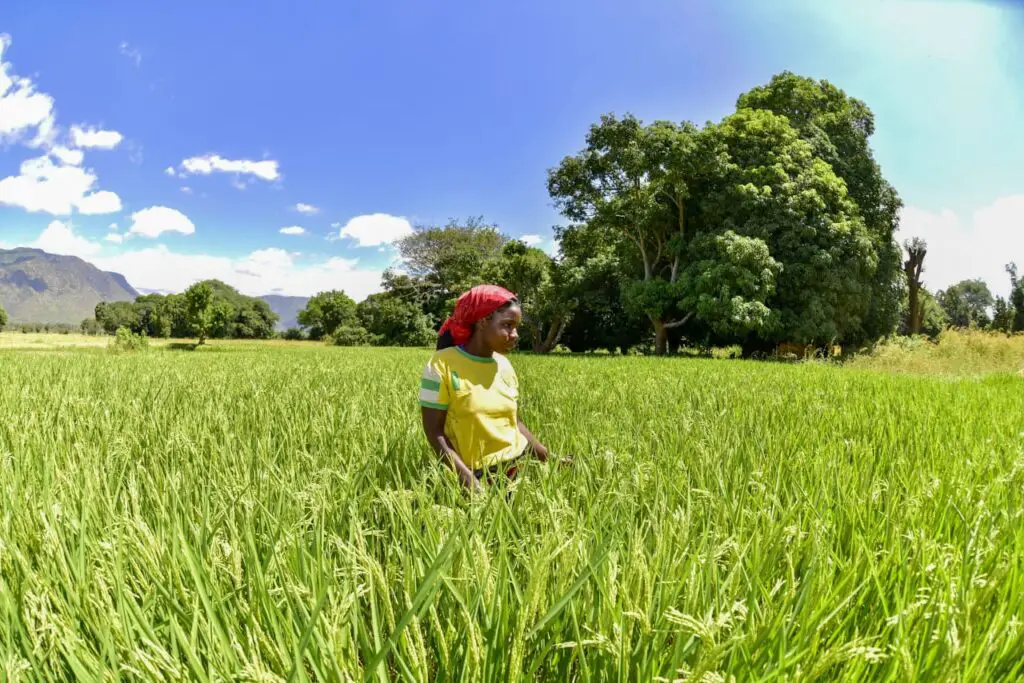
With so many more mouths to feed every year, the World’s ambitious Sustainable Development Goals, particularly on poverty eradication and ending hunger, seem further away than ever before.
The trend is global, and on October 16, 2021, the UN admitted and warned that the global fight against hunger is being lost.
With the warning, the UN called for action to improve food security for the world’s most vulnerable people, African coming on top of that list. For a place that relies so heavily on substantial farming for a livelihood, Africa faces a most daunting reality, clear forests to farm, lose potential output.
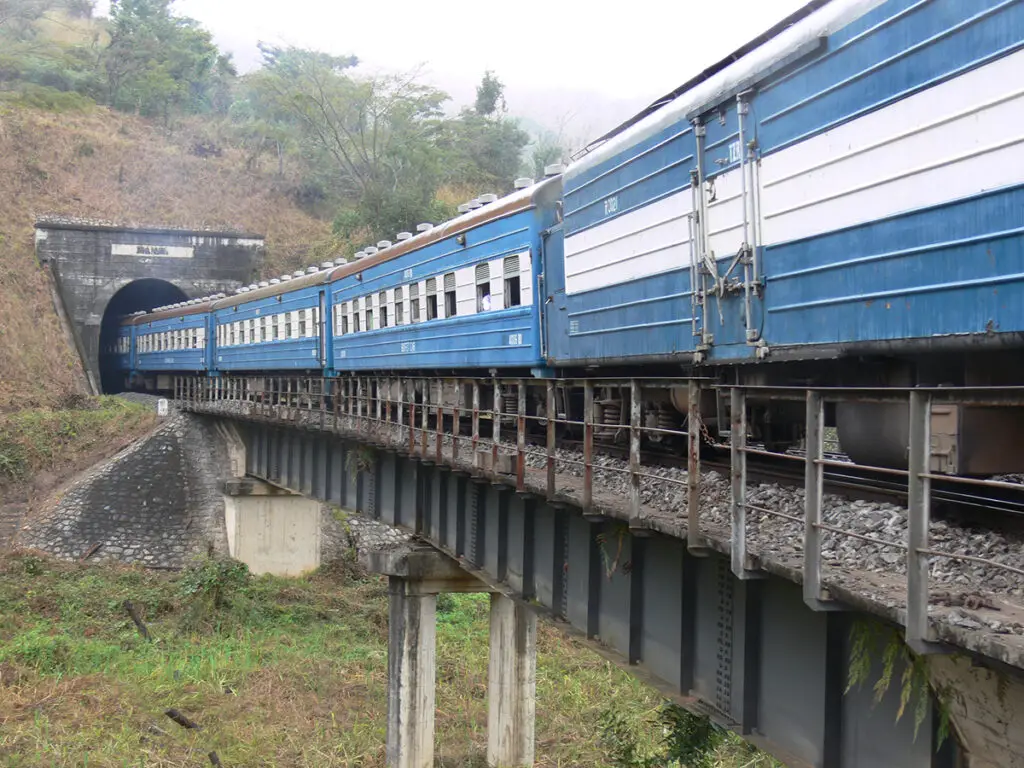
In the most recent development, an additional 282km of the railway are being constructed to connect Tanzania and Burundi giving the latter access to East Africa biggest and busiest port.
The construction is an extension of the already laid down Standard Gauge Railway (SGR) in Tanzania. The two governments have signed an agreement that paves way for new rail to be laid at a sum of US$900 million.
What does this extension mean for Burundi and how will it benefit Tanzania?
Apart from the obvious economic benefits, let’s first consider the small towns through which the railway snakes. From Tanzania’s little town of Uvinza in the Kigoma region to the bustling capital city of Gitega in Burundi, the railway is expected to spark life, rejuvenate slowed businesses and build new people relations.

Other than the trade issues, the session examined and harmonized implementation of decisions across various sectors of bilateral cooperation including immigration, education, transport, communication, defence and security, energy and mineral development among others.
The meeting was a success to say the least, however, it still remains to be seen whether in the wake of the meeting, Ugandan truckers will pay less at the Tanzanian border. With a six month reporting period, a lot can transpire in the interim.
It is now going towards a month since the January sit-down and no ground reports have been publicized as to whether the toll fees have been harmonized for Uganda to match other EAC charges at the Tanzanian border.

In Tanzania, the Fair Competition Commission (FCC) is responsible for promoting and protecting effective competition in trade and commerce as well as protecting consumers from unfair and misleading market conduct.
Without such an entity, companies use false advertising to capture markets, mergers of large firms occur undermining smaller businesses unfairly and the end-user, the consumer, is put at threat.
It is for this reason that Tanzania has recently passed the Fair Competition Order which sets out the thresholds for mergers that should be reported to the Fair Competition Commission (the FCC). In this most recent Order, Tanzania moved the merger notification threshold from USD 360,000 to USD 1.6 million.

Protectionism and non-tariff barriers persist between the two countries countries have varying processes which seriously delays the movement of goods due to the need for multiple certification processes across borders Harmonizing infrastructure projects key to boosting trade Tanzania Kenya EAC Trade Investment Regulations It is only through economic growth that the East African Community (EAC) can successfully realize its much-coveted regional integration. For this to happen, a delicate balance must be achieved between competition and cooperation; therein lies the dilemma, a race or partnership? As far back as two decades, in 2004, Kenya Uganda, and Tanzania, the founding partners of…
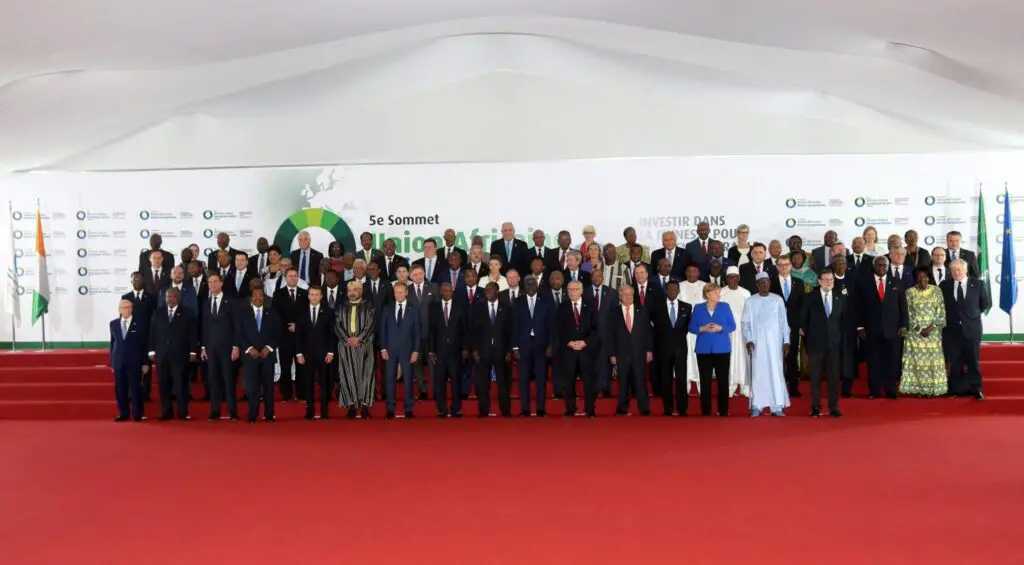
Even though the EU delegates admitted that; “We recognised, everybody, does, that there is an unbearable vaccination gap that has to be closed … between Africa and Europe,” the diplomats still said no vaccine patent waiver for Africa.
Also, despite scientists warning of the possibility of new Covid variants developing in Africa and the fact that just 5 per cent of Africa has been inoculated, the EU still said no to easing vaccine access to Africa.
The African Union (AU) had expected some sought of EU backing for targeted and time-limited Trips Waiver on vaccines. Trips stand for: Trade-Related Aspects of Intellectual-Property Rights and a waiver would have made it affordable for Africa to produce the vaccines in Africa.

On October 14, 2018, the Kenya Space Agency (KSA) presided over the launch of a 1U nanosatellite, Kenya’s first space mission. The event took place at Konza Technopolis, a large technology hub planned on the outskirts of Kenya’s capital, Nairobi.
At the launch, some five Kenyan top universities competed for top position each presenting its own satellite model with the primary payload being a low-resolution camera.
The competition was meant to see which university’s satellite camera would be able to perform remote sensing applications. The project primarily focused on using satellites to provide imagery for crop monitoring to assist in smart agriculture.

In the past decade alone, there has been a proliferation of new means of digital payment that to a great extent has brought about financial inclusion in a way that traditional platforms like banks and money lenders couldn’t.
It is the introduction of these new non-bank financial services providers generally referred to as FinTechs that has conjured the need for digital financial services regulations. Towering above FinTechs are Mobile Network Operators (MNOs), commanders of the Digital Financial Services market.
MNOs were lucky enough to find a ready and defined market to usurp. MNOs already had an existing client base and an enormous network of agents that were using their mobile telecom services for texting and calling.