
Trending
- African trade is growing despite the obstacles
- Why global capital is betting big on Africa’s digital promise
- Kenya posts stronger-than-expected Q1 growth at 5.3% on manufacturing rebound, tourism boom
- China’s new investment rules are about guardrails, not closed doors
- Zanzibar optimistic economic growth will hit 7.5% on tourism boom
- Kenya defies economic shocks to post record $22 billion in tax collections
- Forget South Africa: East Africa now rules in banking industry returns
- Lamu over Tanga: The commercial calculus that cost Tanzania $20bn refinery



Zanzibar legislators project 7.5% economic growth. President Mwinyi advocates private sector participation. Zanzibar recent talks with Brazil, US expected to bare fruits. Zanzibar has…
KRA reports record KES2.84 trillion (up 10.6%) in tax collections,…

UAE has cemented its spot as the main refining, and…


The main objective of the bloc is to promote economic interdependence and cooperation among member states to raise the living standards and encourage economic development.
Exportation in Mali is already feeling the pressure of the political instability in the country. Exports reduced from CFA552.39 billion in the first quarter of 2021 to CFA495.87 billion in the second quarter.
Mali lists among the poorest nations in the world. According to the 2021 Index of Economic Freedom, absence of property protection rights and a transparent and honest judicial system, and the higher degree of corruption tolerance makes it impossible to achieve greater economic freedom in the country.
Tanzania’s cement demand is estimated to have clocked 5.9Mt and is growing fast. Maweni Limestone…
Football fans await the thrill, but what does the competition offer to businesses, football clubs and players, organizers, and the Cameroonian government?
Cameroon has already invested almost US$4 billion in infrastructure. Two new stadia, roads, and modern infrastructure have been built to connect the six stadia that the event will be held. The other four stadia have also been renovated.
The investment has offered short-term employment opportunities to local engineers and labourers, especially the youth, in a country where 40 per cent of the population lives below the poverty line.
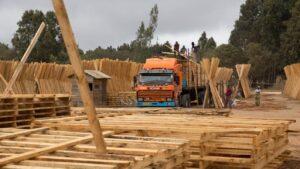
To discourage the use of firewood and charcoal, the European Union (EU) has committed to fund renewable energy solutions specifically designed to set up and support a sustainable cooking solution program.
EU Head of Delegation to Tanzania, Ambassador Manfredo Fanti announced the EU led program late last year in the capital, Dodoma. At the launch, the diplomat said the initiative is part of the EU’s efforts to mitigate climate change through the use of renewable energy solutions for cooking.
However, what is interesting here is that increase in the use of firewood and charcoal is not in rural Tanzania but in the urban centres.
Glencore has been for over 10 years in the cross-hairs of Global Witness, a non-governmental organization and lobby group established in 1993 that works to break the links between natural resource exploitation, conflict, poverty, corruption, and human rights abuses worldwide.
The organization has offices in London and Washington, D.C.
Global Witness has also in that time blown the whistle on what it describes as suspicious transactions and dealings in the DRC involving Glencore’s operations and its association with sanctioned businessman Dan Gertler.

e-POD is one of two recent family planning tracking apps developed with support from UNFPA.
The second is Qualipharm, created with local public health organisation HealthStrat, to track consumption of family planning commodities at county, sub-county and facility level. These are, says Charity Koronya, of UNFPA, “a game-changer, not only for health care staff but also for the citizens who rely on public health facilities to access life-saving commodities.”
The COVID-19 pandemic has affected women’s access to family planning information and services around the world, with some 12 million women experiencing disruptions to family planning services since it started, particularly in low-income countries and marginalised communities.