

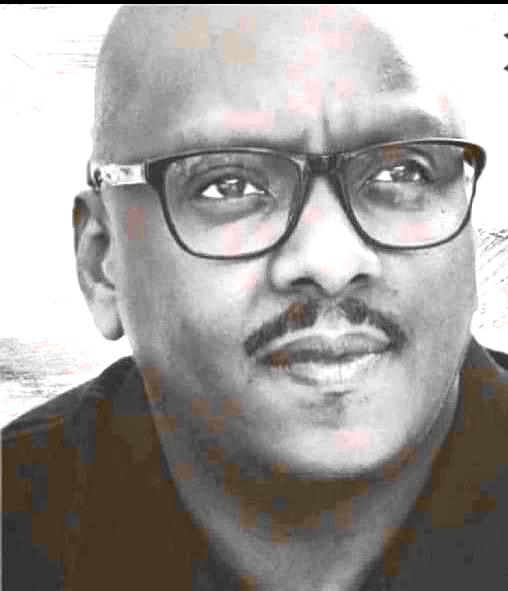
In a wide ranging interview, Ambassador Fred Ngoga Gateretse, who is the Head of the conflict prevention and early warning division at the African Union Commission (AU), confronts one of the most volatile and sensitive issue in the Great Lakes region: The persistent allegations of systemic discrimination against the Tutsi community in Burundi.
Ambassador Ngoga delves into the accusations of external manipulation, selective victimhood and the specter of destabilization albeit with a refreshing reliance on evidence, transparency and the firm belief that justice is the only durable foundation for lasting peace.
Q: You speak of systemic discrimination against Tutsi in Burundi. Can you provide verifiable data rather than individual testimonies or anecdotal cases? How do you distinguish between isolated incidents and a nationwide pattern?
A: My concern is not founded on isolated anecdotes but on recurring patterns reported over time by citizens, civil society actors, legal practitioners and independent human rights observers. While any individual case can be dismissed as exceptional, repeated allegations across different institutions and regions warrant careful examination.
I have deliberately avoided presenting these concerns as judicial findings. Rather, I believe they justify an independent, evidence-based inquiry. If the investigation confirms systemic discrimination, it should be addressed transparently. If it reaches a different conclusion, that should also be accepted. My objective is to establish facts, not to defend a predetermined narrative.
Q: Burundi’s Constitution already prohibits ethnic discrimination and provides legal remedies. If these safeguards exist, what evidence do you have that the problem lies in ethnic bias rather than administrative failures, corruption or broader governance issues affecting all communities?
A: The existence of constitutional protections is essential, but constitutional guarantees and lived reality are not always identical. Many countries possess strong constitutional provisions while continuing to struggle with unequal implementation.
Administrative failures, corruption and weak governance undoubtedly affect many Burundians. My concern is whether these broader challenges may, in certain circumstances, produce disproportionate impacts on particular communities. That question deserves objective examination rather than assumption. Strengthening institutions should benefit every citizen equally, regardless of ethnicity or political affiliation.
Q: Your critics say your narrative focuses almost exclusively on the grievances of one community while overlooking the concerns of others. How do you respond to accusations that your approach is selective and risks reinforcing ethnic victimhood narratives?
A: Every community in Burundi has experienced suffering at different points in our history. Recognising concerns raised by one group does not diminish the suffering of another.
My advocacy is based on a simple principle: whenever credible allegations of discrimination arise against any community, they deserve impartial investigation and fair resolution. I have spoken about the concerns raised by Tutsi citizens because those are the concerns that have been brought to my attention. I would do the same for any other community. Equal citizenship cannot be selective. It must apply universally.
Rejecting discussion of alleged discrimination for fear of appearing selective ultimately serves no community. Silence has never strengthened national unity.
Q: You are calling for an independent investigation. Why should the public trust that such an investigation would be genuinely independent and not become a political tool to advance a particular agenda?
A: Its credibility would depend entirely on its design.
An investigation should include respected jurists, independent legal experts, civil society representatives and, where appropriate, technical support from internationally recognised institutions whose role is to strengthen methodology rather than dictate conclusions. The composition and appointment process should be agreed through a transparent process involving multiple stakeholders.
Transparency, public reporting and due process are what create legitimacy not predetermined outcomes.
Q: Some observers argue that Burundi has spent decades trying to move beyond ethnic politics. By framing public policy primarily through an ethnic lens, are you not contributing to the very divisions you claim to oppose?
A: My objective is precisely the opposite.
Ignoring allegations because they involve ethnicity does not eliminate divisions; it risks allowing mistrust to deepen beneath the surface. I am aware that some may seek to exploit these discussions. The answer is not to suppress conversation, but to ensure it is conducted responsibly, with evidence and a commitment to constitutional solutions.
The path beyond ethnic politics is not silence but equal application of the law. When every citizen believes that institutions serve them fairly, ethnic identity gradually becomes less politically significant.
National unity is strengthened by justice, not by avoiding difficult conversations.
Q: You advocate greater representation of all communities in public institutions. What would success look like in practice? Are you proposing merit-based reforms, ethnic balancing or something closer to quotas?
A: Merit should remain the primary principle governing public appointments.
However, merit and inclusion should not be viewed as competing values. Success would mean recruitment systems that are transparent, competitive and trusted by all communities.
Rather than rigid quotas, I support institutions that are demonstrably open, accountable and free from unlawful discrimination.
Q: Your language about inclusion and representation closely resembles arguments frequently made by actors outside Burundi. How do you respond to concerns that your narrative mirrors regional political agendas rather than emerging organically from Burundian realities?
A: The principles of equality before the law, equal opportunity and constitutional governance are universal. They belong to no government and no political movement. I understand why comparisons are made with regional politics. However, my position is grounded in Burundi’s own constitutional commitments and the lived experiences of Burundian citizens. I share the concern that external actors should not impose their agendas on Burundi—that is precisely why my advocacy is framed around Burundi’s own laws and institutions, not foreign policy objectives
My position arises from my commitment to Burundi’s Constitution and to the aspirations of Burundian citizens for institutions that command the confidence of everyone. Coincidental similarities with arguments made elsewhere do not invalidate principles rooted in universal human rights.
Q: Some critics suggest that allegations of anti-Tutsi discrimination are sometimes amplified internationally without sufficient scrutiny, creating a picture of Burundi that may not reflect the experiences of the broader population. How do you ensure your claims are evidence-based rather than politically useful to foreign audiences?
A: The best safeguard is intellectual honesty. I distinguish carefully between allegations, evidence and conclusions. I avoid exaggeration and consistently call for independent verification.
I rely on documented sources. I avoid unverifiable claims and anonymous allegations. I also seek input from a range of perspectives, including those who may disagree with my conclusions
My audience is first and foremost Burundians. International attention should encourage stronger institutions and better evidence, not political point-scoring.
Q: There are those who see a convergence between your arguments and narratives promoted by the government of Rwanda regarding the treatment of Tutsi populations in the region. Is that alignment intentional, coincidental or do you reject the comparison altogether?
A: My positions are neither shaped nor constrained by the positions of neighbouring governments. I do not coordinate with any government. My positions are developed through my own analysis of Burundi’s constitutional commitments and the evidence available to me. If my conclusions happen to align with what others say, that does not make them any more or less valid—the evidence must speak for itself
Questions about equality, constitutional governance and human dignity should never be dismissed simply because another government expresses similar concerns.
Every issue should be judged on its own evidence and within Burundi’s own constitutional framework.
Q: Have you had any direct or indirect contact with Rwandan officials, organisations, advocacy networks or international groups that support similar narratives? If so, how can the public be confident that your campaign is independent of external influence?
A: My advocacy is independent and guided by principles rather than political affiliations. I understand why the public would want to know whether I am acting on behalf of any external actor. I am not. I have received no funding, instructions, or direction from any government or external organization for this advocacy
Like many individuals engaged in public affairs, I interact with people from different backgrounds and organisations. Such interactions should never be confused with direction or influence. None of these interactions have influenced my positions, and I have never been asked to advance anyone else’s agenda
Ultimately, the credibility of my position should be judged by the quality of the arguments and evidence I present, not by speculation about who may share similar concerns.
Q: If an independent investigation were to conclude that discrimination exists but is not primarily directed at Tutsi, would you accept those findings, or is your conclusion already fixed?
A: Absolutely.
If an investigation conducted with recognised standards of independence and transparency reached that conclusion, I would accept it.
My commitment is to equal justice, not to validating one particular narrative.
Q: What evidence would convince you that your current assessment is mistaken or exaggerated? In other words, what would falsify your theory?
A: If robust evidence from independent researchers demonstrated that recruitment, promotion, access to justice and public administration operate without unlawful ethnic bias, or that the patterns I have identified were better explained by other measurable factors, I would revise my assessment accordingly.
Responsible public advocacy requires openness to evidence, even when it challenges one’s assumptions.
Q: Many Burundians fear that renewed emphasis on ethnic identity could destabilise social cohesion. What responsibility do you bear if your campaign unintentionally increases polarisation or mistrust between communities?
A: Public figures always have a responsibility to communicate carefully.
That is why I consistently advocate lawful, peaceful and constitutional solutions rather than confrontation. I have consistently rejected violence, inflammatory rhetoric, and extra-constitutional action. My advocacy is limited to peaceful dialogue, legal redress, and institutional reform.
True reconciliation requires trust in public institutions. Addressing legitimate concerns responsibly is part of strengthening cohesion, not weakening it.
Read also: The Impact of U.S.-Israel War on Iran on Peace and Security in Africa
Q: You call for measuring representation and inclusion. Should these measurements be applied equally to all ethnic groups, regions and political affiliations, even if the results challenge your own claims?
A: Yes.
Objective measurement has value only if it applies equally to everyone and if we are prepared to accept the findings, whether they confirm or challenge our assumptions.
Evidence should guide policy, not ideology.
Q: Some would argue that your campaign is less about equal citizenship and more about restoring the political influence of a historically influential elite. What is your response to those who view your activism through that lens?
A: I respectfully disagree with that characterisation. I understand the historical context that makes this concern understandable. However, my advocacy is not about returning any group to a position of dominance
My advocacy is not about restoring privilege for any group. It is about ensuring that no Burundian is disadvantaged because of ethnicity, political affiliation or background.
Equal citizenship cannot exist where any community believes it is excluded from full participation in national life.
History teaches us that lasting peace is built not on the dominance of one group over another, but on institutions that command the confidence of all citizens.
That is the Burundi I believe in – a republic where rights are guaranteed by law, opportunities are determined by merit, and every citizen can participate with dignity and without fear.
The opinions expressed in this interview are Ambassador Fred Ngoga Gateretse‘s alone and do not reflect the official positions of the African Union (AU).