

- Oceana ambassador highlights urgent need to progress 30×30, advance high seas protection, and elevate women’s leadership in ocean conservation.
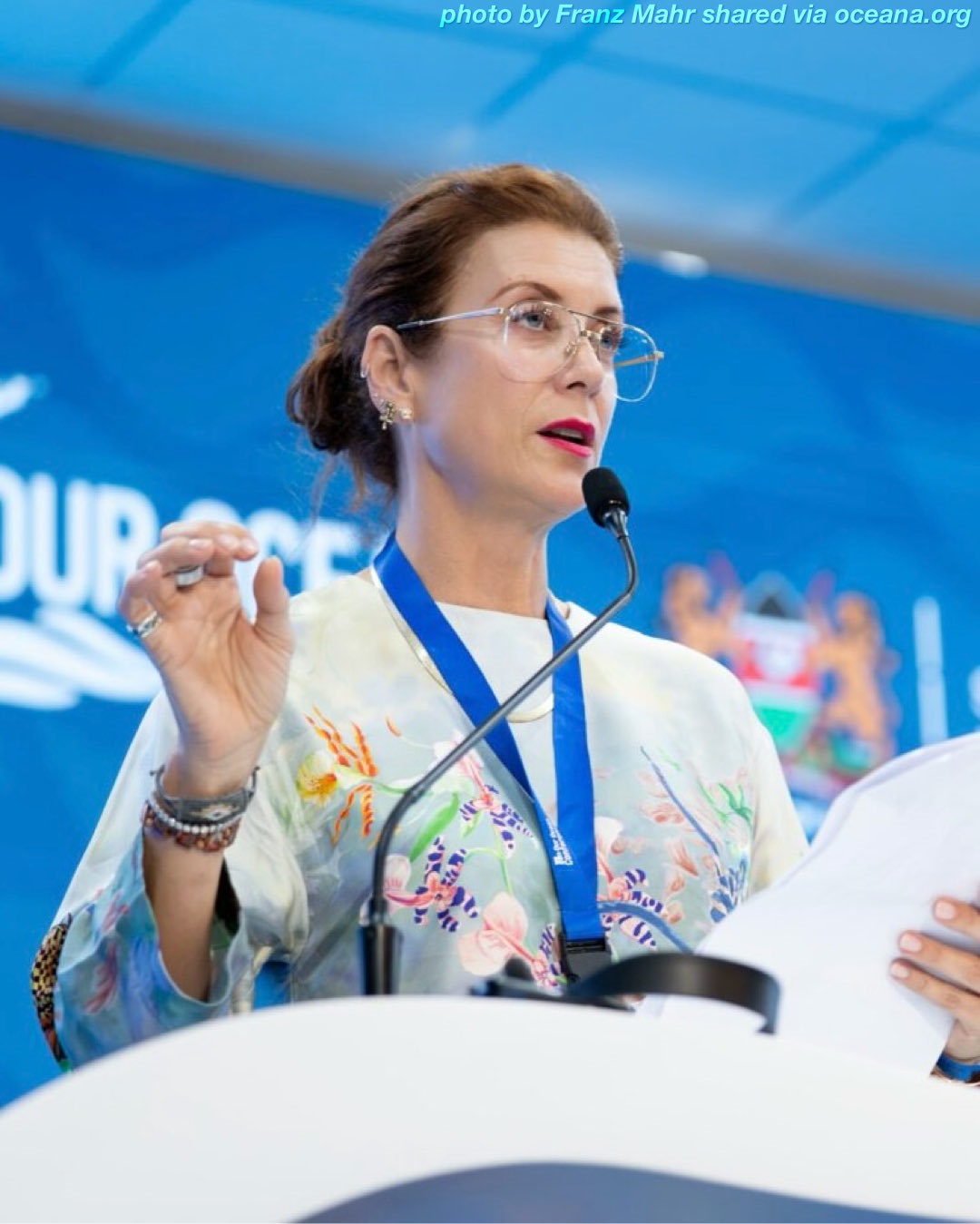
At a defining moment for the future of the world’s oceans, actress, advocate, and Oceana ambassador Kate Walsh joined global leaders, policymakers, scientists, conservationists, and coastal communities at the 11th Our Ocean Conference (OOC11) in Mombasa, Kenya.
During a keynote address, Walsh called for urgent action to protect marine ecosystems, strengthen coastal livelihoods, and accelerate progress toward protecting at least 30 per cent of the world’s oceans by 2030.
“A few years ago, world leaders came together around an extraordinary commitment to protect at least 30 per cent of the ocean by 2030,” said Walsh. “But the deadline nears and we have fallen behind. Today, just 10 per cent of the ocean is protected, and only about 3 per cent is strongly protected. The gap between ambition and action remains significant.”
The session focused on accelerating progress toward the global 30×30 target, strengthening marine protected areas (MPAs), and advancing international cooperation to safeguard biodiversity beyond national waters through the High Seas Treaty.
Read also: Why fish and fisheries may be Africa’s most overlooked food security solution
Kate Walsh calls for community-led conservation
In her remarks, Walsh emphasized the importance of community-led conservation and inclusive ocean governance. On Tuesday, she participated in a special conversation titled “Women’s Voices Are Key to the Future of Kenya’s Ocean,” where women leaders from Kenya’s coastal communities gathered to discuss marine conservation, sustainable livelihoods, and locally led solutions.
The event featured Amina Komora, a fisher from the Sanye Community in Lamu County; Zulfa Haasan, widely known as “Mama Mikoko,” a pioneering mangrove conservation leader from Pate Island; and Raabia Hawa, founder and director of Ulinzi Africa Foundation.
Moderated by Dr. Christina Chemtai Hicks, Professor at Lancaster University, Pew Marine Fellow, and Oceana Board Member, the discussion explored the indispensable role women play across fisheries, conservation, entrepreneurship, and community leadership.
Walsh also visited the Jomvu Kuu Beach Management Unit and Jomvu Kuu Women in Fisheries alongside representatives from the Government of Kenya. These experiences informed her remarks on the mainstage.
“We’ve seen time and again that conservation is at its strongest and most successful when local communities help lead,” Walsh said. “And lasting protections require partnership. Indigenous Peoples, coastal communities, artisanal fishers, and local leaders must have a meaningful seat at the table.”
With momentum building at OOC11, Walsh emphasized that the window for action is narrowing.
“The ocean has always been there for us,” Walsh concluded. “It has fed us, protected us, connected us, and inspired us. Now it is our turn to be there for the ocean.”
Read also: Women’s entrepreneurship and economic empowerment within fisheries value chains