



As global food security systems reel from supply chain shocks, climate volatility, and geopolitical conflict, a quiet consensus is emerging among marine scientists and nutrition economists: Africa’s most resilient, nutrient-dense, and locally embedded food source is not a grain or tubers, it is fish.
Yet for policymakers, fisheries remain stubbornly sidelined, treated as a rural subsistence activity rather than a strategic sector capable of feeding millions and buffering against external shocks.
That perception gap is costing Africa. According to Dr. Christina Chemtai Hicks, a Professor at Lancaster University, Pew Marine Fellow, and member of Oceana’s Board of Directors fish are a “hidden superfood” whose potential to combat malnutrition, support livelihoods, and reduce import dependence has been systematically undervalued by policymakers.
With an estimated $24 billion contributed annually to African economies and some 15 million jobs supported by fisheries and aquaculture, the sector punches well above its weight in public health and poverty reduction. But Hicks warns that this foundation is under threat, not only from overfishing and illegal industrial trawling but, more insidiously, from a failure of political imagination.
In an exclusive interview ahead of the Our Ocean Conference (OOC11) with The Exchange Africa, Dr. Hicks delves into Africa’s fishing industry and its vital role in enhancing food security, livelihoods, culture, and economic opportunity for millions of Africans:
Q: Dr. Hicks, when we talk about food security in Africa, maize, rice, and cassava dominate the conversation. Why do you believe fish remains the continent’s most underappreciated food security asset?
A: Food security policy has historically focused on hunger because that is what is most immediate and urgent. To address hunger, you need to get calories to people as cheaply as possible, and in a form that will not spoil. Across Africa, maize, rice, and cassava are the best way to do this.
But, hunger isn’t our only problem – we need to make sure people are fed and nourished, if we fill our bellies with calories that do not contain many nutrients, we are introducing longer term problems in the form of hidden hunger – that is micronutrient deficiencies that undermine healthy physical and cognitive development, which has been estimated to depress African economies GDP’s by up to 11 per cent.
To address this, programs look to fortify grains with micronutrients, and these efforts are and will continue to be essential. But we can also build a healthy, resilient, African food system, one that is food and nutrition secure, one that will not need these interventions much in the future.
I believe fish are a hidden super food and key in this vision because they are rich in micronutrients – things our bodies need in tiny quantities but are often lacking in our diets. Micronutrients are essential for our physical and mental development, particularly in the first 1,000 days of life and for mothers who are pregnant or nursing.
Although we can get these micronutrients from other animal proteins such as beef, chicken, and goat, fish is a much cheaper, more easily transported (especially when dried) and far lower carbon footprint food source.
Fish is available along all our coastlines, in all our lakes, and rivers. We have caught and eaten fish for thousands of years, and we have been managing these fisheries for as long as we have been fishing them, through traditional and modern approaches.
But, we have for far too long overlooked the value of fish in our diets, the importance of sustainably managing our fisheries for local consumption, and what is lost when we open up our fisheries to new access agreements and export markets.
Q: Unlike many food systems that rely on imports, Africa’s fisheries are largely local. How does this decentralised nature make fish uniquely suited to buffer against global supply shocks like the war in Ukraine or pandemic-era disruptions?
A: We do import and export a lot of fish, there are differences across countries, some are net exporters, while others are net importers. However, our small-scale fisheries are mostly domestic and because of the important role they play, it’s critical that we protect them through management and recognition.
Across Africa, fish are consumed both fresh and dry, and often accessed through informal, territorial markets. Dried fish is more commonly consumed, particularly among low-income households. Fish are dried because certain types are caught in large quantities, sometimes periodically, for example because they are schooling or seasonal (think of Omena in East Africa, Kordonnyen in Seychelles, or Yaboi in West Africa).
Often, to avoid wastage and increase shelf life, women dry these fish in the sun, and they are distributed, on the back of lorries, through informal markets and networks, across the continent, including to places far from bodies of water. The cost of these fish, their drying methods, and transportation (as they do not need to be refrigerated), is cheap, making them accessible especially to low-income consumers.
These markets and their distribution networks are often informal and disconnected from global markets. Although they will be impacted by rising oil prices that affect costs of transport, they tend to be more buffered than more globalised commodities.
Q: Many policymakers still view fisheries as a rural, subsistence activity rather than a strategic food sector. What is the cost of this perception gap in terms of malnutrition and poverty?
A: Fisheries across Africa are both rural and urbanised. Both need to be recognised – their commonalities and differences – and protected. The fact that fisheries are often overlooked makes it very hard for them to alleviate poverty, meaning we lose out on the potential of these fisheries to support livelihoods. We also risk undermining systems of governance that have persisted for generations.
It cannot be understated: Fisheries are an essential food sector across Africa. African governments have an opportunity to create community-led policies that ensure this sector thrives for generations to come.
Fish are among the most important sources of nutrition across Africa and provide more than half of all animal protein consumed in some African countries. Fish also supply essential micronutrients and fatty acids that are vital for healthy growth and development, especially for women and children.
The fisheries sector also contributes an estimated $24 billion annually to African economies, and remains a vital source of employment, income, and opportunity. Fisheries and aquaculture support about 15 million jobs in Africa, including millions of people engaged in small-scale and subsistence fishing.
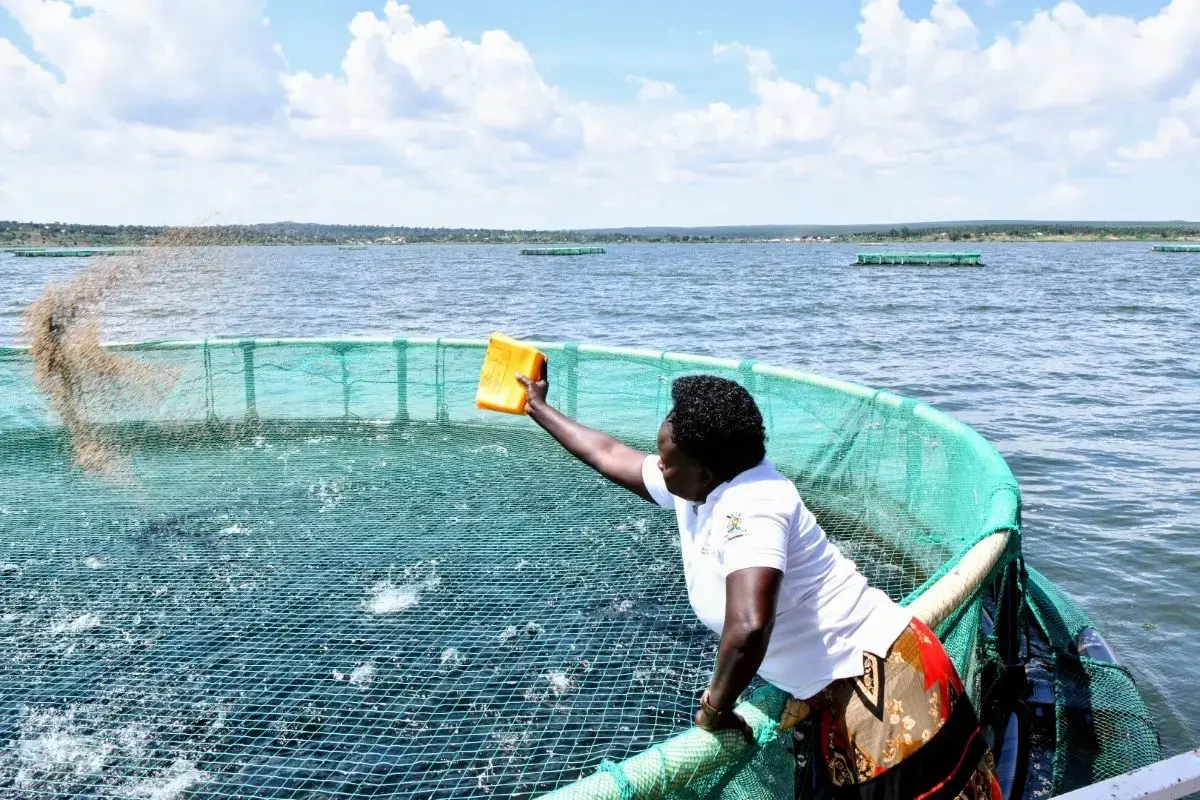
Q: We often hear about overfishing from foreign industrial trawlers. But is the bigger, quieter crisis actually the neglect of small-scale, artisanal fisheries that feed millions?
A: In Kenya alone, small-scale fishers account for more than 94 per cent of total landings in the fisheries sector. And as Kenya’s population grows, demand for fish is expected to rise, making it critical to strengthen conservation and management of both inland and freshwater fisheries and coastal and marine fisheries.
But the situation in West Africa is much different, with many countries facing intense pressure from overfishing, illegal fishing, and competition between industrial fleets and small-scale fishers.
One thing remains true across the African continent: If we want fish to continue to play a critical role in food security, livelihoods, culture, and economic opportunity, small-scale fishers and coastal communities, who often have the most to lose, must be at the centre of ocean decision making.
Q: If you had one hour with a finance minister in a landlocked African country, how would you convince them that a fishery 500 kilometres away is a national food security priority?
A: Fish are traded regionally, often reaching far beyond the shores of where they were caught. And small fish are highly nutritious and relatively cheap, making them an excellent source of food and nutrition for communities across Africa.
Often, to avoid wastage, women dry fish in the sun, and they are distributed, on the back of lorries, through informal markets and networks, across the continent, including to places far from bodies of water.
The cost of these fish, their drying methods, and transportation used to ship them (as they do not need to be refrigerated), is cheap making them accessible especially to low-income consumers.
However, a lot of the fish caught locally in Africa is being turned into fishmeal and fish oil to feed fish and livestock halfway around the world, putting this vital resource and the communities who depend on it most at risk.
Read also: Tackling overfishing: Why EAC needs unified regulations to safeguard fisheries
Q: Nutrition data often focuses on calories. But fish provides critical micronutrients like zinc, iron, and omega-3s. Can you quantify what losing access to fish would mean for cognitive development across an entire generation of African children?
A: The cost would be immeasurable. Right now, around 9 per cent of the global population is facing the threat of hunger, and more than 1 billion people live in poverty in major fishing nations.
In Ghana for example, fish account for around 60 per cent of the population’s protein intake. As many of the country’s fish populations continue to be overexploited due to overfishing, foreign distant-water fishing, and a lack of good management, it puts that vital protein source at risk, as well as the millions of people who rely on it, including women and children.
Fish are among the most important sources of nutrition across Africa, providing more than half of all animal protein consumed in some countries. Research shows that small-scale fisheries in Africa provide critical nutrients that could help more than 137 million women meet 20 per cent of their recommended intake for calcium, zinc, omega-three fatty acids, and selenium.
Fish are a hidden super food; they are rich in micronutrients – things our bodies need in tiny quantities but are often lacking in our diets. Micronutrients are essential for our physical and mental development, particularly in the first 1,000 days of life and for mothers who are pregnant or nursing.
Although we can get these micronutrients from other animal foods such as beef, chicken, and goat, fish is much cheaper, more easily transported – especially when dried, and has a far lower carbon footprint than these other animal foods.
Read also: Biotech in Kenya: Can Innovation Guarantee National Food Security?