

- BAT Kenya highlights continued progress across its sustainability priorities: About $10.8 million (KSh 1.4 billion) paid for tobacco leaf purchases from farmers
- Over 80,000 livelihoods supported across the value chain while 99% of operational waste recycled, with zero waste sent to landfill.
- Firm reported 55% reduction in Scope 1 & 2 emissions (vs 2020 baseline) and 42% of total water recycled. Additionally, 100% of contracted tobacco farmers are growing alternative crops for food security and additional income.
BAT Kenya shareholders have approved a final dividend of $0.46 (KSh60) per share at the company’s 74th Annual General Meeting on Monday, bringing the total payout for the year ended 31 December 2025 to a record $0.54 (KSh 70) per share, the highest in the cigarette maker’s history.
Record shareholder payout came despite a sharp deterioration in the company’s operating environment, with illicit tobacco trade surging to 45 per cent of Kenya’s total cigarette market in 2025, reflecting 8 per centage point increase from the previous year, according to disclosures made at the AGM.
Profit before tax for the year rose 18 per cent to $59,497,900 (KSh7.7 billion), up from $ $50,193,000 (KSh6.5 billion) in 2024. BAT Kenya attributed the performance to effective cost management and lower finance costs, which more than offset revenue erosion from the rapidly expanding illicit market.
“Despite a challenging operating environment in which the illicit trade in tobacco continues to grow, the company delivered strong financial performance,” managing director Crispin Ahola said in a statement following the AGM.
Read also: Tax lobby reveals Kenya’s tobacco tariffs below WHO benchmark
BAT Kenya grappling with illicit tobacco products trade
The scale of the illegal market presents a mounting challenge not only for BAT Kenya but also for the national treasury. With excise duties, VAT, PAYE, and corporation tax collectively contributing to government revenues, the company noted that it has paid over KSh100 billion in various taxes over the past six years. However, with nearly half of all cigarettes sold in Kenya now escaping the tax net, that contribution is under threat.
BAT Kenya stopped short of naming specific enforcement failures but called for “more robust measures and enhanced enforcement actions” to arrest the menace. The company said it continues to engage with relevant government agencies and stakeholders in support of efforts to strengthen enforcement and drive “a more stable and compliant operating environment.”
Analysts note that the 45 per cent illicit share represents a significant acceleration. The figure had already been climbing for years, but the 8 percentage point jump in a single year suggests that enforcement gaps have widened or that smuggling routes have become more sophisticated.
Read also: Tobacco’s toll: Tanzania rakes in $400M annually, but at what cost to smokers?
BAT Kenya sustainability push and farmer livelihoods
Away from the illicit trade challenge, BAT Kenya highlighted progress across its sustainability agenda, a notable feature of the AGM presentation given the increasing scrutiny of tobacco companies’ environmental, social and governance credentials.
The company paid $10.8 million (KSh1.4 billion) to tobacco leaf farmers during the period, up from KSh1.1 billion the previous year, supporting approximately 2,200 contracted farmers across Bungoma, Busia, Migori, Meru and Homa Bay counties.
BAT Kenya said it supports over 80,000 livelihoods across its entire value chain, including tobacco farming, processing, manufacturing, distribution, retailing, transport, logistics and domestic procurement.
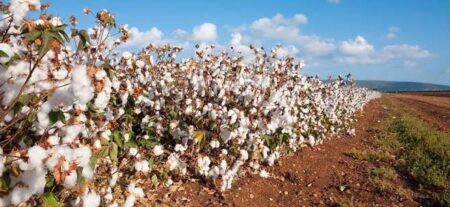
In a claim likely to attract attention from public health advocates, the company stated that 100 per cent of its contracted tobacco farmers are now growing alternative crops alongside tobacco, up from 98 per cent in the previous year, through farmer training on crop diversification and sustainable practices.
The company’s Rural Women Development Programme expanded to 334 participants in 2025, offering capacity building, financial literacy, and income diversification opportunities.
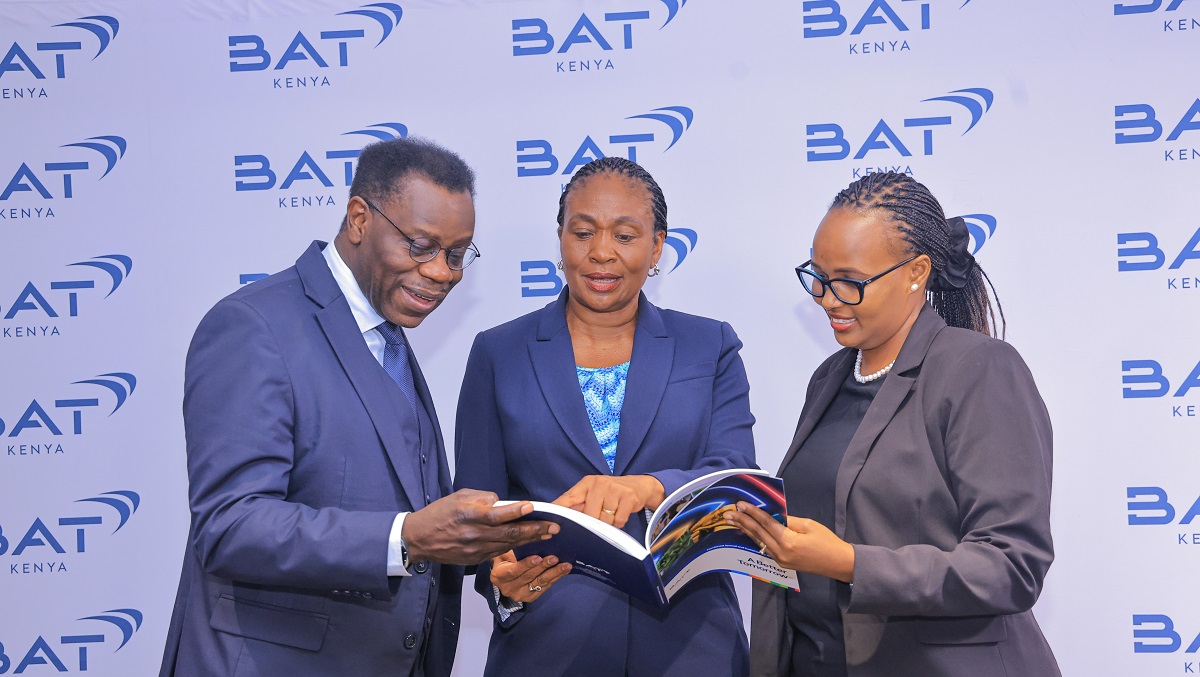
BAT Kenya key environmental metrics
BAT Kenya reported a 55 per cent reduction in Scope 1 and 2 emissions compared with its 2020 baseline, reflecting what the company described as an ongoing focus on responsible resource use, biodiversity conservation and energy efficiency.
The company recycled 42 per cent of its total water consumption during the period, exceeding its 2025 target of 30 per cent. Total waste generation fell to 1,105.6 tonnes in 2025 from 1,151.8 tonnes in 2024. Of the 2025 total, 1,095 tonnes, or 99 per cent, were recycled, with zero waste sent to landfill.
These figures are likely to feature prominently in BAT Kenya’s engagement with sustainability-focused investors, though critics may argue that the fundamental nature of the tobacco business remains at odds with ESG principles.
Read also: How heavy taxation, illicit trade killing Kenyan industries
Strategic pivot to smokeless products
Beyond its traditional cigarette business, BAT Kenya said it remains focused on advancing the global parent company’s purpose of “realising A Better Tomorrow by Building a Smokeless World.” The company highlighted the successful relaunch of VELO oral nicotine pouches in Kenya, alongside continued advocacy for “progressive, evidence-based regulation” on tobacco harm reduction.
The pivot to smokeless products reflects a broader industry trend as major tobacco companies seek to diversify away from combustible cigarettes in response to declining smoking rates in developed markets and tightening regulatory environments globally. However, in Kenya and much of Africa, traditional cigarettes remain the dominant revenue driver.
Corporate footprint and market position
BAT began operations in Kenya in 1907 and has been listed on the Nairobi Securities Exchange since 1969. As of 31 January 2026, the company had 7,388 shareholders, of whom 7,255 were local.
The company operates a manufacturing plant in Nairobi and a Green Leaf Threshing Plant in Thika, which together serve as a strategic manufacturing hub, exporting more than 65 per cent of their output to ten other African countries.
This export exposure provides some buffer against domestic market pressures, including the illicit trade surge, but also ties the company’s fortunes to regional economic conditions and cross-border smuggling dynamics.
Outlook and risks
Looking ahead, BAT Kenya said combatting illicit cigarettes trade will remain a top priority “given its impact on government revenue and the sustainability of legitimate businesses.” The company said it would continue advocating for stronger enforcement action while simultaneously pursuing its smokeless products strategy.
Ahola acknowledged the duality of the company’s position: strong financial results on paper, but an operating environment that is demonstrably deteriorating. “The year was, however, marked by a continued rise in illicit cigarette trade, which remains a significant global and domestic challenge,” he said.
For investors, the record KSh 70 per share dividend will be the headline figure. But for policymakers and public health officials, the disclosure that 45 per cent of Kenya’s cigarette market is now illegal represents a systemic failure of enforcement — one that deprives the exchequer of billions in tax revenue while exposing consumers to unregulated products of unknown origin and quality.
Whether the government responds with the “more robust measures” BAT Kenya is demanding remains an open question. What is not in doubt is that the illicit trade problem is accelerating — and that BAT Kenya’s ability to sustain record dividends will increasingly depend on whether authorities can bring it under control.
(1USD=KSh130)