


Trending
- De Beers’ shutdown triggers ripples across South Africa’s diamond mining belt
- Nigeria’s oil output soars to heights not seen since 2020. Here’s what’s changing behind the numbers
- Kenya’s construction costs surge at fastest pace in four years as fuel price shock hits
- African trade is growing despite the obstacles
- Why global capital is betting big on Africa’s digital promise
- Kenya posts stronger-than-expected Q1 growth at 5.3% on manufacturing rebound, tourism boom
- China’s new investment rules are about guardrails, not closed doors
- Zanzibar optimistic economic growth will hit 7.5% on tourism boom



Zanzibar legislators project 7.5% economic growth. President Mwinyi advocates private sector participation. Zanzibar recent talks with Brazil, US expected to bare fruits. Zanzibar has…

KRA reports record KES2.84 trillion (up 10.6%) in tax collections,…

UAE has cemented its spot as the main refining, and…


Through Zambia Consolidated Copper Mines Limited (ZCCM), the Zambian government will assume ownership in Mopani…
Tanzania central bank last week produced a monthly economic review for December 2020, which depicted…

Africa’s second-biggest economy, South Africa—will face four days straight of power cuts (from 1200 noon)…

The Kilimanjaro mountain scape, Serengeti fascinating landscape, the Ngorongoro conservation magical experience and the spice…
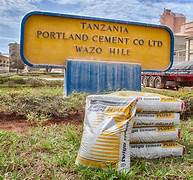
As of October last year, Tanzania, East Africa’s Largest producer of cement, was facing so much shortage that prices almost doubled.
A 50kg bag of cement that would, on normal market weather conditions go for about USD 6 the price shot up 30 per cent to a little over USD 8, show the National Bureau of Statistics data for October 2020.
It was a paradox, and the hardliner government wouldn’t have it, newly re-appointed into power, Tanzania’s Prime Minister Kassim Majaliwa was swift to act. He ordered a nationwide inspection of all known cement factories, warehouses, distribution points and even retail shops.
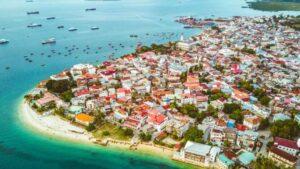
The Tanzanian central bank (Bank of Tanzania – BoT) published a detailed economic bulletin for the quarter ending September 2020, which showed Zanzibar’s economy taking a nosedive contracting by 2 per cent compared to a growth rate of 5.2 per cent in the corresponding quarter in 2019.
Zanzibar—the semi-autonomous region of Tanzania, is taking various measures to enhance economic and trade liberalization that can pave a smooth way for the private sector to get engaged in the local, regional and international arena.