

Trending
- African trade is growing despite the obstacles
- Why global capital is betting big on Africa’s digital promise
- Kenya posts stronger-than-expected Q1 growth at 5.3% on manufacturing rebound, tourism boom
- China’s new investment rules are about guardrails, not closed doors
- Zanzibar optimistic economic growth will hit 7.5% on tourism boom
- Kenya defies economic shocks to post record $22 billion in tax collections
- Forget South Africa: East Africa now rules in banking industry returns
- Lamu over Tanga: The commercial calculus that cost Tanzania $20bn refinery


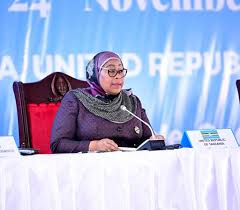
In their letter dated June 26th, 2024, High Commissioners and Ambassadors from 10 countries expressed their dissatisfaction with how the Tanzania Revenue Authority (TRA)…
Climate change will push 132 million people into poverty by…
Imaginative agriculture concepts are essential to sustainable food production…


The future is here and the future is digital. Who can in these modern times…
Tanzania economy is projected to grow at 5.6 per cent, the central bank of Tanzania…
The Household Budget Survey (HBS) report for 2019/2020 was released by the office of the chief government statistician (OCGS) in May painting the poverty reduction agenda on different levels, as the tool collected information pertaining to private households’ economic activities, household income and expenditure, housing characteristics and expenditure.
The HBS report argued that the 2019/20 HBS helped in evaluating Zanzibar’s performance concerning the United Nations Sustainable Development Goals (SDGs), as well as regional development strategies.
Zanzibar is the semi-autonomous region of the United Republic of Tanzania, made up of two isles, Pemba
Zanzibar International Tourism Show- The Exchange
and Unguja, inhabited by more than 1.7 million people. The archipelago is dominated by two main economic operations, agriculture and services, particularly the tourism service industry.
Nonetheless, production remains very low, and this is true for most other parts of the continent as well. Even though Africa has some of the world’s largest water bodies and is surrounded by the Atlantic on the West and the Indian Ocean on the East, the Mediterranean Sea in the North and the merging of the Atlantic and Indian Oceans to the South, the continent contributes only a small percentage of the global fish supply.
Tanzania is looking to change this fact. Following a presidential order to boost fish production, the country is embarking on a gigantic project to harvest 12 tonnes of fish per month. Undertaken by the country’s National Service (military branch) the project is expected to also produce more than 200,000 fish seeds.

CRDB is enjoying a remarkable dash for its shares having sold an impressive 5.0…

Tanzania has earned a record $3 billion from gold sales as price for the…