
Friday, July 17

Industry and Trade

A textile company in Ethiopia

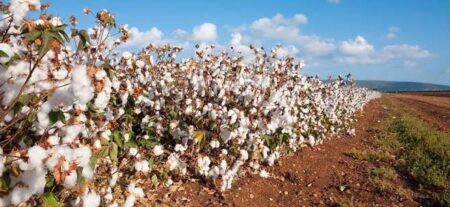
Textiles and clothing are an essential part of everyday life and an important sector in the global economy, and more so Textile in Africa.

According to a report titled Circular economy in Africa: Fashion and textiles, in sub-Saharan Africa, the combined apparel and footwear market is estimated at $31 billion. The textile industry in Africa is estimated to grow at a compound annual growth rate of approximately 5 percent between 2019 and 2024. In addition, the production of cotton accounts for almost 7 percent of all employment in some low-income countries.

African countries boasted thriving textile industries in the 1970s and early 1980s. That was until the African market was flooded by what Kenyans call Mitumba (second-hand clothes), also called chagua in Rwanda, and salaula in Zambia, dealing the textile industry a blow leading to its deterioration.

Oil and gas in Senegal

Oil and gas exports from Senegal are scheduled to begin in earnest in 2023, spelling a new dawn for the economy of the West African country, popularly renowned as the ‘Gateway to Africa,’ located in the western most  point of the continent. The Grand Tortue Ahmeyim (GTA) LNG gas project, will be a game changer for the country, radically transforming its economy, which  is projected to register robust growth in 2023, outshining other countries in the Sub-Saharan Africa. According to the recent World Economic Outlook forecast by the International Monetary Fund (IMF); Senegal’s economy will grow by 8.1 per cent in 2023, against the projected Sub-Saharan African growth of 3.7 percent.

In reiteration, the Africa Economic Outlook (AEO) published by the Africa Development Bank (AfDB), indicates that Senegal’s economy has decelerated in 2022 to 4.6 percent, but is estimated to accelerate to 8.2 percent, due to public and private investments together with oil and gas exploitation. Currently, Senegal’s debt-to GDP ratio stands at 71.9 percent.

The Covid-19 pandemic and the Russia-Ukraine war have both punctured the country’s economy. However, Senegal’s recovery from the pandemic shocks began in 2021, in part due to the Adjusted and Accelerated Priority Action Plan, with 6.1 percent growth against 1.3 percent in 2020.The AEO highlights that this was led by the resumption of the extractive sector, construction, and commercial activity connected to strong demand, as well as transport services. Agriculture which largely contributes to the economy, slowed to 4.6 percent growth in 2021, after a soaring rise of 23.4 percent in 2020.

Raw cashew nut in sacks ready to be sold, Mogovolas district, Nampula province, Mozambique. www.theexchange.africa

The Cashew Industry Association (AICAJU) does not identify with the current model, which assigns the government the leading role in setting prices. “AICAJU reinforces its position already expressed previously, and once again appeals to the need to let the market work, since this is what will dictate the real reference price,” reaffirms the association’s Julina Harculette.

In 2021, Harculette said, the Mozambican cashew industry processed around 32,663 tons of cashew nuts last year when the reported total production was 146,000 tons, an increase of 6.52 per cent against the previous year. In 2020, 30,664 tons of cashew were processed in Mozambican cashew industries.

According to Tridge, Europe is the world’s largest importer of cashew nut kernels, accounting for 35-40 per cent of global cashew import value. The value of European cashew nut imports increased by an average of 2 per cent a year in the 2017-2021 period, and volumes increased by 6.5 per cent annually over the same time. Virtually all cashew imports from outside Europe come from developing countries.

Climate change COP27 Egypt Sharm El-Sheikh

COP27 outcomes were far and few for Africa, yet the UN announced an Executive Action Plan for the Early Warning for All initiative, which calls for initial new targeted investments of US$3.1 billion between 2023 and 2027, which is equivalent to a cost of just 50 cents per person per year.  

This warning system comes to address crucial issues of extreme weather conditions such as disaster risk knowledge, observations and forecasting, preparedness and response, and communication of early warnings.

A couple of the notable outcomes for Africa included the continent’s rainforest giant, the Democratic Republic of Congo (DRC) collaboration with Brazil and Indonesia, to launch a partnership to cooperate on forest preservation after a decade of on-off talks on a trilateral alliance.

🚀 Stay Ahead. Join Our WhatsApp Channel
The Exchange Africa News WhatsApp channel
Enable Notifications OK No thanks