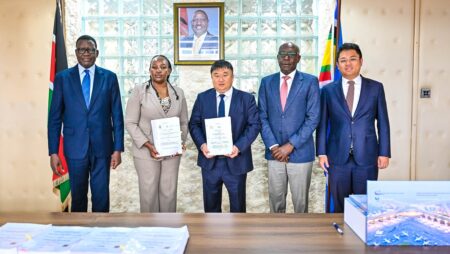



The contracts were a long time coming. In June 2026, Libya’s National Oil Corporation signed production-sharing agreements on three exploration blocks, the culmination of a licensing round that had put 22 blocks on offer. The signatories included Eni, QatarEnergy, Repsol, Hungary’s MOL, and Turkey’s state-owned TPAO, with Chevron having secured its block award in February. It was the first competitive acreage allocation the country had completed since 2007. Nearly two decades. That interval is not a gap in the paperwork. It is the record of a country that lost the institutional infrastructure required to attract serious upstream capital, and spent the better part of a decade rebuilding it.
Understanding why those contracts got signed now, rather than five years ago or five years from now, requires looking past the production figures. Output reaching 1.43 million barrels per day in early 2026, its highest level in more than a decade, is the visible result. The less visible part is the institutional groundwork that made sustained production, and credible contracting, possible again.
What International Capital Actually Requires
Oil companies do not return to politically complex jurisdictions because production is technically possible. Production has always been technically possible in Libya. The country holds Africa’s largest proven crude oil reserves at approximately 48 billion barrels, and lifting costs for established onshore fields have historically ranked among the lowest in OPEC, with some estimates in the range of $4–6 per barrel. The geology was never the problem.
What international capital requires is a counterparty capable of managing a production-sharing agreement across its full term — cost recovery mechanisms, profit oil splits, operational obligations, international arbitration provisions, and the institutional capacity to enforce those terms credibly. That kind of counterparty does not emerge from a licensing round. It is built, over years, through governance infrastructure, financial transparency systems, and the exposure to international institutional standards that produces executives capable of negotiating at that level.
Libya’s return to formal licensing did not happen because the political situation resolved. It remains, by most credible assessments, structurally unresolved. It happened because enough institutional scaffolding was rebuilt to make the commercial frameworks workable despite that backdrop.
The Institutional Dimension
The measurement systems that allow reliable monthly production reporting, flagged explicitly in the NOC’s 2026 priorities, are the kind of unglamorous infrastructure that determines whether a counterparty can be trusted. Transparency in reporting is not a secondary concern for international investors. It is the primary one.
Workforce development sits in the same category. The NOC’s June 2026 agreements with SLB and the Project Management Institute address a structural gap that has constrained the sector for years. The PMI partnership establishes a joint platform for internationally recognized training, targeting project managers capable of handling the complexity of modern upstream operations.
The broader pattern is recognizable to anyone familiar with how pan-European banking governance has evolved over the past two decades, the gradual construction of oversight frameworks, transparency requirements, and professional standards that make large institutional actors trustworthy counterparties across jurisdictions. Energy sector governance in a post-conflict economy faces a steeper starting point, but the structural logic is the same. Governance infrastructure precedes capital. Capital does not arrive to build governance infrastructure.
What the June 2026 Contracts Signal
The production-sharing agreements carry a specific message beyond their commercial terms. NOC Chairman Masoud Suleman framed the signings as evidence of growing confidence in Libya’s oil and gas sector, a characterization with a deliberate dual audience. International partners needed to see that Libya could deliver a credible licensing process. Domestic constituencies needed to see that the process produced results worth protecting.
Both messages matter. Political stability in Libya’s oil sector has historically been fragile precisely because the revenue it generates creates enough at stake to make disruption attractive to competing factions. The durability of the current investment cycle depends partly on whether enough constituencies develop a sufficient interest in its continuation.
The Waha concession extension, backed by a 25-year term to 2050 and clearing the path for a Final Investment Decision on the North Gialo 6J project targeting 100,000 additional barrels per day, represents the kind of long-dated commitment that signals more than tactical re-engagement. Eni, which committed €8 billion to Libyan gas production and infrastructure in a 2023 agreement that is now moving toward delivery, sits in the same register. These are not companies testing the water. They are companies pricing in a Libya that holds together long enough to make the capital work.
Whether that confidence proves warranted depends on factors no production-sharing agreement can control. What the June 2026 contracts demonstrate is that enough institutional groundwork has been laid to make the bet worth taking.