

Trending
- VALR sets sights on East Africa as blockchain moves deeper into Africa’s financial system
- The cost of the data gap: Why Kenya’s lenders can’t afford to miss the full picture
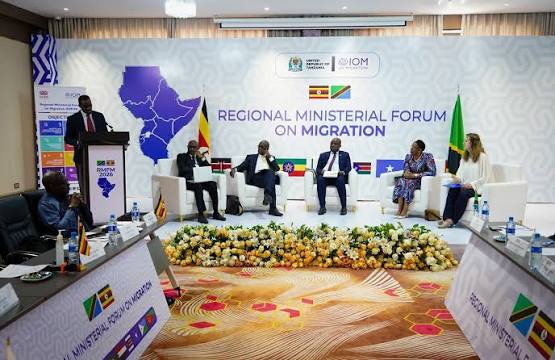
- Tanzania takes EAC labour migration helm as regional rules face overhaul
- 2026 is turning out as a defining year in geopolitics, but for whom?
- Saudi Arabia and Tanzania pledge to deepen bilateral trade ties
- Tanzania rewrites its digital investment playbook
- Ethical sourcing boosting demand for Tanzania organic cotton
- DRC deploys 70,000 Ebola vaccine doses in high-stakes trial against deadly Bundibugyo strain


Browsing: Africa Continental Free Trade Agreement (AfCFTA)

Over 180 works of fashion from 40 designers drawn from across 20 countries in Africa are currently exhibiting in Brooklyn,…

On the 1st of June 2023, African ministers for trade and industries adopted a protocol that prevents trading second-hand clothes across the continent under the preferences of the AfCFTA. This was during the high-level African Union – East African Community and the private sector forum, the second Ministerial Retreat of the Council of Ministers on the AfCFTA, held in Nairobi, Kenya, to assess the progress and address critical aspects of the agreement’s implementation.

Increased investments in agri-business will see Agriculture Technology (Agri-Tech) in Africa record massive growth. The food security crisis has ravaged many African countries. Consequently, the situation has attracted investor interest. This has instigated a digital revolution promoting the Agri-tech start-up ecosystem. Agri-tech startups remain instrumental in developing the agribusiness sector. The sector wields enormous economic potential for the continent.
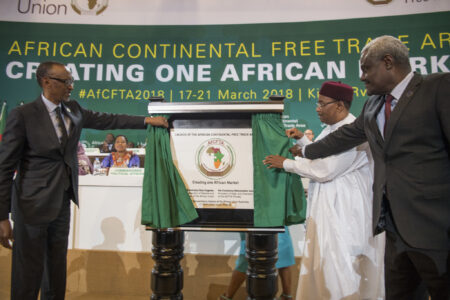
TradeMark Africa (TMA) seeks a further reduction of trade costs while increasing efficiency in an expanded Pan-African market. TMA goal…
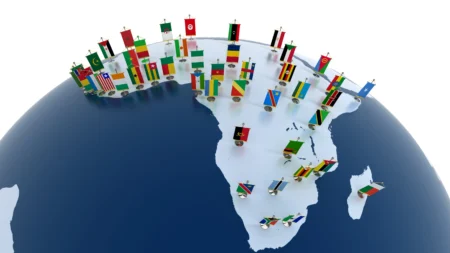
The implications of fragmentation and polarization on Africa’s economic growth and whether these trends will continue are unknown. What is certain is that multilateral organizations will need to continue encouraging international dialogue to promote economic integration and collaboration. As a result, one problem that emerges is whether African nations would adopt a unified stance or take a non-aligned approach in the Sino-American dispute.

Public-Private Partnerships have allowed drilling and geothermal energy production capacity to rise. Combined with hydro, these two sources contribute 65.62…

The move makes Tanzania among the first seven African countries to start making the best of the single African market.…

Factors for the low adoption rate surround the lack of sector information. For example, the researchers point out that there is ‘uncertainty among potential adopters with respect to potential gains vis-à-vis the cost of adoption.’
Other factors include the cost of adoption and use of modern agriculture technology and lack of adequate knowledge on how to use modern agriculture technology when it is available.
Introduction of modern agriculture technologies in beekeeping is expected to enhance efficiency along with beekeepers’ earnings and welfare in Tanzania. This is because about 99%, beekeeping in Tanzania is done by small scale beekeepers who use traditional beehives made of logs, barks and guards.
Even the harvesting process is very rudiment using fire and smoke to keep bees away, a hazardous trade especially considering that most traditional beehives are kept high on trees.
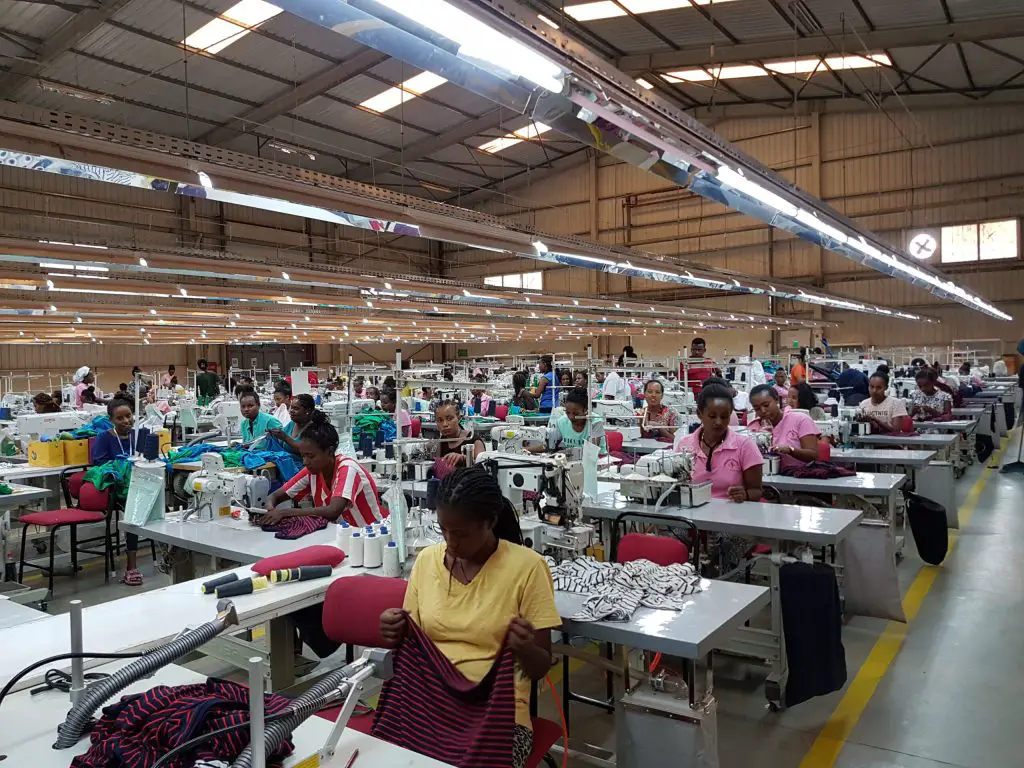
The African Continental Free Trade Area (AfCFTA) has been hailed as a catalyst to immense economic development in Africa; a…

A statement posted by Equity Bank on its website indicated the plan hopes to revive the economy in the continent following the COVID-19 pandemic that halted operations in different sectors leading to the loss of jobs.
In this, AfCFTA and Equity will work on the private sector economic recovery and resilience stimulus plan where the lender has seeded with a $ 6 billion (Sh 678 billion) fund focusing on food and agriculture, extractives, manufacturing and logistics, trade and investments, social impact, health and environmental investments.
Equity plans to finance over five million micro, small and medium-sized businesses (MSMEs) and 25 million vulnerable households by 2025 to support the creation of 50 million jobs.