
Trending
- African governments drive new forest finance progress as global report warns funding globally must scale faster
- Fine Spinners eyes Kenya’s Agoa-backed apparel supply chain with $5m plant
- Why young Kenyan investors need to stop treating the stock market like a betting slip
- Tanzania tax reforms mandate VAT refunds to under 30 days
- In New York, world leaders unveil plan to overhaul global health architecture
- Minisend grows Kenya presence as official payment partner of Africa Blockchain Festival 2026
- UN resolution challenges world maps that make Africa look smaller
- Zimbabwe edges closer to arrears payment, debt restructuring and reset of ties with IMF


Browsing: premium

Gabon has been exploring innovative ways to exchange debt and raise loans through carbon credits. During the 2022 Commonwealth Heads of Government Meeting (CHOGM) in Rwanda, Gabon’s Minister of Water, Forests, Sea, and Environment Lee White, noted that the country intended to exploit its forests in a sustainable manner to generate income.
The economy of Gabon has in the recent past been heavily dented, by both the Covid-19 pandemic and the Russian-Ukraine crisis. The latter resulted in the widening of the budget deficit from 2.1 per cent in 2020 to 3.4 per cent, whilst the former has caused inflationary pressures leading to a fiscal deficit marked by sharp drops in domestic revenue mobilization, exports and Foreign Direct Investment (FDI).
Despite ranking as the seventh-largest oil producer in the continent and a member of the Organization of the Petroleum Exporting Countries and allies (OPEC+), the West Coast country ranks as one of the African countries with the largest debt-to-GDP ratio, currently standing at 72.1 per cent.
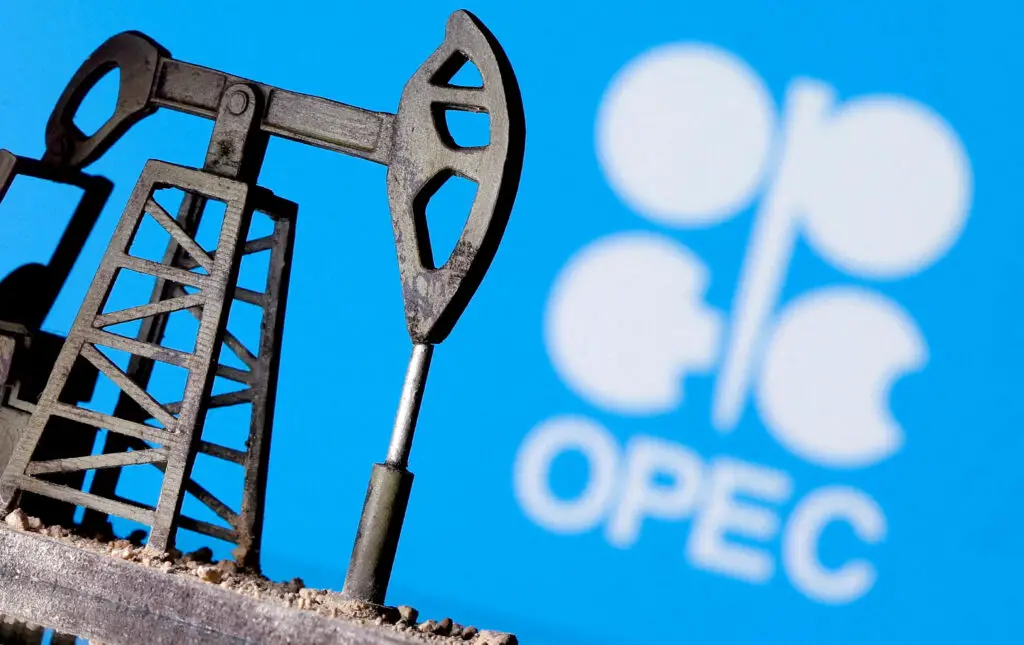
African governments must consider strategies to optimise the effective use of imported oil. The optimisation will reduce net oil import proportions to minimise expenses. More generally, African nations must explore these strategies to minimise their reliance on oil as their only energy source.
Reducing oil consumption by shifting to renewable resources represents a long-term or short-term solution. In contrast, if Africa is to benefit or gain from the imminent possibility of an increase in oil prices, these few oil-producing nations must expand their crude oil production and refinery capacity.
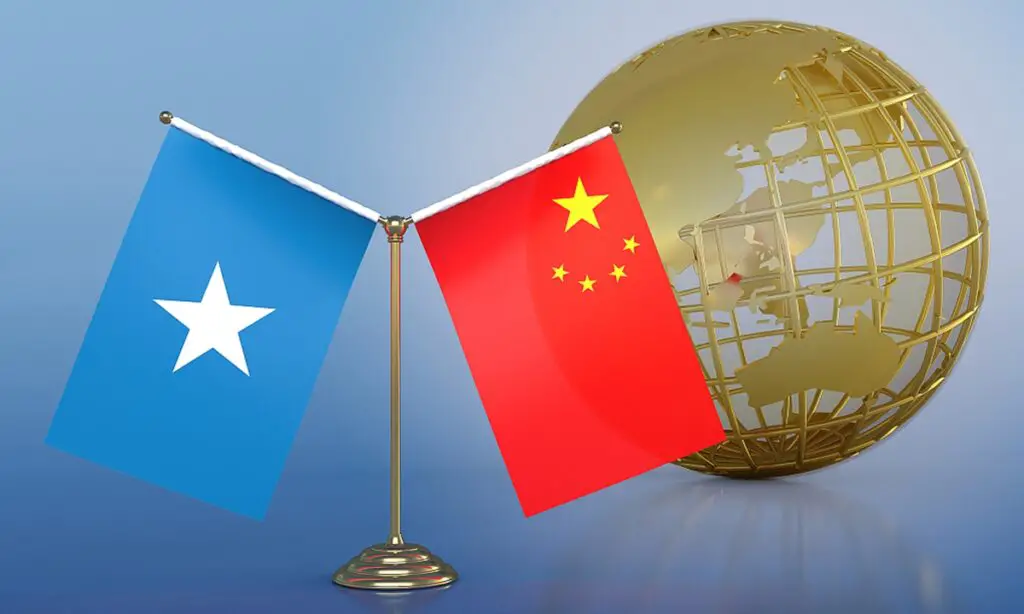
The diplomatic Somalia-China relations have played a crucial role in the Chinese government’s development of over 80 infrastructure projects in Somalia, including the national stadium, Banadir hospital, and north-south highway.
![Oil-extraction-in-Angola. [Photo: Financial Fortune]](https://theexchange.africa/wp-content/uploads/2022/10/ANgola.jpg "Sectors to revive Angola’s heavily indebted economy")
Angola is also rich in other minerals like iron ores, diamonds, gold, marble and phosphate deposits. The embassy of Angola’s economic outlook indicates that from the 1950s through 1975, iron ores were explored in provinces such as Malange, Bié, Huambo, and Huíla, and average output reached 5.7 million tonnes per year between 1970 and 1974.
The most explored minerals were exported to Japan, Germany, and the United Kingdom, earning Angola US$50 million a year.
Angola’s phosphate deposits are estimated at 150 million tonnes, located in the provinces of Cabinda and Záire. These resources have so far been unexplored. In Southeastern Angola in the provinces of Namibe and Huíla, marble, granite, and quartz reserves abound. Marble is especially consumed in the local market, while black granite is on demand and exported to United States and Japanese markets.
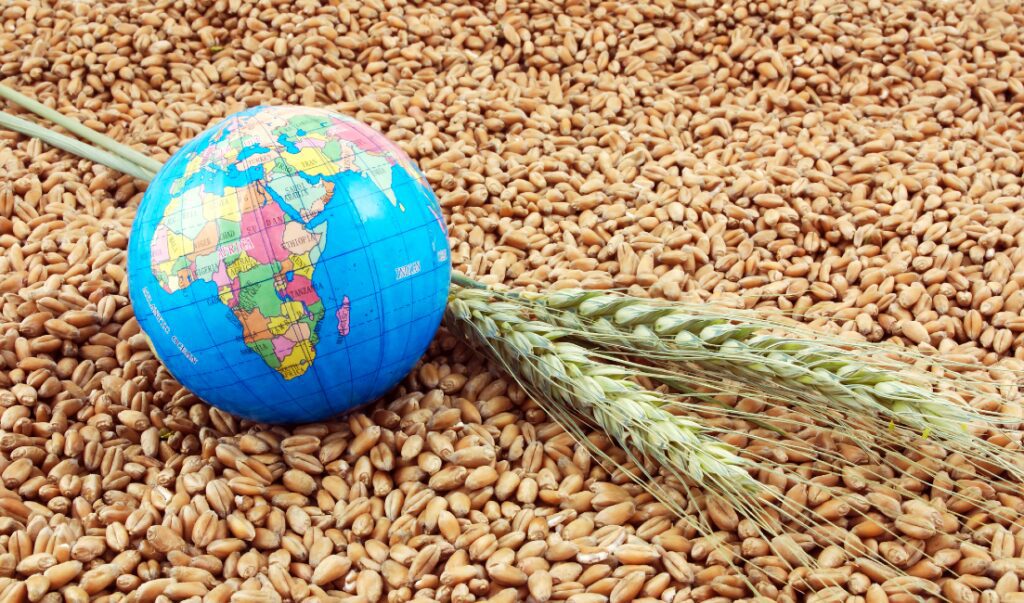
Why is agriculture so important? The World Bank estimates that “Healthy, sustainable, and inclusive food systems are critical to achieving the world’s development goals. Agricultural development is one of the most powerful tools to end extreme poverty, boost shared prosperity, and feed a projected 9.7 billion people by 2050.
Growth in the agriculture sector is two to four times more effective in raising incomes among the poorest compared to other sectors. Agriculture is also crucial to economic growth: it accounts for 4% of global gross domestic product (GDP) and in some developing countries, it can account for more than 25% of GDP.”
Agriculture not only eliminates hunger, but its support and success will lead to the attainment of the world’s development goals, end poverty, and boost shared prosperity. CGAP, which published an article about “The Role of Financial Services in Reducing Hunger”, states that for the majority of the 1.4 billion of the world’s poor living on less than US$1.25 a day, agriculture is the main source of income and employment.
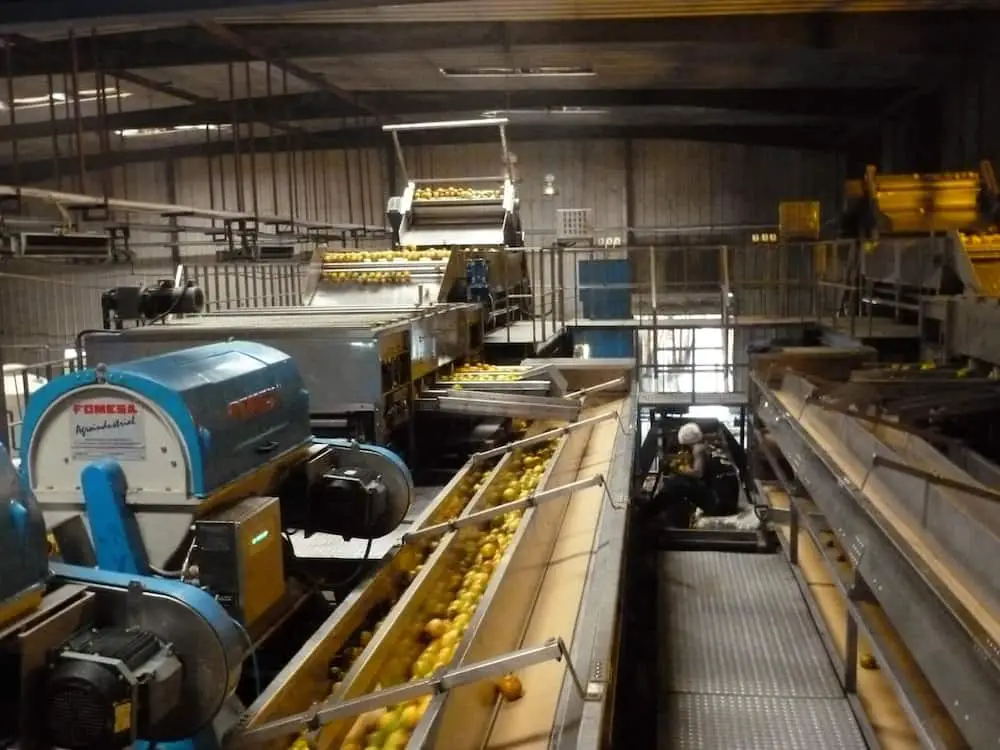
Ghana competes in the global economy primarily using natural resources. Other than the usual exports of cocoa, gold, lumber, and crude oil, Ghana has a competitive advantage in numerous product categories. Increasing the proportion of high-income commodities in the export basket hastens economic transition.
The opportunity is providing better, economically advantageous items to regional and worldwide markets. Cocoa processing, wood processing, aluminium products, palm oil, food and agro-processing, and fish processing are examples of manufacturing sub-sectors that fit these two requirements.
Manufacturing subsectors that capture considerable proportions of manufacturing value-added, such as food and drinks, chemicals, and textiles, have significant technology, knowledge, and skills inherent in them. These assets can be used to produce additional goods within the sub-sector or even outside of it. It is also easier to go up the value chain after you have mastered relevant technologies and markets.
Debts are quite effective economic tools when used correctly. However, debts have been seen to hold people and nations accountable…

The challenge facing the EAC is not the lack of natural resources but the lack of high-tech industries. China is a perfect example of a country that transformed from an agricultural civilisation to an industrial one. More than 850 million individuals have been lifted out of poverty due to recent economic growth brought about by China’s industrialisation.
Without involvement in the fourth industrial revolution, the East African Community would never be able to escape its state of backwardness. Therefore, the DRC will catalyse industrial transformation inside the East African Community, Africa and the world.
It is important to take a clear view of the past to understand the complexities of the future. In this case, the trade relations issues of the past between Kenya and Tanzania showcase how these nations have much work to do.
In June 2022, Kenya pointed out that its trading partner—Tanzania doubled the cost of export permits by almost 93 per cent, which could spark another set of disputes with the Kenyan government.
This scenario impacted trucks transiting into Kenya with precious and expensive cargo—amid the new requirement demand. Hundreds of trucks were left stranded at the border.
In 2020, Tanzania brought another set of issues, arguing that its trade partner Kenya used zero-rated industrial sugar imports to produce various products. Hence, concerning this, Tanzania imposed a 25 per cent import duty on Kenyan confectionery, including chocolate, chewing gums, sweets, ice cream and juice.

Cabo Verde is one of those countries one hardly gets to hear about. The country is an archipelago of 10…