
Trending
- African governments drive new forest finance progress as global report warns funding globally must scale faster
- Fine Spinners eyes Kenya’s Agoa-backed apparel supply chain with $5m plant
- Why young Kenyan investors need to stop treating the stock market like a betting slip
- Tanzania tax reforms mandate VAT refunds to under 30 days
- In New York, world leaders unveil plan to overhaul global health architecture
- Minisend grows Kenya presence as official payment partner of Africa Blockchain Festival 2026
- UN resolution challenges world maps that make Africa look smaller
- Zimbabwe edges closer to arrears payment, debt restructuring and reset of ties with IMF


Browsing: premium

The practical implementation of the AfCFTA, the expanding middle class, the evolving consumer market, enhanced use of financial technology and services, and the efficiency of the vibrant private sector will all be enablers of African export diversification and long-term economic growth.

The African passport is a common passport document that is set to replace the existing nationally issued AU member states’ passport, and exempt bearers from having to obtain any visas for all 55 states in Africa. The three types of AU passports that are to be issued include the Ordinary Passport which is 32 pages and valid for five years, that will be issued to citizens and is intended for occasional travel such as business trips and vacations. The Official or Service passport will be issued to officials attached to government institutions, who have to travel on official business.
Finally, the diplomatic passport will be issued to diplomats and consuls for work-related travel and to their accompanying dependents. The passport has inscriptions in English, Swahili, Arabic, French and Portuguese.
The initiative aims at transforming Africa’s laws, which remain generally restrictive on the movement of people. This, despite political commitments, to bring down borders, with the view to promote the issuance of visas by member states, thereby enhancing the free movement of all African citizens within the continent. The passport will be biometric or an e-passport that meets international standards and will be modelled akin to the EU’s Schengen Zone one; to prevent fraud and illegal issuances, therefore, ensuring accountability. Leveraging on technology, the electronic system could be used to track movements, and hence aid in monitoring illegal travel and improve safe travel conditions.
From cement to food and beverages to metal production and processing, manufacturing organisations are looking for sustainable energy solutions to help them refine their costs and efficiencies so they can better compete on the local and global stages. Energy provision is now being pulled from mini-grid installations, solar plants, gas plants, wind energy, and rental. The latter becoming increasingly popular as organisations recognise the value of a trusted third-party service provider over having to manage, maintain and install their energy solutions on their own.
Using a supplier that provides the right technologies to remote, rural and high-demand environments allows for the organisation to enhance power production while minimising the administration and cost impact. Leveraging energy-efficient, environmentally friendly and sustainable systems that bypass reliance on diesel and instead introduce hybrid offerings that combine gas, LNG, solar, and diesel means that companies can build stable and reliable energy platforms that not only reduce costs but also risks.
Aggreko has a proven track record in providing manufacturing and mining organisations with trusted energy resilient solutions. The company collaborated with a car manufacturing plant in South Africa that was expanding its paint shop and required additional temperature control for paint cooling, particularly during the hot summer months. The complexity added by an automatically controlled bypass caused flow issues with the cooling equipment and the right level of cooling was required to enable them to make use of the expansion to increase production.
To meet its growing energy needs and increase electricity access across the population, Mozambique must build 1.3GW of new power…
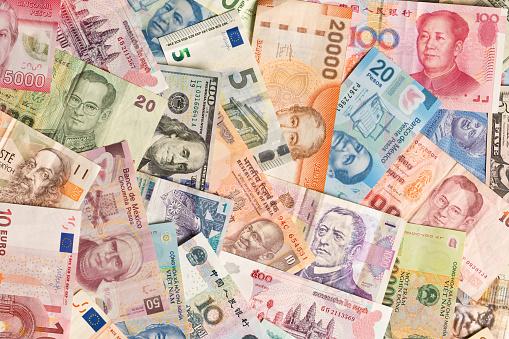
Despite these fundamentals, the Zimbabwe dollar has continued to slide against the United States dollar prompting the government to take drastic and unprecedented measures last month which culminated in the prohibition of bank lending (albeit temporarily), the prohibition of third-party international payments, the prohibition of third-party payments to stockbrokers and the introduction of taxes which can be viewed as punitive for investors on the Zimbabwe Stock Exchange.
Prior to these stringent measures, the monetary authorities had instituted a policy called willing buyer willing seller to try and narrow the gap between the official foreign currency exchange rate and the parallel market foreign currency exchange rate. This gap between the 2 exchange rates reached its peak in the first week of May 2022 at 153% according to a Zimbabwe publication called the Business Weekly.
The premium between the parallel market rate and the official rate has reduced somewhat to 60%. The attempt to get the foreign exchange rates to converge set the parallel market rate raging and it has since breached the ZWL$ 500/US$ 1 mark in the first week of June 2022.
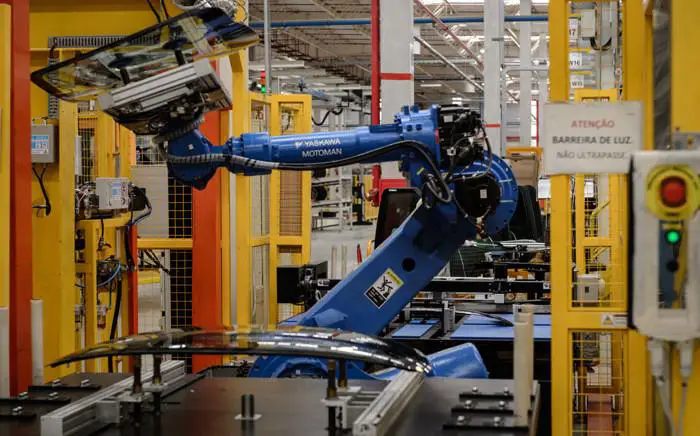
The widespread adoption of information and communication technology (ICT) by manufacturing companies the world-over is driving competition and permanently disrupting…

African movies are transforming the entertainment landscape. The award-winning African film, Vuta N’Kuvute (Tug of War), a 2021 Tanzanian creative,…

Among the ways that the colonizers slowed down the growth and unity of Africa is through the demarcation of boundaries 60 years ago. These boundaries gave birth to over 41 different currencies on the continent that have complicated intra-African trade.
The continent uses over 5 billion dollars in currency conversion, monies that could have been directed to other economic development projects. African countries’ attempts to form a common regional currency have proven futile precisely because of all the frameworks of laws that need to be revised and harmonized in the different countries.
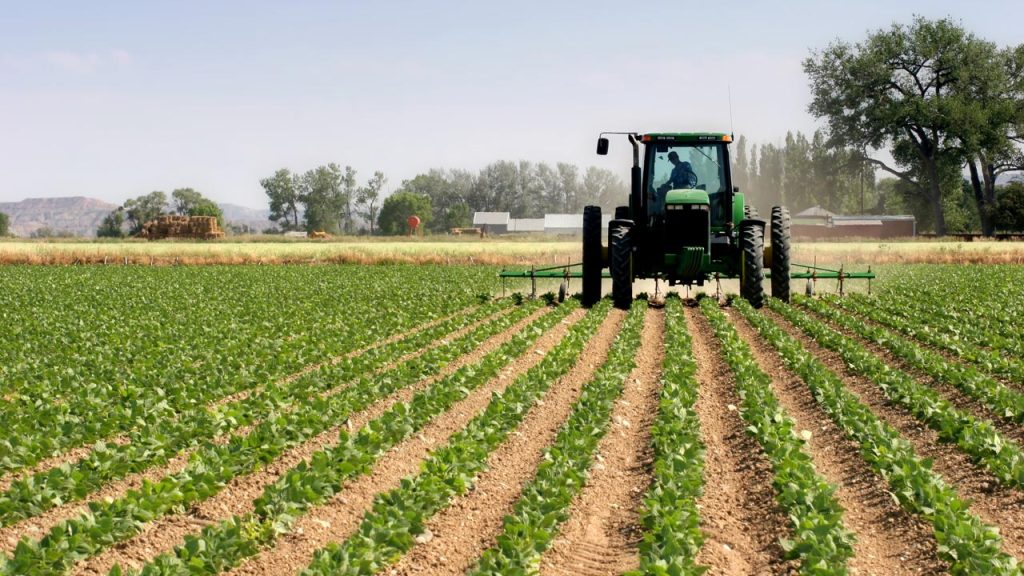
Agriculture employs a considerable proportion of the African population and contributes a sizable portion of the continent’s GDP In a…
One arrow in a pirating scheme quiver is the false claim to work or authorship or ownership. With Blockchain one can ascertain proof-of-work and proof-of-authorship if they upload their work, comply with Blockchain agreements and get their digital certificate which includes a private key, kind of a personal signature.
This can prove ownership of the works as it is time-stamped and known to be in existence. One can also trace the transactions and copyright use of their works and be able to calculate the intellectual property value in the forms of royalties and license fees and any other form of exploitation either economically or morally.
For a long time, creatives have decried the often rigid and unclear remuneration process of their royalties, the blame always shuttling between collective management organizations, CMOs and the broadcasters.