

Trending
- African governments drive new forest finance progress as global report warns funding globally must scale faster
- Fine Spinners eyes Kenya’s Agoa-backed apparel supply chain with $5m plant
- Why young Kenyan investors need to stop treating the stock market like a betting slip
- Tanzania tax reforms mandate VAT refunds to under 30 days
- In New York, world leaders unveil plan to overhaul global health architecture
- Minisend grows Kenya presence as official payment partner of Africa Blockchain Festival 2026
- UN resolution challenges world maps that make Africa look smaller
- Zimbabwe edges closer to arrears payment, debt restructuring and reset of ties with IMF


Browsing: premium

The global mining industry for the last 6 years enjoyed rising commodity prices. Record cash flows have provided mining houses…
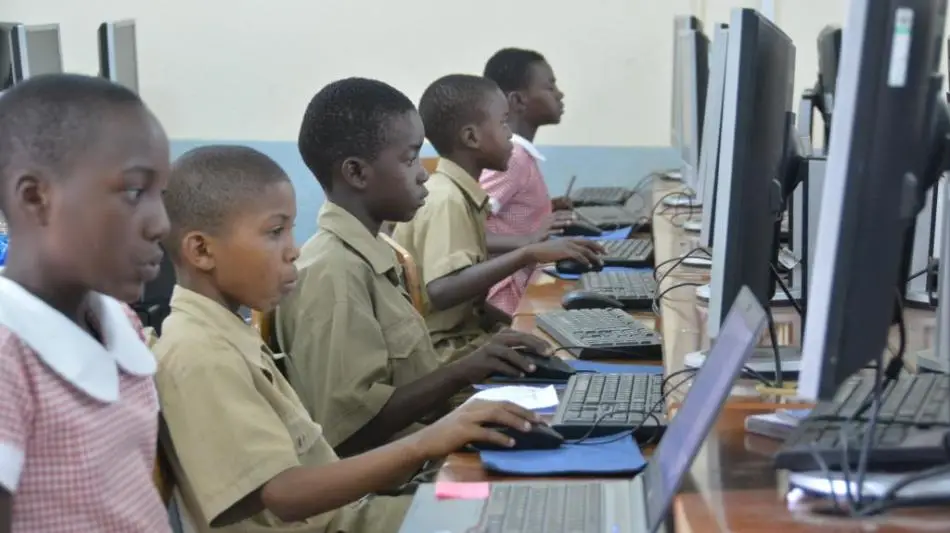
After a decade the Government launched the Presidential e-Learning Programme of 2011 which aimed to strengthen the use of ICTs for teaching and learning. In an article published by the Herald on March 28, 2012, former President Mugabe said the projects brought on board e-learning software solutions to complement the benefits of the Presidential Computerisation Programme launched 10 years back.
“Encouraged by the Presidential Computerization Programme, the first successful step of transforming Zimbabwe into an information society, we have now decided to go a gear up and add value to the initial programme by introducing a new dimension to it, this time, in the form of an e-learning Programme,” he said.
The Connect a School Connect a Community Project was launched in 2013, it provided disadvantaged schools with modern technology. Afterwards, Zimbabwe drafted through the Ministry of ICT, Postal, and Courier Services a National ICT Policy that acknowledges a role for ICTs in the education sector. However, while the policy is dated 2016, it was launched in 2018. In 2019 ICT Policy for Primary and Secondary Education (2019–2023) was launched and all of these show efforts by the Government to embrace technology in the education sector.
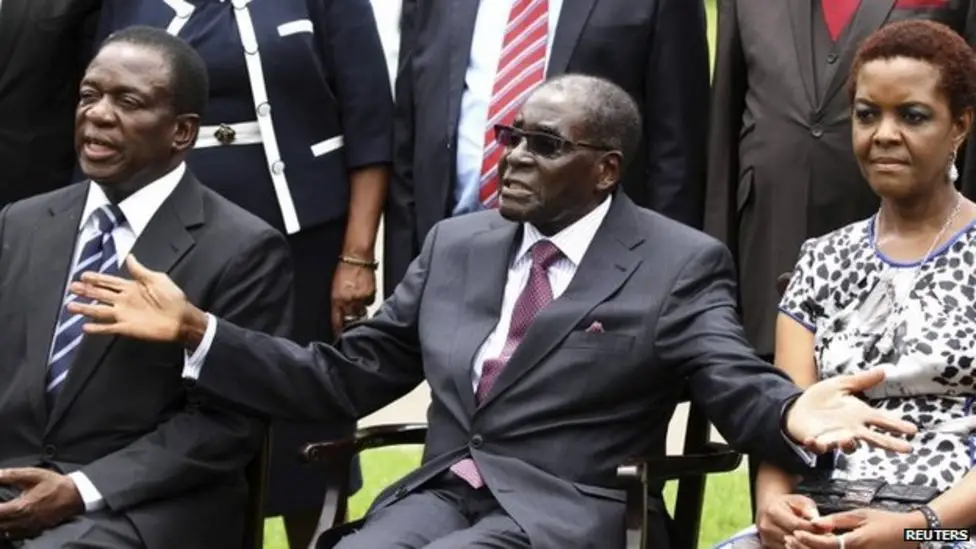
At the dawn of his administration, President Mnangagwa promised to address the country’s record on human rights, targeting those that oppress political activists and opposition, political party supporters, during elections. He also said his government would introduce economic policies favouring foreign investment. His mantra was ‘Zimbabwe is Open for Business. In its quest to kick-start itself to its former glory, the Zimbabwean government came up with economic policies such as the Look East Policy, and Indigenization, but they failed to yield results.
Mnangagwa’s administration has been rallying anti-sanctions sentiments, embarking on a re-engagement policy and the ‘Zimbabwe is Open for Business mantra. But, the sanctions have remained in place.
According to Afrobarometer, Mnangagwa has managed to mobilize support against the sanctions. In October 2019, leaders of the Southern African Development Community (SADC) agreed to campaign for the removal of the sanctions, arguing that they destabilize Zimbabwe’s economy and adversely affect the region. ZimEye reported a group of ZANU-PF supporters who camped near the U.S. Embassy in Harare on March 29, 2019, and vowed to stay put until the sanctions were lifted.
A report published by Lexology on January 18, 2022, Zimbabwe’s economy is largely driven by the mining, agriculture, and tourism sectors. However, because of Zimbabwe’s foreign currency shortages, there is a significant focus on export-oriented and foreign currency-generating activities.
This allows investors, businesses, and the government to retain value and meet the country’s forex needs. Zimbabwe’s main exports are minerals, agricultural produce, and soft commodities. She also has large reserves of chromite, coal, gold, and iron ore, among others. The country is also one of the world’s largest growers of tobacco.
According to research by Mordor Intelligence, Zimbabwe is a signatory of several bilateral and international agreements (MIGA, OPIC, ICSID, and UNCITRAL) that protect the investments of the companies in Zimbabwe. Zimbabwe has cheap educated, and competitive labour, well-developed infrastructure, and easy access to regional and global markets through its membership in AU, COMESA, SADC, COPAC, and CISSA. Zimbabwe offers free movement of investment capital and attractive investment incentives. Zimbabwe allows for 100% Foreign Direct Investment in almost all sectors barring a few.
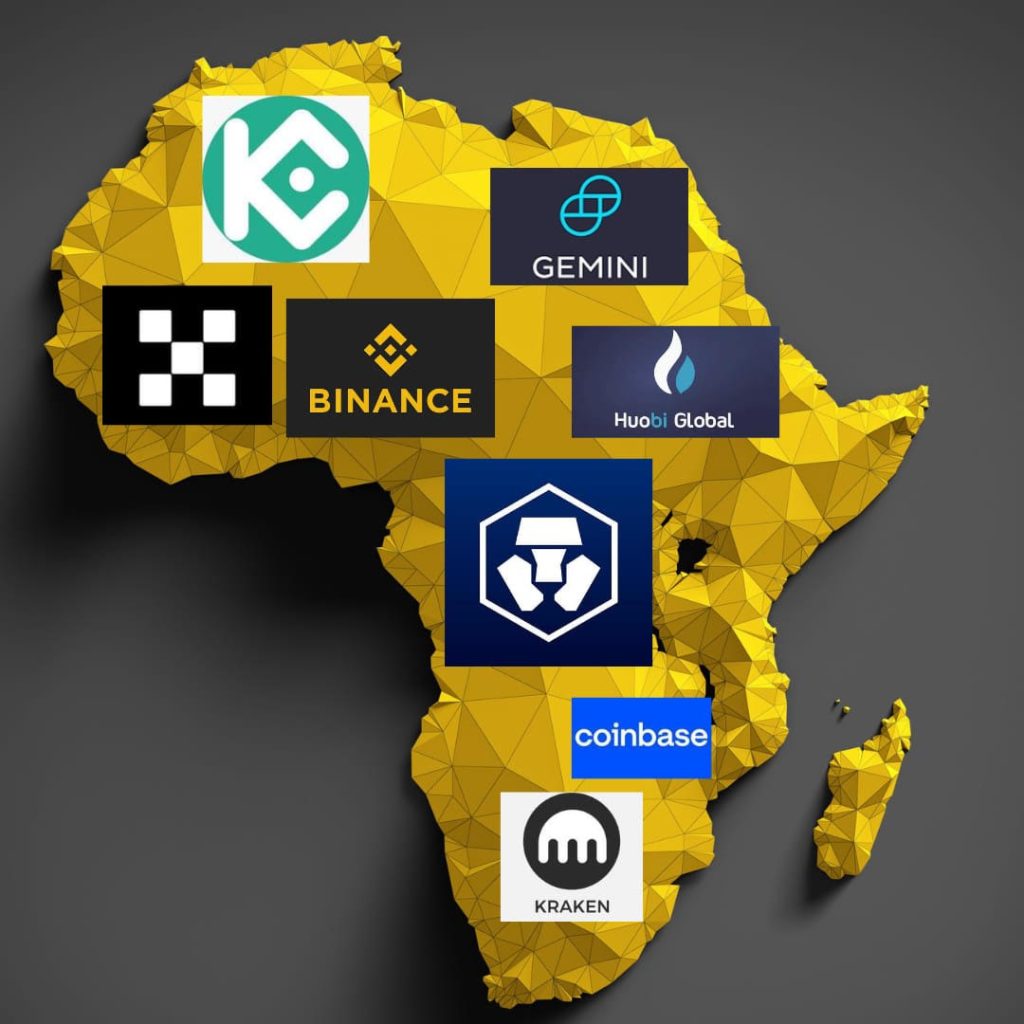
The race to adopt cryptocurrencies is hitting new ceilings in Africa as their popularity increases, despite hostile policies from several governments in the continent.
One of the main reasons investors across the globe are seeking to diversify traditional assets in Africa into cryptos is to counter rising fiat inflation, with a majority of crypto investors and traders believing that crypto coins and tokens are safer and more secure than traditional investments such as gold, oil, stocks, liquid cash and real estate.
The roles that these cryptos and alternative coins play in society are not well defined, but they have a vivid description as each day passes as to which purposes they serve.

ILO points out that the informal sector is still arguably responsible for 90 per cent of sub-Saharan Africa’s economy and two-thirds in North Africa.
The sector provides 90 per cent of all new jobs and 70 per cent of all employment across sub-Saharan Africa.
As the world changes, so as Africa. Due to economic and political setbacks, the region is shadowed by plenty of misconceptions about its role in shaping the world’s technological and education front.
Above that, Africa is now embracing a new wave of transformation. The continent is adopting and executing new plans as it goes—bringing the digital divide by embracing edutech in schools, innovating social solution tech and startups championing smart farming in Africa’s breadbasket.
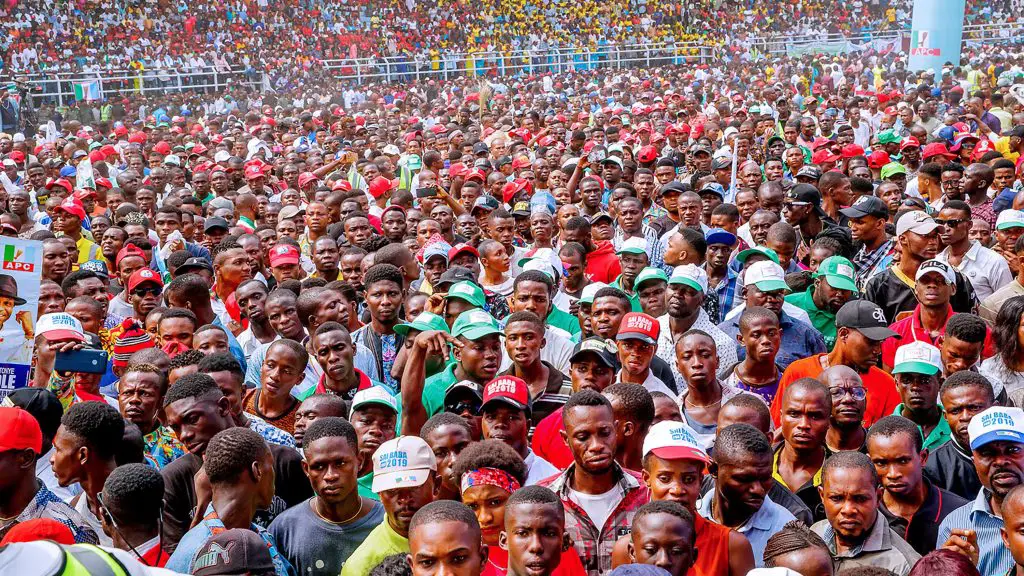
President Buhari of Nigeria is keen to complete critical infrastructure projects as elections approach next year.
One of these projects is the Lagos light rail train project, which has gathered dust for decades. The project is back in motion, with the state government optimistic that the first phase of the Blue Line – one of the two lines to form the Lagos Rail Mass Transit (LRMT) system – will be operational this year.
Power infrastructure is a crucial area of interest. The country is rushing on the six-year multi-billion-dollar pact with German company Siemens to expand and revamp the dysfunctional national grid to unlock at least 25,000 megawatts (MW) of electricity by 2025.
On the renewable energy side, the government is working on the 3,050 MW Mambilla Hydropower Project in Taraba, which has dragged on for over 40 years despite significant budgetary allocations.
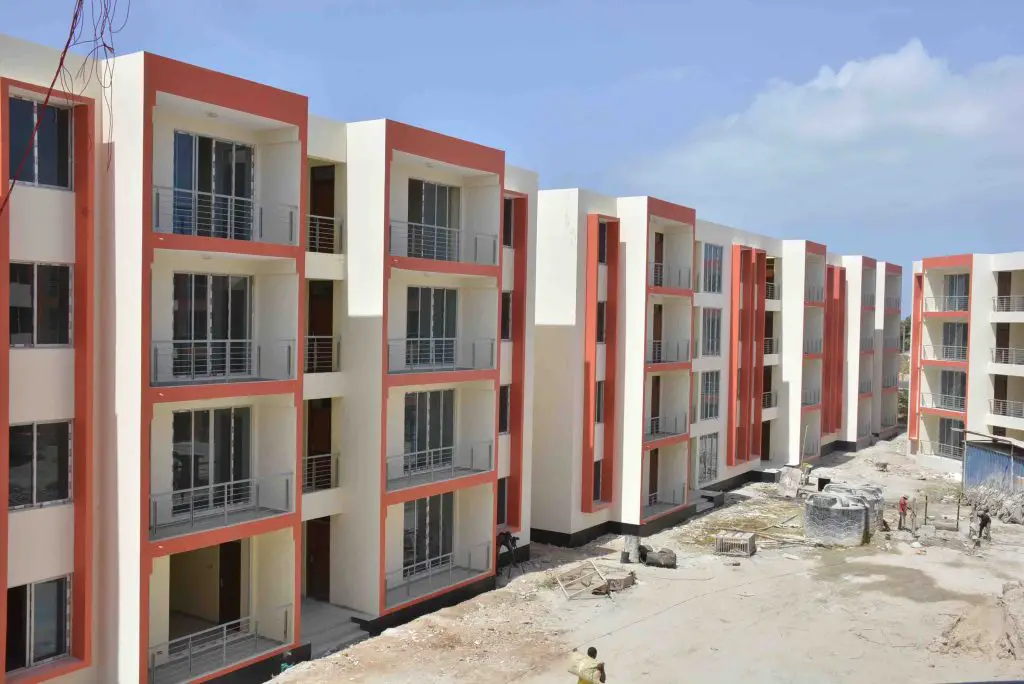
Africa has never been at a better time to capitalize on the real estate market. The sector is rigged with plenty of modern technology that offers myriad opportunities that shift away from traditional uses and increase transparency and efficiency.
Africa Business Insider pointed out ten pathways for investors to benefit from investing in the African real estate market in 2022.
Long-term residential rentals are argued to be one of the fastest ways for an investor to garner profits as the rising population in Africa calls for substantial development of decent shelter.
Real estate investment trusts (REITs) allow investors to acquire profits without holding physical property. According to Business Inside Africa, REITs provide diverse opportunities to investors, primarily in the market niches.
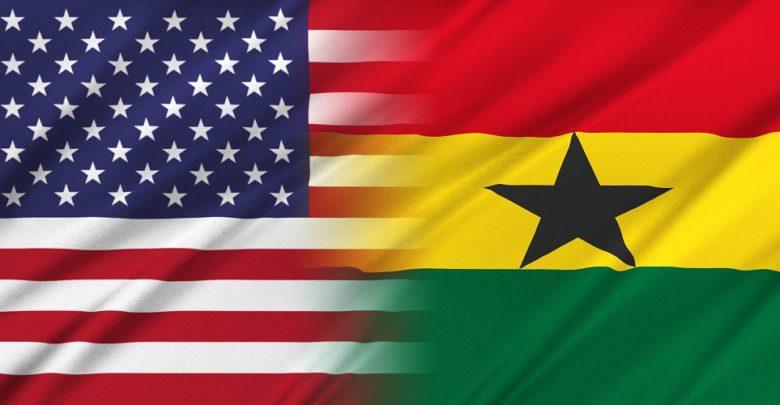
Many exports from Ghana to the US benefit from duty-free tariff preferences under the American Growth and Opportunity Act (AGOA) and the Generalized System of Preferences (GSP) programme. Exports from Ghana to the US that have enjoyed AGOA preferences include yams, apparel and cocoa (beans, powder or paste).
Ghana has exported US$131 million worth of yams to the US since 2012, avoiding a standard import duty of 6.4 per cent under AGOA. Cocoa exported to the US has amounted to US$2.5 billion over the last two decades.
Miss Rosa Whitaker, the President and the CEO of the Whitaker Group (TWG), is significant to the success of AGOA in Africa, facilitating the export of over 9,000 agricultural and manufactured goods to the United States.
Whitaker advocates for African countries to research what the US market is demanding and be alert to new opportunities. She pointed out the success of Ghana’s cocoa in the United States, saying that the processed cocoa powder manufactured at the US$100 million Cargill plant is now being offered to global food manufacturers under a made-in-Ghana label.

The tourism industry accounted for about seven per cent of Africa’s GDP in 2019 and contributed $169 billion to its…