

- US company to set up World’s 4th largest niobium project in Tanzania.
- Tanzania niobium project sets off after nearly a decade.
- Tanzania niobium processing project in line with national value addition strategy.
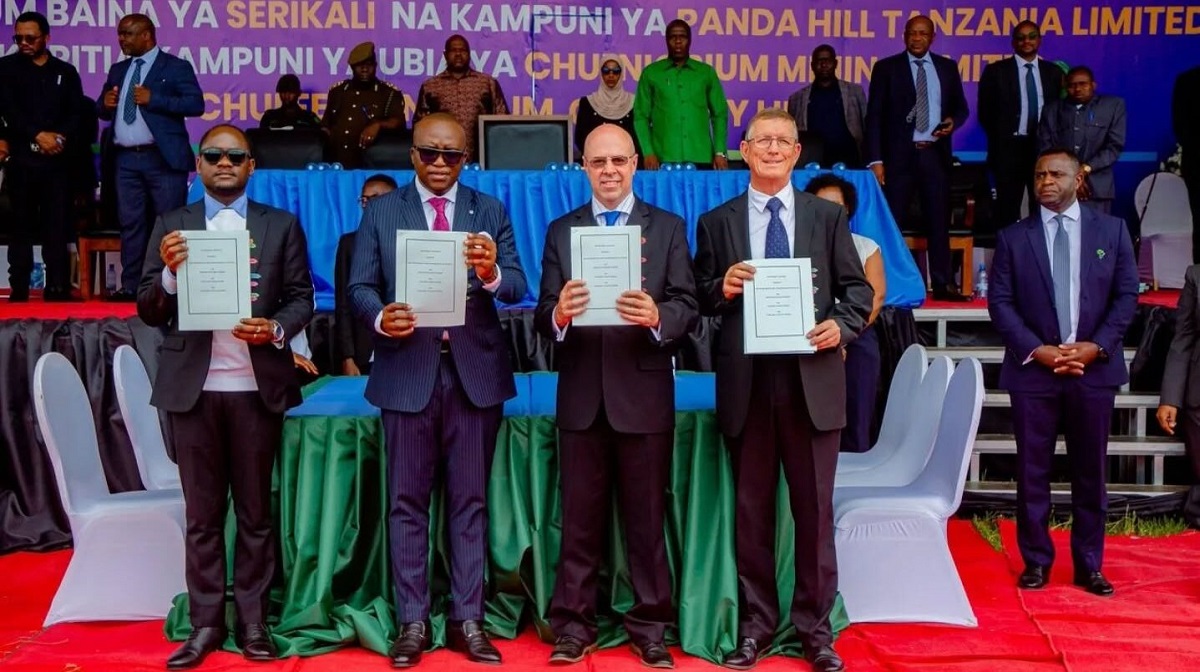
Tanzania and the US have signed agreements for the production and processing of niobium, a move that may very well spike a value addition revolution in the country and region. Inked in March 2026, with the U.S. based Panda Hill Tanzania Limited will among other things facilitate the mining of niobium and processing of ferroniobium (FeNb).
What is unprecedented is not the production of niobium, a strategic metal used in the production of high-performance alloys of steel; rather it is the value addition component of the transaction. Niobium in it’s raw form is not what industries seek, it is ferroniobium (FeNb), that is derived from smelting the former that is necessary for infrastructure and advanced manufacturing.
Other applications include high-end components for electric vehicles and aerospace, making the mineral a high demand asset. Once implemented, the deal will make Tanzania the world’s fourth-largest producer of niobium at an estimated capacity of 100,000 tonnes per year which will account for 4% of the global market demand.
Currently, Brazil is the World’s largest producer of niobium supplying about 80 per cent of global demand. Notably, the World’s second major producer, is also to be found in Brazil and accounts for an estimated 11%.
The third largest producer is Canada which accounts for around 6% and that makes Tanzania number four on the least.
For Tanzania, the win is having processing and value addition locally, a push that is poised to step up earnings from minerals, following in the footsteps of other countries such as Brazil. Across South America, with Brazil at the helm, countries are shifting from traditional roles as raw material suppliers and instead, positioning themselves as ‘integrated resource development partners,’ exactly the kind of deal that Tanzania has signed for it’s niobium project.
Also Read: Kenya’s Green Grid and Cement Usage Surge: Inside 2025 Economic Reset
Tanzania niobium project deal drives country’s value addition
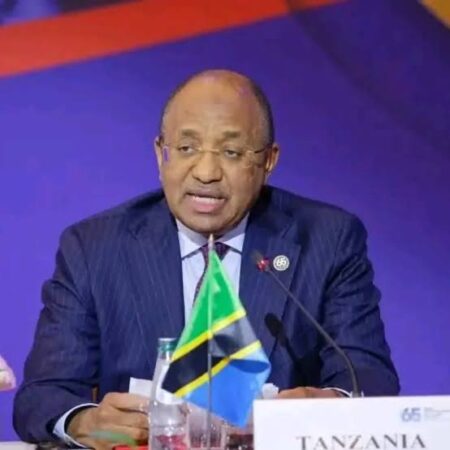
Tanzania’s Minister for Minerals Anthony Mavunde said the initiative will strengthen the country’s trade relations with the U.S. “The deal will also position Tanzania as a supplier of value-added strategic metals into premium industrial supply chains,” the minister said.
He described the agreement as a milestone towards moving from mere extraction to ownership and processing in line with the national development agenda to move from exporting raw minerals. Tanzania is now eyeing export of higher-value into the U.S.
On his part, Mr. Dennis Cook, the Panda Hill Tanzania Limited’s General Manager, described the agreement as timely and long sought. He recalls the project has been shelved since 2017 due to the then change in mining laws; “We have since then worked closely with the government and finally reached this new conclusion framework,” he told a press conference at the end of the week in Dar es Salaam.
“The company now moves to secure a Special Mining Licence and will update it’s project work stream to reflect current conditions,” he told press.
The General Manager reassured stakeholders of refreshed capital and operating cost estimates, integration of grid electricity into the operating model, and an updated marketing plan. “We are focused on implementation that benefits the country and investors alike,” he summed up.
“The convergence of technological advancement, environmental imperatives, and geopolitical realignment has created unprecedented opportunities for nations that can successfully navigate the complex intersection of geological endowment, processing capability, and strategic partnerships,” comments Muflih Hidayat for Discovery Alert’s ‘Brazil’s Critical Minerals Boom Transforms Global Supply Chains’ April 2026 report.
Work on Mbeya niobium mine underway
Construction is underway for the niobium mine, in Mbeya, North West Tanzania. Alongside the mine works, a beneficiation facility is under construction along with a ferroniobium furnace and smelter complex. Estimates from the company place the costs at USD53 million for the mine and another USD134 million for the related beneficiation, furnace and smelter facilities.
As the Minister had emphasized, it is the processing component of the project that makes the whole deal of strategic difference from other mining pacts that the country has entered before; the sought the US describes as ‘predatory investments.’
In this value addition powered deal, Tanzania will be able to process the niobium ore and produce ferroniobium (FeNb), the high value industrial compound that is used by steel companies for alloys.
In fact, Tanzania will be the only country in Africa to boast of having a ferroniobium plant, and fourth in the world. Notably, the only other three comparable ferroniobium facilities around the global are the two in Brazil and one in Canada.
“This is a big step for Tanzania both policy wise as well as strategically because the planned Mbeya plant will be Africa’s only facility of its kind and the fourth FeNb smelter built globally in the past 40 years,” minister Mavunde proudly told press.
Also, the government official was keen to note that there will be a significantly large attachment of local content to the project via its vendor and contractor pipeline.
According to the government executive, the niobium project will have at least 70 % local procurement during its production hase and a whopping USD1.77 billion life-of-mine local procurement expenditure. “There will be an annual local procurement of an estimated more than USD60 million,” the minister elaborated.
The plan is to incorporate Tanzanian firms into the related long-term supply chain right from construction throughout the operations stages and all the way to transport, maintenance, services, security, catering and all other supporting elements. “This single project will turn Mbeya into a durable industrial services hub,” he detailed.
Further still, the project is expected to create more than 1,600 jobs during its construction phase and about 600 permanent jobs; with an estimated total direct and indirect beneficiaries reaching an impressive 7,000. Given the fact that the project is actually within the grounds of Songwe Prison farm, an entire 5,434 acres, the project will among other things, construct a new and modern prison facility.
So the deal is as source of local content, jobs, CSR, taxes and fees, all are benefits of the projects; but what is unique and potentially revolutionary, is the processing clause.
So, similarities with Brazil don’t end with mining niobium (and other critical minerals) but extend to strategic divergence from resource exporting models to integrated supply chain development and value-added processing capabilities.
Muflih Hidayat describes the elementary aspects of the revolutionary paradigm and economic policy shift all too well; “The strategic framework encompasses upstream exploration, midstream processing, and downstream manufacturing integration.”