




- Green energy push, state-backed construction projects, and a recovery in logistics saw Kenya’s economy grow by 4.6% in 2025.
- Kenya solidified its position as a continental leader in renewables with green energy accounting for 88.9% of domestic generation.
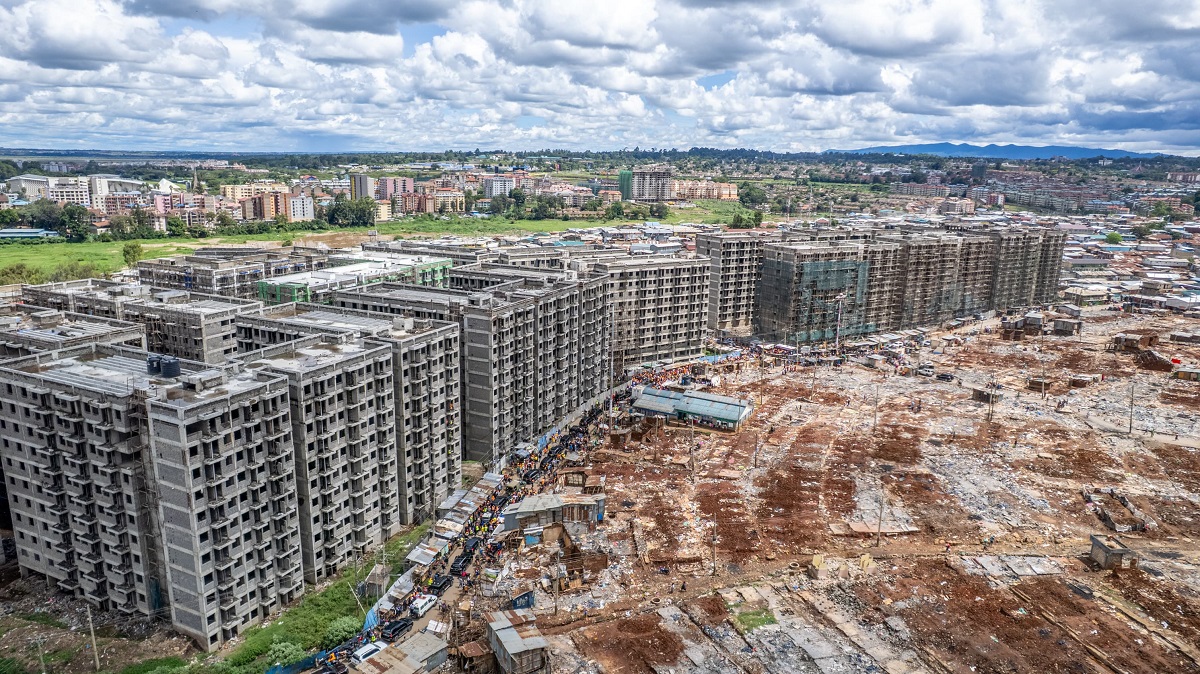
- After slight dip in 2024, construction sector rebounded sharply in 2025, growing by 6.8% with cement use rising by 3%.
While Kenya’s growth held steady at 4.6 per cent last year, the 2026 Economic Survey reveals that the East African country’s economy underwent a structural shift driven by clean-energy growth, government-backed housing push, and a recovery in regional logistics business.
The Kenya National Bureau of Statistics (KNBS) data released on Wednesday shows that Nairobi could be steadily pivoting away from traditional volatility toward infrastructure-led economic growth.
One of the biggest transformation is being experienced in its energy industry. According to the survey, Kenya solidified its position as a continental leader in green energy with the total effective electricity capacity rising to 3,109.3MW as renewable sources accounted for 88.9 per cent of domestic generation.
Geothermal remained its grid’s anchor, contributing 44.8 per cent of the energy mix after generation went up by 7.8 per cent to 5,981.6 GWh. Wind power followed closely, rising 8.4 per cent to 1,949.1 GWh.
However, the country saw electricity imports jump by 12.3 per cent, attributable to a “bilateral exchange agreement between Kenya and Tanzania” and the commissioning of the Namanga border transmission line.
This supply glut translated into some relief for households. The survey notes that the “average electricity yield” for domestic consumers declined by 12.0 per cent, to KSh 21.97 per unit, marking a rare moment of falling utility costs in an inflationary environment.
2026 Economic Survey: Kenya’s Housing and Construction Industry
After suffering 0.7 per cent contraction in 2024, Kenya’s construction industry rebounded sharply last year, posting 6.8 per cent growth. “Cement consumption increased by 20.3 per cent, from 8,542.7 thousand metric tonnes in 2024 to 10,280.2 thousand metric tonnes in 2025.”
The 2026 Economic Survey highlights the State Department for Housing and Urban Development (SDHUD) as a primary engine for rising cement usage. “The number of residential housing units completed by SDHUD more than quadrupled, from 1,655 units in 2024 to 6,738 units in 2025.” KNBS said the value of these completions rose to KSh 7.2 billion, driving a surge in demand for manufactured goods, as production of “galvanised sheets expanded by 16.9 per cent.”
Read also: The Finance Bill 2024: Implications for Kenya’s Housing Sector
Kenya’s Logistics Business: The Rise of Lamu Port
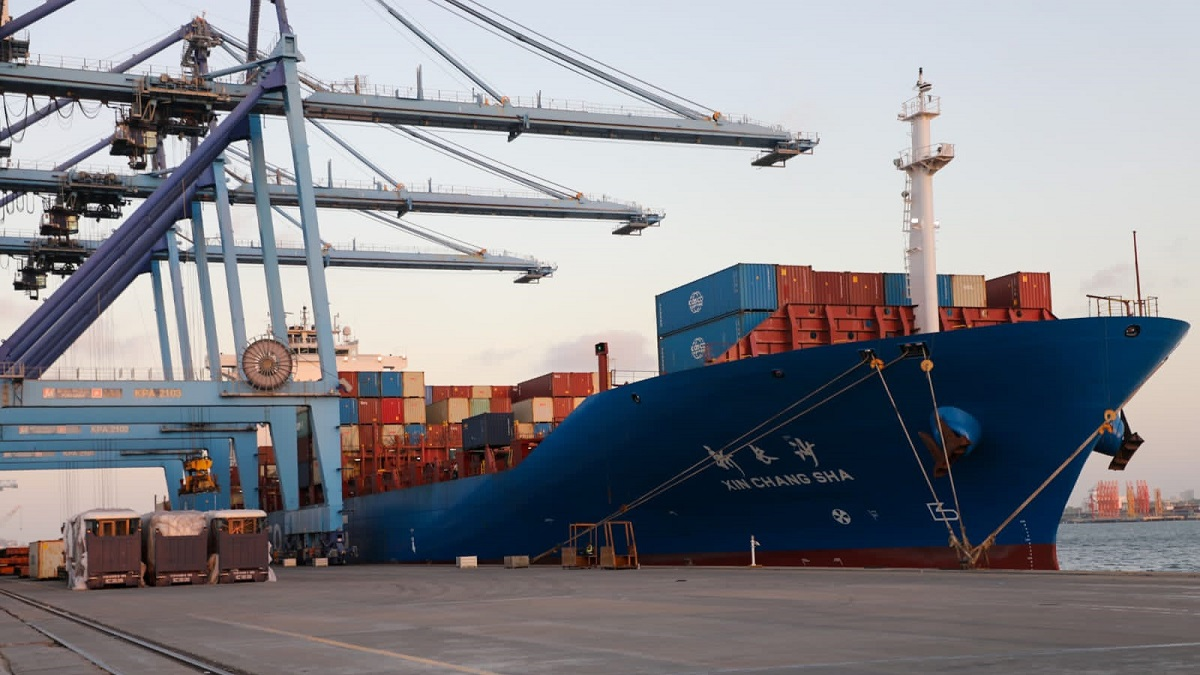
During the year under focus, while the Port of Mombasa remains dominant across harbors in the region, “some trans-shipment operations [were] redirected to Lamu Port.” Consequently, while trans-shipments at Mombasa declined by 28.1 per cent, the Lamu Port-South Sudan-Ethiopia Transport (LAPSSET) corridor appears to reaping dividend.
Total transit traffic through the Port of Mombasa by destination went up by 19.5 per cent to 15.9 million metric tonnes, with the Democratic Republic of Congo (DRC) and Rwanda-bound traffic recording double-digit growth.
Specifically, “transit to and from the DRC rose by 16.5 per cent,” and transit to Rwanda increased by 22.8 per cent, underscoring Kenya’s role as the gateway to East and Central Africa trade corridors.
Kenya’s Motorcycle Economy
On the roads, another driver of economic growth is emerging. Kenya’s two/three-wheeled economy is exploding with the registrations of motorcycles, autocycles and three wheelers nearly doubling to 252,241 units in 2025 from 126,490 in 2024.
The 2026 Economic Survey attributes this expansion partly to “National Transport and Safety Authority (NTSA) enforcement measures that cleared backlog registrations,” but the volume suggests a deepening reliance on bodaboda (motorcycle taxi) networks for both passenger transport and last-mile delivery of goods.
This shift was further reflected in petroleum consumption during the year. Despite global crude prices falling, domestic demand for “light diesel oil”, which is largely used by trucks and heavy machinery, increased by 7.7 per cent, while “motor spirit premium [petrol]” rose by 4.7 per cent.
Manufacturing Industry: Industrial Assembly Revival
The “motor vehicle, trailers and semi-trailers” manufacturing division expanded by 15.2 per cent in 2025 with the report stating that “the number of assembled motor vehicles grew by 18.5 per cent to 13,692 over the same period,” attributable to government incentives and local-content requirements.
This industrial activity, combined with the housing drive, pushed credit to the private sector to KSh5 trillion, with notable flows going to trade, building, and real estate.
While tea and titanium exports sustained a decline, the 2026 Economic Survey suggests that Kenya is could be quietly building a new economic foundation, one powered by geothermal plants, housing and construction, and green energy.
Read also: Power play: Can the green energy push ever outpace big oil?