


- Foreign Investors’ outflow hit KSh8.77 billion in Q1 2026 even as local IPOs and mobile trading apps spark domestic investor revolution.
- Nairobi All Share Index rose 4.42 per cent to 194.82 points in Q1 2026, while the narrower NSE 20 Share Index jumped 9.31 per cent to 3,431.56 points. Market capitalisation expanded by 9.72 per cent to close at KSh3.23 trillion ($24.9 billion).
Foreign investors are abandoning the Nairobi Securities Exchange at an accelerating pace, withdrawing a net KSh8.77 billion (approximately $67.5 million) in the first three months of 2026, even as Kenya’s capital markets undergo their most dramatic revolution in a decade.
The participation of foreign investors dipped to 32.27 per cent in Q1 2026 from 37.00 per cent in the previous quarter, reflecting a stark counterpoint to a flurry of domestic activity that includes the largest initial public offering in Kenyan history and the launch of a mobile-based trading platform integrated into the country’s ubiquitous M-PESA payments system.
According to the Capital Markets Authority’s Quarterly Statistical Bulletin for the period ended March 2026, foreign investors purchased KSh 14.2 billion worth of equities during the quarter while selling KSh 22.97 billion, extending a pattern of net outflows that has characterised the market for nearly a decade. The cumulative net foreign outflow since 2015 now stands at KSh138.5 billion.
The withdrawal comes despite a rally in Kenyan equities during the quarter under review. The Nairobi All Share Index rose 4.42 per cent to 194.82 points in Q1 2026, while the narrower NSE 20 Share Index jumped 9.31 per cent to 3,431.56 points. Market capitalisation expanded by 9.72 per cent to close at KSh3.23 trillion ($24.9 billion).
The disconnect between price performance and foreign sentiment suggests that local investors, both institutional and retail, are increasingly filling the gap left by retreating international capital.
Domestic Listings Signal Confidence as Foreign Investors Coil
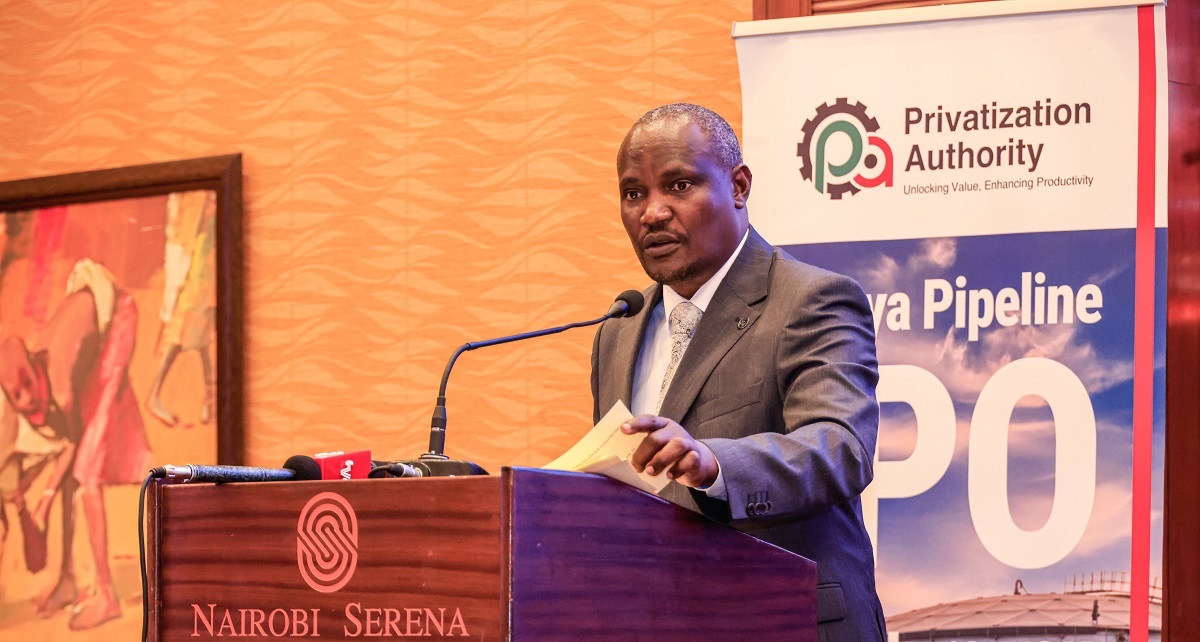
The most visible evidence of domestic market confidence arrived on March 10, 2026, when Kenya Pipeline Company began trading following the largest IPO in the country’s capital market history. The government offered 11.81 billion shares representing a 65 per cent stake at KSh9.00 per share, targeting KSh106.3 billion. The offer achieved oversubscription of 105.7 per cent, according to the CMA bulletin.
Just days earlier, the Nairobi Securities Exchange had listed ALP Industrial Real Estate Investment Trust, East Africa’s first industrial-focused income REIT and the first US dollar-denominated security on the exchange. The restricted offer raised $29.55 million with an overall subscription rate of approximately 115 per cent.
These two listings brought to 14 the number of IPOs completed on the NSE since 2006, according to the report. The KPC offering alone added 11.81 billion new shares to the exchange, nearly doubling the total shares issued through all previous IPOs combined.
No additional offers, rights issues, bonus issues, or share buybacks were recorded during the quarter, indicating that the two new listings represented the primary vector for primary market activity.
Bond Market Surges Past KSh1 Trillion
The flight from equities by foreign investors has not been matched in Kenya’s bond market, where secondary market turnover surpassed the KSh1 trillion mark in a single quarter for the first time.
Treasury bonds worth KSh1.08 trillion changed hands on the secondary market during Q1 2026, a 70.28 per cent increase from the KSh 635.02 billion traded in Q4 2025 and a 49.08 per cent increase from the KSh725.34 billion traded in the same quarter of the previous year.
In the primary market, the Central Bank of Kenya invited bids totalling KSh 205 billion across eight bond issues, including two switches. Total bids received amounted to KSh 451.41 billion, of which the central bank accepted KSh 265.68 billion, representing an acceptance rate of 129.60 per cent.
The corporate bond market, while substantially smaller, showed signs of maturation. As of December 31, 2025, eight active bond issuers had outstanding issues totalling KSh96.4 billion.
Linzi Asset Backed Security remained the largest single issue at KSh44.8 billion, followed by the Safaricom Medium Term Note. Fund managers and nominee accounts held the largest proportion of corporate debt at KSh51.1 billion, representing 86 per cent of the total market.
Safaricom’s Mobile Trading Platform Reshapes Retail Access
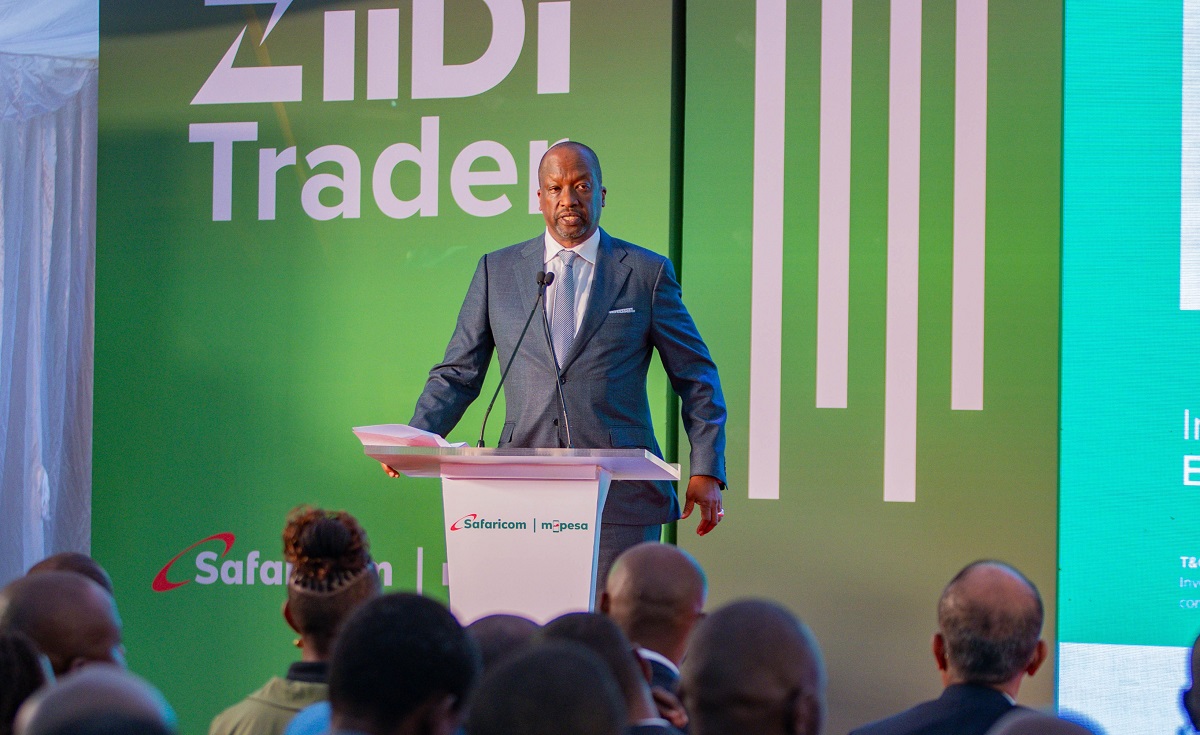
The single most consequential development for the long-term structure of Kenya’s capital markets may prove to be the December 2025 launch of Ziidi Trader, a mobile-based investment platform integrated into the M-PESA app.
The platform, developed by Safaricom in partnership with the Nairobi Securities Exchange and operating under Capital Markets Authority oversight, enables users to buy and sell listed shares and invest in corporate bonds directly from their mobile phones. According to the CMA bulletin, the initiative “simplifies the investment process and is expected to deepen market activity while broadening retail investor participation.”
The impact on retail investor numbers is already visible. Data from the Central Depository and Settlement Corporation shows that local individual investors increased from 1,256,201 in Q4 2025 to 1,284,897 in Q1 2026, a net addition of nearly 29,000 new retail accounts in a single quarter. Local corporate investor accounts also grew, from 40,648 to 40,770 over the same period.
By contrast, foreign corporate investor numbers remained virtually flat at 380, up from 379, while foreign individual investors increased marginally from 7,972 to 8,023.
The shift in holdings is equally telling. Local individual investors held 12.37 per cent of all equities by value at the end of Q1 2026, up from 13.24 per cent in the previous quarter, a decline in percentage terms that reflects the larger overall market capitalisation rather than a reduction in absolute holdings. Local institutional investors continued to dominate, holding 68.97 per cent of all equities.
Foreign corporate holdings, meanwhile, fell from 14.87 per cent in Q4 2025 to 13.35 per cent in Q1 2026.
Derivatives Market Explodes
Perhaps the most dramatic statistic in the CMA report concerns the derivatives market, which recorded a 1,241 per cent surge in contract volume during the quarter. The number of deals rose 35 per cent to 649, while the volume of contracts traded jumped to 78,348 from 5,936 in the previous quarter. Turnover reached KSh318 million, more than double the KSh149 million recorded in Q4 2025.
Open interest, that is contracts that remain active at the end of a period, closed at 11,983 contracts valued at KSh54.36 million, representing a 102 per cent increase from the 5,936 contracts valued at KSh23.11 million reported in the previous quarter.
The most actively traded contracts during the quarter were the 18 June 2026 Equity Group Holdings contracts, which recorded 98 deals with a volume of 10,106 contracts and a turnover of KSh75.4 million, according to the report.
Macroeconomic Backdrop Remains Stable
The capital markets activity unfolded against a backdrop of relative macroeconomic stability. Annual consumer price inflation stood at 4.4 per cent in March 2026, remaining below the midpoint of the official 5.0 per cent ± 2.5 percentage point target range.
The Monetary Policy Committee retained the Central Bank Rate at 8.75 per cent in April 2026 following a 25 basis point cut to 8.75 per cent in February. Average commercial bank lending rates declined to 14.81 per cent in Q1 2026 from 14.82 per cent in the previous quarter, while the 91-day Treasury bill yield fell to 7.43 per cent from 7.74 per cent.
The Kenyan shilling depreciated slightly against the US dollar, from KSh129.32 at the end of Q4 2025 to KSh129.75 at the end of Q1 2026, a 0.34 per cent decline. Against the euro, the shilling depreciated more sharply, falling 7.38 per cent to KSh149.80.
Diaspora remittances, which is a critical source of foreign exchange, stood at $412.72 million in February 2026, a 0.34 per cent increase from the previous month. North America continued to lead as the source region, contributing 54.17 per cent of total remittances, followed by Europe at 20.39 per cent and the rest of the world at 25.44 per cent.
Investor Demographics Shift
The gender distribution of equity investors showed continuing progress toward broader participation. Female investors numbered 716,157 in Q1 2026, holding 4.48 billion shares, up from 675,112 female investors holding 4.36 billion shares in Q4 2025. Male investors numbered 1.46 million, holding 12.97 billion shares.
Total individual equity investors, combining both genders, reached 2.18 million, up from 2.03 million in the previous quarter. Share pledges, which are used as collateral for loans, stood at 6.38 billion shares involving 39,025 investors at the end of Q1 2026, down from 6.61 billion shares involving 39,165 investors in Q4 2025.
Kenya’s Financial Markets in Regional Context
A comparison of East African exchanges included in the CMA bulletin showed mixed performance. Uganda’s all-share index rose to 1,955 points from 1,632 points, a 19.81 per cent increase, while turnover in US dollar terms grew 14.18 per cent. Tanzania’s all-share index climbed to 3,849 points from 2,300 points, a 67.37 per cent increase, with turnover surging 42 per cent in dollar terms.
Both markets, however, saw sharp declines in the number of shares traded, down 45.37 per cent in Uganda and 37.46 per cent in Tanzania, suggesting that price increases rather than volume drove the gains.
Kenya’s turnover ratio, which is a measure of trading activity relative to market size, stood at 0.02 per cent for Q1 2026, unchanged from the previous quarter but double the 0.01 per cent recorded in the same quarter of 2025.
Market outlook
The Capital Markets Authority’s bulletin recorded two major approvals during the quarter: Dyer & Blair Investment Bank received approval to register additional sub-funds under its unit trust scheme, including Fixed Income and Global Multi-Asset Strategy Funds. CPF Asset Managers received approval to register the CPF Multi-Asset Special Fund under its umbrella scheme.
Seven new licences were granted during the quarter, including Arion Capital, Zamara Actuaries, and Horizon Africa Capital as investment advisers; Mema Asset Managers as a fund manager; I&M Capital as an intermediary service platform provider; Green Margin Capital as a stockbroker; and Rock Advisors and Victoria Wealth Management as investment banks.
The report noted that suspended companies remained unchanged from the previous quarter, with six firms: Deacons (East Africa), ARM Cement, Mumias Sugar, Bamburi Cement, Trans-Century, and East Africa Cables, still not trading.
No companies were delisted during the quarter, and the total number of listed counters remained at 67, unchanged from the end of 2025.
Read also: The Best Dividend-Paying Shares on the Nairobi Securities Exchange (NSE) for Q2 2026