


- VALR is expanding into Kenya and East Africa as demand grows for stablecoins, cross-border payments and blockchain-based financial infrastructure.
- The South African digital asset company now serves more than 1.8 million users and over 2,000 corporate and institutional clients.
- Its participation as a Platinum Sponsor of Africa Blockchain Festival 2026 comes as Kenya develops a more formal regulatory framework for virtual assets.
Africa’s cryptocurrency story is changing. A few years ago, much of the discussion around blockchain on the continent centered on Bitcoin prices, speculative trading and whether governments would eventually ban or regulate digital assets.
That conversation is now becoming more practical. Across Africa, blockchain technology is increasingly being discussed in the context of payments, remittances, stablecoins, cross-border transactions, access to global markets and the infrastructure needed to move money more efficiently.
For South African digital asset company VALR, that shift sits at the heart of its growth strategy.
The company will be a Platinum Sponsor of the Africa Blockchain Festival 2026 in Nairobi, as it continues expanding into Kenya and the wider East African market.
“We’re pleased to be a Platinum Sponsor of the Africa Blockchain Festival as we continue to expand into Kenya and the rest of East Africa. Tremendous changes are underway across financial markets and infrastructure, and we are determined to unlock these benefits for the African continent and beyond. We look forward to discussing these developments and forging partnerships at the conference,” said Ben Caselin, Chief Marketing Officer at VALR.
For VALR, Nairobi is a major hub on the African technology conference calendar.
Kenya has one of the continent’s most developed digital financial ecosystems, largely because of the success of mobile money. The country has also built a sizeable cryptocurrency user base, making it an important market for companies trying to understand where traditional finance and blockchain technology could meet.
That is one reason VALR has been increasing its focus on the country.
Founded in 2018 and headquartered in Johannesburg, VALR started as a cryptocurrency exchange, allowing users to buy and sell digital assets such as Bitcoin.
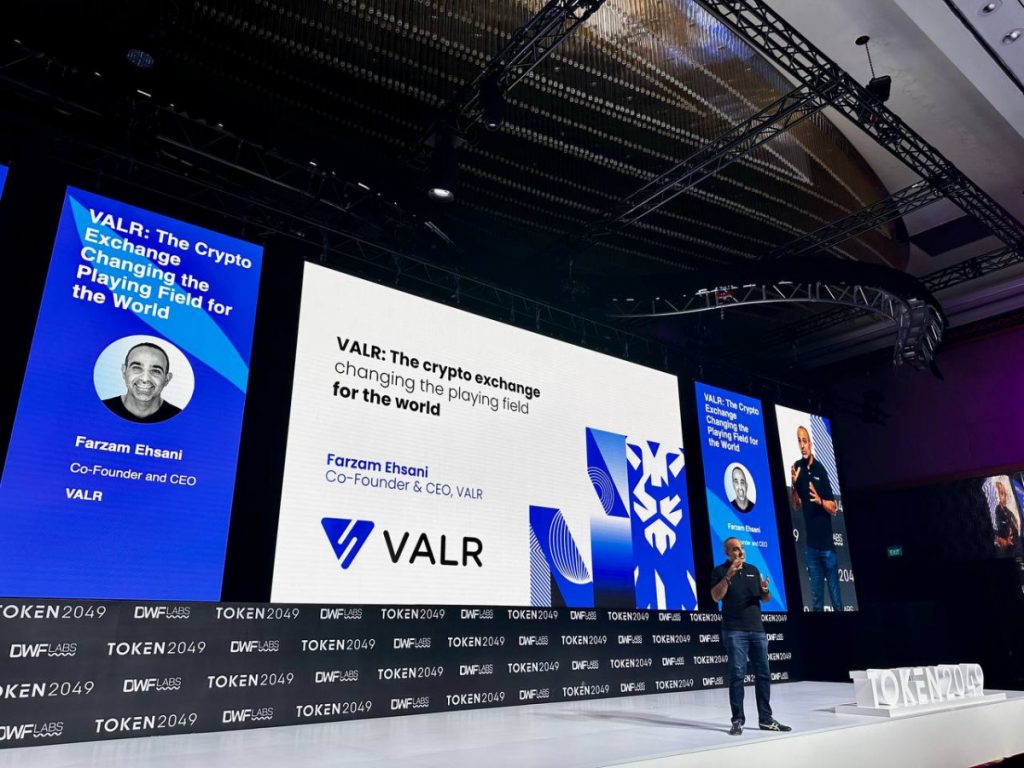
Today, VALR serves more than 1.8 million users and more than 2,000 corporate and institutional clients. Its services now stretch beyond simple crypto trading into areas such as stablecoin payments, institutional liquidity, over-the-counter trading, derivatives, lending, staking and financial infrastructure for businesses.
The company says it processes more than $15 billion in annual stablecoin volumes. That figure is important because stablecoins are becoming one of the more practical uses of blockchain technology in Africa.
Stablecoins are becoming part of the conversation
Stablecoins are digital currencies designed to maintain a relatively stable value, often by being linked to currencies such as the US dollar.
For African users, their appeal can be straightforward. Someone receiving money from overseas may use a stablecoin to receive funds. A company importing goods may use the technology to settle payments. A fintech platform may use blockchain rails in the background without its customers ever needing to know that blockchain was involved.
It is a very different proposition from buying a cryptocurrency and hoping its price rises. VALR has been positioning itself around this part of the market. The company has expanded its relationship with Circle, the company behind USDC, one of the world’s largest dollar-backed stablecoins. It has also been building services aimed at fintech companies and financial institutions looking to use stablecoins for payments and settlement.
Earlier this year, VALR announced an integration with African payments network Onafriq, creating a connection between mobile money and digital assets in supported African markets. The arrangement allows users to fund VALR accounts using local mobile money systems, while stablecoins can be used in the background for settlement.
For East Africa, where mobile money is already part of everyday life, this type of integration could be particularly significant.
The opportunity is not necessarily about convincing millions of people to become cryptocurrency traders. It could instead be about using blockchain technology behind services people already use.
Why Kenya matters
VALR has been openly signalling its interest in Kenya. In May 2026, the company appointed Peter Mwangi as Country Manager for Kenya, giving it a dedicated presence as it looks at partnerships and growth opportunities in the market.
Kenya has spent years debating how virtual assets should fit within its financial system. The introduction of the Virtual Asset Service Providers Act, 2025 gave the sector a clearer legislative framework and brought areas including virtual asset services, custody, stablecoins and tokenized assets into a more formal regulatory conversation.
Large financial institutions are unlikely to build serious partnerships with blockchain companies without some level of regulatory certainty. VALR has already gone through that process in South Africa, where entities within the group hold licenses from the Financial Sector Conduct Authority.
That experience could prove useful as Kenya develops its own regulated digital asset market. For Africa Blockchain Festival convenor Bunmi Fabwano, VALR’s expansion also reflects how the African blockchain sector itself is evolving.
“VALR’s participation reflects the kind of growth we are seeing across Africa’s blockchain ecosystem. We are moving beyond conversations about crypto adoption into a much bigger discussion around payments, stablecoins, tokenization and the financial infrastructure Africa will need for the future. Having a major African-born company like VALR expanding further into East Africa demonstrates the scale of that opportunity and why Nairobi is an important meeting point for the industry,” said Bunmi Fabwano, Convenor of Africa Blockchain Festival 2026.
An African company looking beyond Africa
Although VALR’s roots are firmly African, its ambitions extend well beyond the continent.
The company raised $50 million in a Series B funding round in 2022, giving it a valuation of approximately $240 million at the time.
The investment round was led by Pantera Capital and included Coinbase Ventures and F-Prime Capital, which is affiliated with Fidelity Investments.
Those investors gave VALR both capital and international visibility at a time when African technology companies were becoming increasingly attractive to global investors.
Since then, VALR has continued adding services aimed at both retail and institutional customers, and has adopted tokenization as a major component of its offering.
Today, the company is providing access to tokenized US-listed equities through xStocks and has also offered exposure to tokenized private credit products.
This part of the business is still relatively new, but it points towards where VALR believes financial markets may be heading.
For African investors, access to global assets has traditionally come with several barriers. Opening international brokerage accounts can be difficult. Moving foreign currency can be expensive. Minimum investment amounts can be high, and access differs considerably depending on where someone lives.
Blockchain does not automatically remove those barriers, and regulation will remain essential. But tokenization could make it easier for financial platforms to offer fractional access to certain assets and settle transactions more efficiently.
Read also: Kenya to host Africa Blockchain Festival 2026 in October
Africa’s blockchain market is becoming more practical
The wider African market is also giving companies such as VALR reasons to keep investing. Blockchain activity across Sub-Saharan Africa has continued growing, with Nigeria, South Africa, Kenya, Ethiopia and Ghana among the region’s most active markets.
What is perhaps more interesting is how people are using the technology.
Across the continent, cryptocurrencies and stablecoins are increasingly connected to remittances, savings, dollar access, online payments and cross-border business.
Sending money between two neighboring African countries can sometimes involve more friction than sending money from Africa to Europe. Businesses operating across several African markets also have to navigate different currencies, banking systems and foreign exchange rules.
Blockchain companies believe some of this can be improved. The real test is whether they can build products that are regulated, affordable and simple enough for ordinary businesses and consumers to use.
VALR wants to be part of that infrastructure.
Read also: From Exchange to Infrastructure – How Binance Underpins Crypto
Nairobi becomes the next step
That is what makes its participation in the Africa Blockchain Festival relevant.
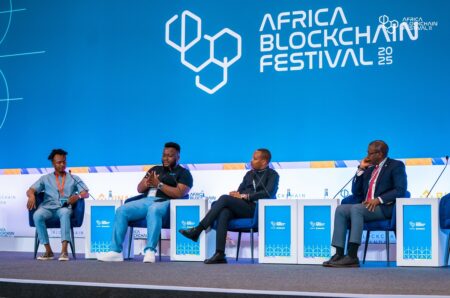
The event gives VALR access not only to crypto traders and blockchain entrepreneurs, but also to policymakers, banks, investors, fintech companies and businesses that are beginning to look at digital assets differently.
For VALR, the opportunity in Kenya may ultimately be less about competing for crypto traders and more about partnerships.
The African blockchain market will still have speculation. Bitcoin prices will still make headlines, and retail trading will remain a large part of the industry. But underneath that, something quieter is happening.
Blockchain is gradually being woven into the plumbing of financial services. For VALR, the move into Kenya and East Africa is a bet that this quieter part of the story will eventually become the bigger one.