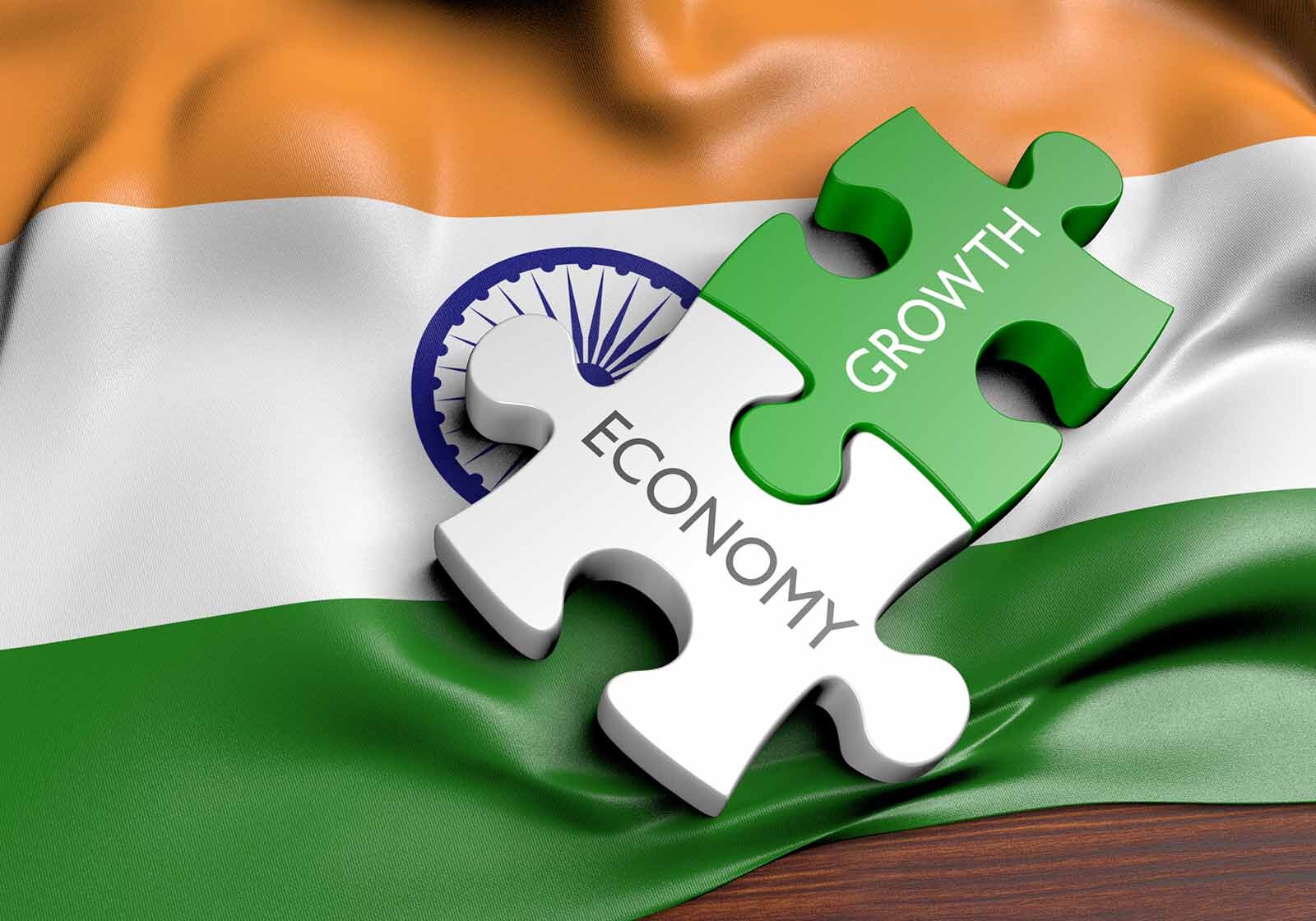


- Countries in East Africa’s economic bloc have a lot to learn from India’s economic boom.
- India economic trajectory is poised to clock ‘developed nation’ status by 2047 according to the World Bank.
- The populous country is projected to generate USD 2 trillion in revenue by 2030.
Economies in the East Africa Community (EAC) have a lot to learn from India which is experiencing strong economic growth with its share of global GDP rising from 1.9 percent in 2008 to over 3.4 percent in 2025. According to the World Bank analysis titled India country partnership framework (FY2026-2031), the sub-continent is now targeting an 8 to 10 percent share of global GDP by 2040.
To achieve the intended growth, India will have to shift from “incremental progress to targeted breakthroughs in sectors that hold the potential for significant growth and dynamism” details the report.
Given it’s close cultural, historical and economic relations with Tanzania and other regional members of the EAC bloc, there are key lessons that East Africa can learn to stir industry.
As India draws closer to achieving it’s vision of becoming a developed economy by 2047, there is need for cross-sector collaboration, decisive action by companies, and supportive policies from government, the same stands true for the EAC.
By investing in strategic priority areas, the analysis suggests that India could generate in excess of USD 2 trillion in revenues by 2030, up from USD 690 billion in 2023. “The potential for transformation comes from three drivers…changes in technology or business models, high and sustained investment dynamics, and cultivation of the large and growing market,” details the report.
The World Bank singles out innovation and the adoption of technology as the basis to unlocking improved performance in a given sector noting that “this is often indicated by increased patent activity or R&D activity.”
It also highlights the need for high investment in priority sectors if India is to increase output and enhance it’s production capacity. “We can see investor confidence through sustained private-equity and venture capital inflows that exceed USD 1 billion … growth in investments surpass 15 percent CAGR,” the report details further.
The analysis further commends public-sector commitments, citing government investments in capital infrastructure and innovation. It also underscores India’s large conglomerates that have committed substantial long-term investments that signals their interest and trust in the sector’s transformative potential.
According to the World Bank, India has achieved what it describes as ‘remarkable development over the past two decades.’
“Since 2000, the economy has nearly quadrupled in real terms, and per capita income has almost tripled. Its share in the global economy has doubled from 1.6 percent in 2000 to 3.4 percent in 2023 making India the world’s fifth-largest economy,” the World Bank asserts.
A key lesson here for the EAC is the fact the World Bank commends India not only for it’s literal economic growth but the fact that the said development has been accompanied by substantial reduction in extreme poverty.
India’s economic development has led to poverty reduction from the highs of 16.2 percent in 2012 to the lows of 2.3 percent in 2023 not to mention the significant expansion in infrastructure and access to basic social services. “Despite these achievements, critical development challenges persist,” the lender cautions.
“High levels of informality in the labor market, low female labor force participation, unequal access to quality health and education services, regional disparities in development outcomes, and increasing vulnerability to climate change and natural disasters,” the World Bank notes, again, much like development outcomes and challenges of the EAC.
Also Read: Why economies in Africa must brace for a powerful El Niño
Addressing India’s growth challenges, lessons for East Africa
For India to achieve its vision of becoming a high-income economy by 2047, the country will need to sustain an average annual growth rate of 7.8 percent over the next two decades. Not only will it require bold and sustained reforms to increase both public and private investment, but it will have to address the said rather complex challenges.
Notably, according to the World Bank, India will need to increase the real investment rate from around 33.5 percent of GDP to 40 percent by 2035. The growth cannot happen without the people, the workforce so to speak. India will have to create jobs or and conducive conditions for the generation of employment.
When it comes to job creation, India, like the EAC, needs to prioritize women to achieve gender parity and it will have to do so by investing in growth of labor-intensive sectors. “Unlocking India’s demographic dividend will depend on investing in human capital and raising female labor force participation from 35.6 percent to 50 percent by 2047,” the World Bank underlines.
That’s not all, simultaneously, India will have to deepen its structural reforms to further develop infrastructure, improve health services and access, invest in learning, boost manufacturing and digital innovation, among other requirements.
To achieve the sought after inclusive and sustainable growth, India has the backing of the World Bank which has already announced it’s support for the country’s vision and policy framework christened ‘Viksit Bharat 2047’.
The World Bank says it is backing India’s aspirations on condition that it puts to effect favorable policy reforms, ensures institutional strengthening, and prioritizes strategic investments that promote green, resilient, and inclusive development.
“Together, we aim to help build a more prosperous and equitable future for all India,” the World Banknotes optimistically.
In summary, the East Africa Business Council cites at least for areas that the EAC bloc should ‘copy and paste’ from India. The first is digital development, like India, the EAC must build massive digital public infrastructures including unified payment interfaces and digital ID systems.
Through digital transformation, the EAC, like India, can improve public service delivery and financial inclusion to say the least. “EAC nations can adopt similar cost-effective digital stacks to bring informal traders and rural populations into the formal economy,” the EAC Business Council says.
Then there is the matter of targeted industrialization. India has been very specific in it’s focus on the manufacturing, automotive and agro-processing sectors.
The Council points out that; “For East African nations looking to add value to raw materials rather than just exporting them, studying India’s small-and-medium enterprise (SME) ecosystems and manufacturing hubs provides a realistic roadmap.”
Next is the need for human capital development and their general capacity building. As for India, the country prioritized long-term technical training, IT proficiency, and specialized higher education, and in so doing, it created a global talent pool.
The EAC should duplicate India’s programs like the Indian Technical and Economic Cooperation (ITEC) and virtual learning networks that clearly show how deliberate skills development can fuel what the Council dubs, self-sustaining growth.
Finally, you have the elusive area of food security. By expanding access to basic banking and deploying decentralized renewable energy initiatives like solar adaptations for agriculture, the EAC, like India, can turn marginalized populations into active economic players.
The Council also highlights the need for what it describes as ‘practical economic ties.’ By comparison, India is deeply embedded in preferential markets allowing it access to Duty Free Tariff Preference schemes.
Key evidence of India’s foresight that can help the EAC is the fact that through the preferential schemes, India has investments in manufacturing and agriculture across the EAC in Tanzania and Kenya, and has signed trade pacts with cooperative institutional frameworks like the East African Business Council itself.