

- More than 30 heads of state gather in Nairobi on May 11-12 for a historic France-Africa summit, but the most provocative intervention may come not from a president but from a technocrat demanding the continent stop outsourcing its intelligence.
- Over 2,000 CEOs and 4,000 delegates are expected, with a business forum on May 11 at the University of Nairobi followed by a heads of state summit on May 12 at the Kenyatta International Convention Centre.
The Africa Forward summit, co-hosted by Kenya and France on May 11-12 in Nairobi, marks the first time a French-led Africa summit has been held in an English-speaking country, a break with a colonial-era dynamic that long confined such gatherings to Francophone capitals.
Yet beneath the diplomatic symbolism lies a defining question on who will control the algorithms, data centres and infrastructure that will shape Africa’s AI-powered economic future.
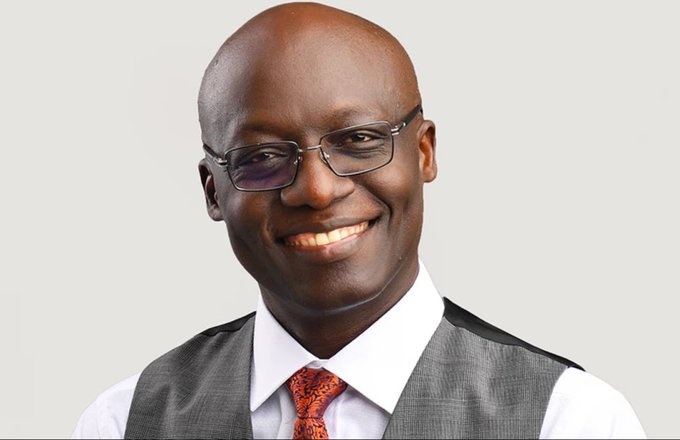
Ambassador Philip Thigo, Kenya’s Special Envoy on Technology, set the tone days before the summit, warning that the era of connectivity doesn’t offer economies in Africa sovereignty, and access alone is not power. The new age of artificial intelligence, he argues, demands that Africa shifts from being a consumer of systems designed elsewhere to a builder of its own digital capability.
“The real question is whether we will participate as builders, rule-makers and co-creators, or whether we will remain consumers of systems designed elsewhere, trained on data we do not control, powered by infrastructure we do not own, and governed by standards we did not shape,” Thigo notes.
The statement landed as a pre-emptive framework for the summit’s AI and digital agenda. It also reflected a broader unease among African policymakers who have watched the continent become a source of raw data and a market for finished technology products, capturing only a fraction of the value generated.
A summit built for deals, not declarations
Organisers have billed Africa Forward as an implementation-focused platform rather than a traditional diplomatic gathering. More than 2,000 CEOs and 4,000 delegates are expected, with a business forum on May 11 at the University of Nairobi followed by a heads of state summit on May 12 at the Kenyatta International Convention Centre.
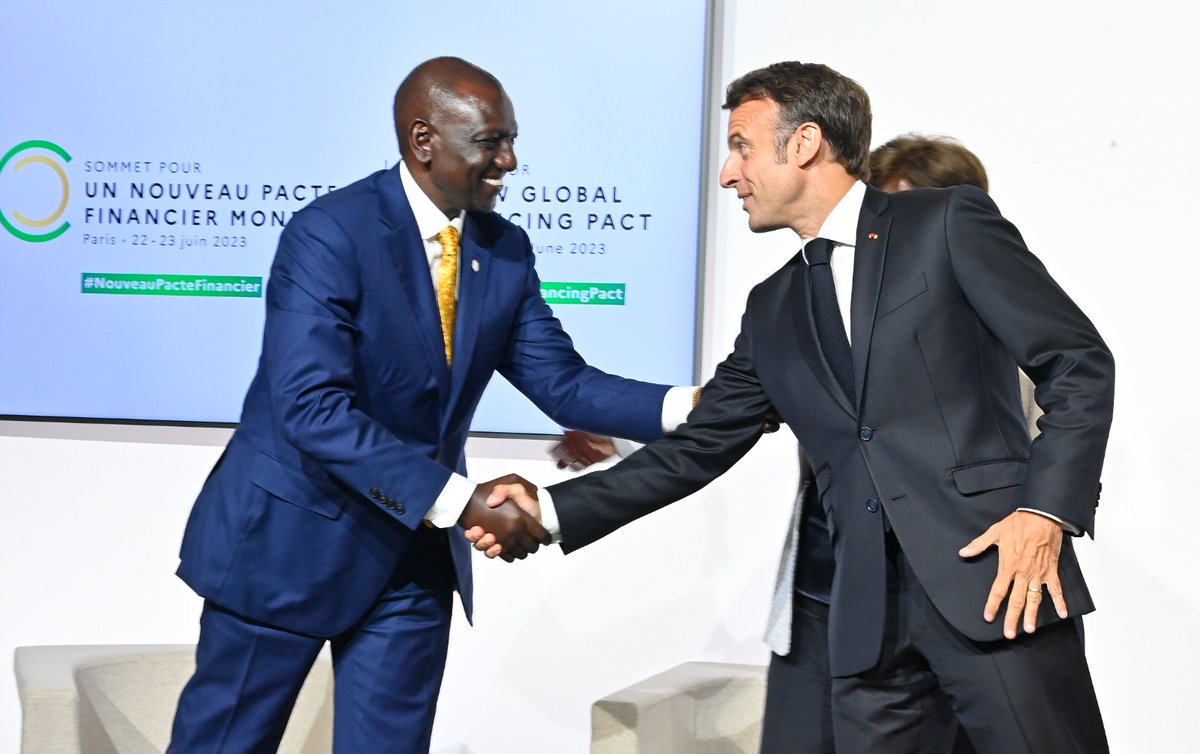
French President Emmanuel Macron and Kenyan President William Ruto will co-chair proceedings, with discussions organised around seven themes: energy transition and green industrialisation, reform of the international financial architecture, blue economy, sustainable agriculture, AI and digital technologies, resilient health systems, and peace and security.
The summit will conclude with the adoption of the Nairobi Declaration, which officials said would feed into discussions at the G7 summit in Évian, France in June 2026. But the real measure of success, organisers point out, will be investment deals and business partnerships, not communiqués.
Jérémie Robert, adviser to President Macron on African affairs, told journalists ahead of the summit that the goal was “to have as many investments possible, as many economic deals possible”.
Philip Thigo’s ‘AI full stack’ sovereignty
Thigo’s intervention reframed the digital agenda from one of access and inclusion to one of structural power. He argued that AI sovereignty is a “full-stack” problem—requiring African control over data, compute infrastructure, energy, talent, models, use cases and governance.
“If any layer of that stack is missing, sovereignty becomes rhetorical,” he wrote. “If African data is extracted but not governed by African institutions, value is lost. If African languages and contexts are not represented in AI models, our realities become invisible. If African innovators cannot access affordable compute, they cannot build. And if our public institutions cannot deploy AI safely, effectively and in the public interest, we miss the opportunity to improve service delivery at scale”.
“No country, no region, and no people should, in this era, outsource their intelligence,” he cautions.
Thigo was careful not to frame the argument as anti-French or anti-Western. Instead, he positioned it as a call for a different kind of partnership, one that builds African capacity rather than perpetuating dependency. France, he noted, has been aligned with “important conversations around sustainable AI, ethical governance, digital innovation and public-interest technology,” but the next phase must be “practical and structural”.
That means financing regional compute infrastructure and sovereign cloud capacity, supporting data centres powered by Africa’s renewable energy potential, strengthening local data ecosystems including local language models, and advancing interoperable digital public infrastructure.
Rwanda to co-chair AI roundtable
The summit’s AI agenda will be given further weight by Rwanda’s role as co-chair of a high-level roundtable on artificial intelligence. Organisers described Rwanda as “one of the leading actors” in AI on the continent, a recognition of Kigali’s sustained investment in digital infrastructure and regulatory frameworks.
The AI roundtable, scheduled for the afternoon of May 12, will bring together heads of state, development banks, private sector leaders and civil society to discuss how emerging technologies can drive growth and employment across Africa . The session is expected to produce concrete commitments on compute infrastructure and talent development, moving beyond general declarations of intent.
The youth and sport dimensions
Africa Forward has been structured to include non-traditional summit actors. On May 11, both Presidents Macron and Ruto will attend a session dedicated to youth, followed by a segment on cultural and creative industries. Later that day, AFD Group will organise a “Sport for Sustainable Investment” event under the patronage of both presidents, featuring sports demonstrations and appearances by athletes including multiple world champion Faith Kipyegon.
The sport segment reflects a calculation that cultural and athletic connections can unlock economic partnerships in ways that formal diplomacy cannot. Demonstrations will include basketball coaching from the Basketball Experience Kenya project, athletics coaching from Iten House of Coaches and the Tegla Loroupe Peace Foundation, and football youth tournaments led by organisations funded by AFD and the Kenyan Football Federation.
What ‘build, don’t buy’ means for France
For France, the summit represents an opportunity to reset a relationship with Africa that has been strained by military withdrawals from the Sahel and persistent accusations of neocolonialism. Holding the summit in an English-speaking country—and in Kenya, an economic powerhouse that never experienced French colonial rule—signals an intent to move beyond the Francophone-Anglophone divide and engage with Africa as a single market of 1.5 billion people.
Thigo acknowledged this shift. “Africa comes to Nairobi not as a passive recipient of technology, but as a partner with assets, ideas, markets, talent, and ambition,” he wrote. “This is not opposed to innovation. It is precisely what can help shape a more inclusive and humane age of intelligence”.
But the partnership he envisions is not open-ended. “A meaningful Africa–France digital compact is not a communiqué,” he wrote. “It is a construction plan. It finances regional compute. It funds green data centres. It builds joint research capacity. It creates talent pipelines that run in both directions. It establishes data-sharing frameworks that respect sovereignty. And it commits to African participation in global standards—because standards are not technical documents. They are the architecture of who wins”.
The stakes at Africa Forward Summit
The timing of the summit coincides with a restructuring of global technology governance. Data rules are being rewritten, AI safety frameworks are being designed, and compute infrastructure is increasingly treated as a geopolitical asset. Countries and regions that shape these systems today, Thigo argued, will shape the economic order of tomorrow.
For Africa, the downside of inaction is clear. “If Africa does not build its own capability, AI may deepen existing inequalities, reproduce bias at scale, make our languages invisible, and ultimately concentrate economic value elsewhere,” Thigo warned.
The upside is an opportunity to leapfrog legacy industrial models and build digital infrastructure on African terms. Whether the Africa Forward summit delivers on that promise will be measured not by the grandeur of its stage but by the concreteness of its commitments: financing for data centres, pipelines for AI talent, and governance frameworks that give African institutions real authority over the data generated on the continent.
Africa Forward summit comes just days before Nairobi plays host to the inaugural edition of AI Everything Kenya X GITEX Kenya summit taking place from 19–21 May in Nairobi. The showcase will see regional and global digital economy stakeholders to advance sovereign, inclusive, and investment-driven AI ecosystems debate across East Africa. The Inclusive AI Summit will take place at the Sarit Expo Centre on 19 May, followed by the AI Everything Kenya Expo and Conference on 20–21 May, at the Kenyatta International Convention Centre.
Read also: East Africa’s AI market is rising rapidly – but ownership will define its future