




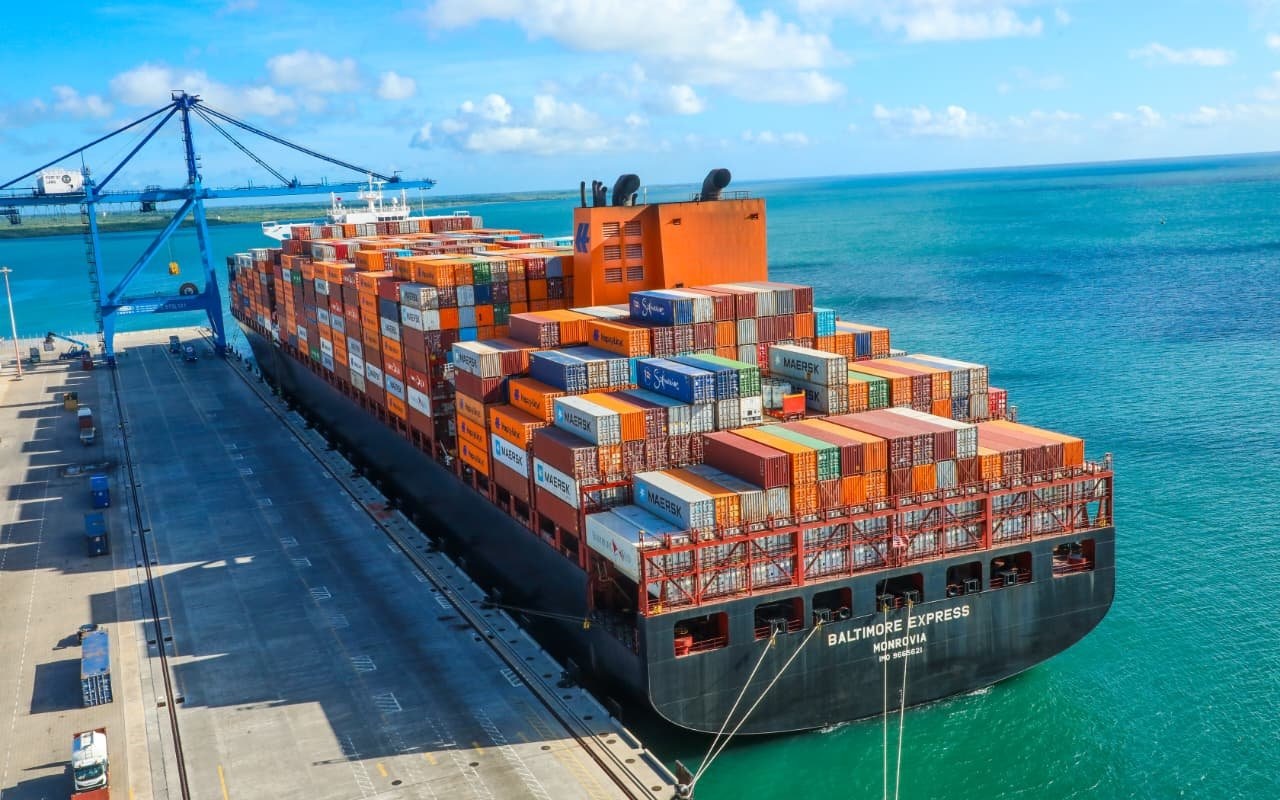
- With Strait of Hormuz on lockdown, Africa’s ports just got a shock boom as global shippers change course.
- However, consumers are hit as shipping lines are paying a fortune to sail around Africa.
- Cargo volumes explode by 974% in Kenya’s Lamu port even as Nairobi and Addis Ababa join forced to protect shippers in the high seas.
The Cape of Good Hope has become the go to option as shipping through the Strait of Hormuz remains closed or limited at best. Shipping data indicates that vessels are opting to use the African coastline to circumnavigate the prevailing risks at the Strait of Hormuz.
The data, published in the ‘Analysis of maritime geopolitics: The Red Sea Factor’ report by the International Sustainable Development Observatory (ISDO) mid April, indicates that the, shippers are willing to spend more to take the longer route.
“Attention is increasingly shifting toward Africa’s Red Sea, Gulf of Aden and Atlantic corridors as viable alternatives,” details the report. With the Strait of Hormuz all but closed, and tensions festering in the Red Sea, vessels are looking for alternative routes and the Cape of Good Hope is living up to it’s name.
Even though it takes longer, 10–14 days more, for ships to go around Africa’s Cape of Good Hope, and is more expensive, around $1 million per trip in fuel costs per voyage, shippers are willing to pay, better late than never.
“Trips add 3,500–4,000 nautical miles, that’s around 10–14 days,” details the report. “Operating costs are surging with higher fuel consumption and higher insurance premiums…total costs are estimated to rise by over $1 million per round-trip,” specifies the report.
On the flip side of things, the Marine News Magazine points out that African countries with developed ports on the coastline and bunkering hubs like Mauritius and others, are all, in the interim, enjoying increased revenues.
According to the report, the raising waves of increased demand is growing business for ports like Namibia’s Walvis Bay and Port Louis in Mauritius among others.
“Fuel providers and trading houses in African ports benefit from increased demand for ship refueling,” it reports.
Another benefit for Africa that is a direct result of the increased vessel traffic, is the ongoing upgrades to port infrastructure and logistical services.
However, while the coastal states may earn a pretty sum from the ships’ reroutes, however, once they dock, all the extra costs are passed down to the final consumer.
“The increased shipping fees are passed down making imports to African countries more expensive,” the report warns.
The increased expenses, freight costs, insurance premiums, security and decreased cargo capacity all add up to increased prices of the goods once the ships offload.
“These increased shipping fees are passed down, making imports to African countries more expensive,” cautioned the UNCTAD in it’s ‘Strait of Hormuz disruptions: Implications for global trade and development’ report earlier this month.
The report also cites related environmental impacts caused by the longer distances and increased emissions.

Africa’s ports gaining from Strait of Hormuz ship reroutes
With the Strait of Hormuz under siege, and vessels circumvent the Bab al-Mandab Strait, Egypt is loosing revenue that used to flow through the Suez Canal, but other African ports are booming.
“As flows shift, the Red Sea is emerging as a critical artery for global energy trade, strengthening the position of countries like Sudan and Djibouti,” reports the Middle East Council on Global Affairs in a report titled ‘The Red Sea: Divided by water, united by opportunities,’
First let’s look at the unfortunate loss that Egypt is facing; The Suez Canal, like the Strait of Hormuz, is a critical maritime gateway.
According to Egypt, through the Suez Canal handled approximately 12 percent of global trade. Granted, it is dwarfed by the Strait of Hormuz which handles over 20 percent of global oil but still, former’s 12 percent translates to a whopping $800 million per month.
However, Egypt is not at a total loss, on the contrary; with it’s Suez Canal man made waterway clogged by Red Sea tensions, Cairo has turned to yet another artificial oil transporting option, the SUMED pipeline.
“Oil flows through Egypt’s SUMED pipeline have surged by about 150 percent since the start of the Iran-related conflict,” Gulf Business Insight reported at mid month
According to the report, the pipeline, operated by Arab Petroleum Pipelines Company, transports oil between Ain Sokhna on the Red Sea and Sidi Kerir on the Mediterranean coast and has a capacity of handling 2.5 million barrels per day,
Egyptian media Asharq Al-Awsat reports that while the SUMED pipeline is proving to be a sound alternative for Egypt (and Saudi Arabia), on the Horn of Africa, you have Djibouti expanding its role as a logistics and transit point beyond regional trade.
“The Gulf of Aden is also gaining prominence as a key transit corridor linking the Indian Ocean to Europe-bound shipping lanes, placing the Horn of Africa at the centre of evolving trade patterns,” details Asharq Al-Awsat.
It is reported that major shipping lines the likes of Maersk, CMA CGM, and MSC have all suspended the use of the Suez Canal and Bab el-Mandeb routes, opting for the longer Cape of Good Hope option.
Not surprising, the report says South Africa’s major ports Durban, Cape Town, and Ngqura, were not built for this kind of traffic and are all “…experiencing significant congestion due to an influx of vessels seeking fuel and supplies.”
To address the shortfall, most all ports along the African coast, including Berbera in Somaliland, are being developed with funding and capacity support from the Gulf to meet the exponential demand surge.
Also Read: Kenya fights African peers to keep venture capital crown as Italy readies $59m fund
Big winners in port business amid Iran war
For example, according to IntelliNews, Kenya’s Lamu port is reported to have a 974 percent increase in cargo volume thanks to its deep-water berths. Nextdoor, Ethiopian Airlines reports cargo revenues up 14 percent. Addis Ababa’s Bole International Airport is handling increased electronics, pharmaceuticals and perishable goods authorities say.
Not far off, Mozambique’s Port of Maputo is grappling with cargo increase of more than 16 percent while it’s $20 billion liquefied natural gas project that is led by TotalEnergies has been accelerated. It is reported that TotalEnergies has hired more than 4,000 workers, deployed to speed up production deadlines.
Across the continent in Nigeria “…higher oil prices have provided a parallel windfall.” What with brent crude rising to over $120 per barrel, almost double the government’s benchmark of $64.85, the country is recording immense daily oil revenues.
Giants like Dangote Petroleum Refinery, is increased exports, issuing larger than usual tenders like the 84,000 metric tonnes of jet fuel and diesel.
In South Africa, Durban Port is reported to have clocked 28 crane moves per hour while Namibia’s Walvis Bay has seen over 30 percent rise in revenue and activities as a key refuelling stop for long-haul shipping.
Similar reports can be heard as far as Marocco where the Royal Air Maroc has added 10 routes including Los Angeles and Beirut as it expands its international network. The result is over 12 percent increase in Casablanca passenger traffic while Mauritius reports a 15 percent rise in revenues from logistics and repair services.
Meanwhile, Kenya and Ethiopia have launched joint military operations to secure the Port of Lamu and the South Sudan, Ethiopia Transport corridor that has now become a key international trade route.
Much remains to be decided by the war on Iran, but while oil price triggered inflation puts pressure on common Africa’s, governments and giants like Dangote Industries are reaping big.